





What Are Nursery Trays and How Are They Used in Plant Production?
2026-01-17 12:24:03
The Importance of Nursery Trays in Modern Plant Production
In professional plant production systems, efficiency, consistency, and scalability are critical. One of the most widely used tools supporting these goals is nursery trays. From seed propagation to early-stage plant development, nursery trays play a foundational role in ensuring uniform growth and organized production workflows.
From a manufacturer and factory production perspective, nursery trays are designed not only for daily use but also for large-scale production, repeated handling, and bulk supply. Understanding how nursery trays work and where they are applied helps growers make informed decisions that improve productivity and reduce operational costs.
What Are Nursery Trays?
Nursery trays are structured containers used to hold growing media and young plants during the early stages of cultivation. They are typically divided into multiple cells, allowing individual plants to develop separately while remaining part of a unified system.
Factory-produced nursery trays are manufactured with standardized dimensions, ensuring compatibility with irrigation systems, greenhouse benches, and automated handling equipment. This standardization is especially important for commercial operations managing high plant volumes.
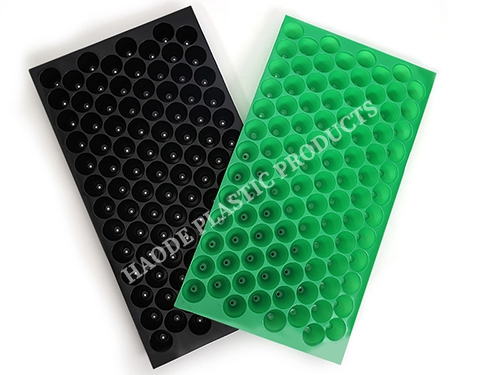
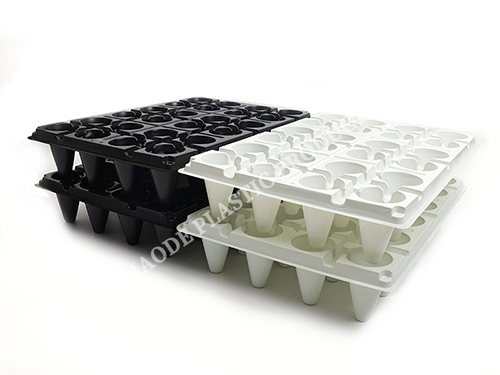
How Nursery Trays Support Plant Production
In plant production, nursery trays serve several essential functions:
·Providing a controlled environment for seed germination
·Supporting consistent root development
·Allowing efficient spacing and organization
·Simplifying movement and handling during growth stages
Because nursery trays are used repeatedly across production cycles, durability and structural stability are key considerations during manufacturing.
Materials Commonly Used in Nursery Trays
Most nursery trays are produced from durable plastic materials selected for strength, flexibility, and resistance to moisture. From a production standpoint, these materials allow trays to withstand:
·Frequent watering and humidity
·Repeated cleaning and disinfection
·Stacking and transport
Manufacturers focus on material consistency during factory production to ensure uniform performance across large batches.
Nursery Trays in Different Plant Production Stages
Seed Germination
Nursery trays create a uniform environment that supports even moisture distribution and temperature control, improving germination rates.
Early Growth
Individual cells prevent root entanglement and reduce competition between plants, supporting healthier early development.
Transplant Preparation
Trays allow plants to be moved efficiently from propagation areas to production fields or containers without disturbing root systems.
This staged use makes nursery trays an essential tool throughout the production cycle.
Advantages of Using Nursery Trays in Commercial Operations
For large-scale growers, nursery trays offer several practical advantages:
·Improved space efficiency in greenhouses
·Easier monitoring of plant health
·Reduced labor during handling and transport
·Consistent plant size and quality
Factory-made trays designed for bulk supply ensure growers can scale operations without compromising uniformity.
Manufacturing and Production Considerations
From a manufacturer’s perspective, producing nursery trays involves precise mold design and strict quality control. Key production factors include:
·Uniform wall thickness
·Reinforced edges for stacking strength
·Accurate cell dimensions
Factory-based production allows these specifications to be maintained across high-volume output, making nursery trays suitable for long-term commercial use.
Nursery Trays and Automation Compatibility
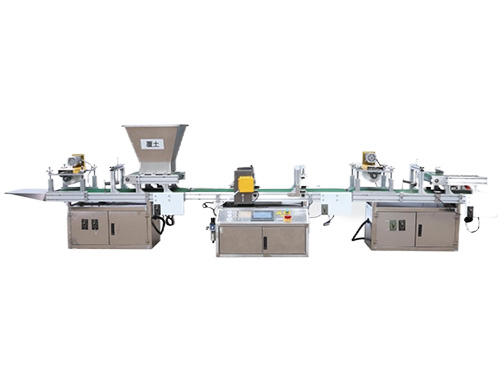
Modern plant production increasingly relies on automated or semi-automated systems. Nursery trays are designed to integrate with:
·Automated seeding lines
·Conveyor-based transport systems
·Mechanized transplanting equipment
Standardized tray dimensions produced at the factory level ensure smooth integration with these technologies.
Choosing the Right Nursery Trays
When selecting nursery trays, growers should consider:
·Cell size and depth
·Tray durability and reuse potential
·Compatibility with existing production systems
·Availability in bulk quantities
Working with a production-focused factory supplier helps ensure stable quality and reliable long-term supply.
Common Mistakes in Using Nursery Trays
To maximize performance, growers should avoid:
·Overfilling cells with growing media
·Inadequate drainage management
·Improper cleaning between cycles
·Excessive stacking during storage
Proper handling extends tray lifespan and maintains consistent production results.
Conclusion: Nursery Trays as a Foundation of Scalable Plant Production
In modern horticulture and agriculture, nursery trays are more than simple containers—they are essential tools that support efficiency, consistency, and scalability in plant production systems.
Manufactured in dedicated factories with controlled production processes, nursery trays are designed for repeated use and bulk supply to commercial growers. By understanding how nursery trays function and how they fit into the production cycle, growers can optimize operations and achieve more predictable, high-quality results season after season.
References
GB/T 7714:Soilless culture: Theory and practice: Theory and practice[M]. Elsevier, 2019.
MLA:Raviv, Michael, J. Heinrich Lieth, and Asher Bar-Tal, eds. Soilless culture: Theory and practice: Theory and practice. Elsevier, 2019.
APA:Raviv, M., Lieth, J. H., & Bar-Tal, A. (Eds.). (2019). Soilless culture: Theory and practice: Theory and practice. Elsevier.

The CNC Seed Braiding Machine is a high-precision, fully automated agricultural equipment s...
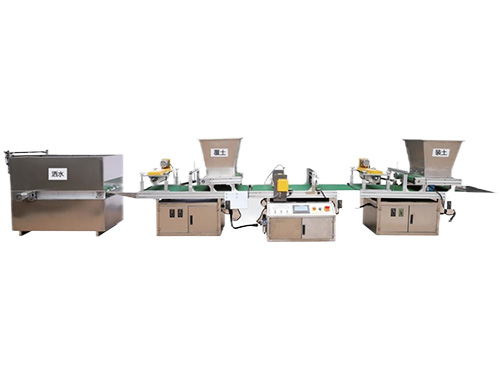
It adopts electrical integration and can be started by pressing the fully automatic button ...
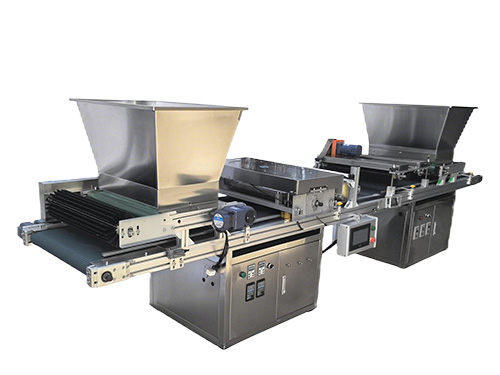
The XP750 seeder has stable performance, excellent product quality, simple and convenient o...
It adopts electrical integration and can be started by pressing the fully automatic button ...