





How Nursery Growers Integrate Seed Trays into Automated Production Lines
2026-06-23 17:40:26
Introduction
Growing healthy seedlings begins long before seeds are placed into soil. The seed tray you choose shapes every stage of early plant development—from germination rates to root architecture at transplant time. Whether you operate a large commercial nursery or manage a small greenhouse operation, selecting the right tray can directly influence yield consistency and overall crop quality. The principles examined here draw on horticultural science research and manufacturer field experience to provide commercial growers with an evidence-based framework for seed tray decision-making.
Commercial seedling production is a precision operation where the choice of growing container directly affects the efficiency of every downstream process. Trays that are well-matched to their intended crop and growing conditions support uniform germination, healthy root development, and efficient transplant operations. Trays that are poorly matched create problems—root binding, uneven growth, transplant shock—that cost more to fix than the marginal price difference between a premium and an economy tray.

Tray Design Requirements for Seeder Machines
Automated seeder machines have become standard equipment in commercial nurseries producing more than a few hundred thousand transplants per year. These systems operate at speeds that manual seeding cannot match—pneumatic and vacuum seeder heads can dispense seeds into hundreds or thousands of cells per minute with accuracy rates above 98 percent. But the performance of these systems depends fundamentally on seed tray design meeting the geometric tolerances that automated seeders require. Cell-to-cell spacing must be consistent within tolerances of approximately plus or minus 0.5 millimeters to ensure that seed drop positions align correctly with cell centers. This tolerance is challenging for lower-quality trays produced with worn or improperly maintained molds, where cell positions may drift across the tray length. A manufacturer producing trays with tight dimensional control on cell positions provides the reliability that automated seeders need to maintain their accuracy performance over long production runs. Tray flatness and warp resistance are equally important. Trays that bow or cup slightly when placed on the seeder conveyor create height variations that cause seed drop timing errors. Vacuum seeder systems, which rely on a consistent height reference from the tray surface to position seed pickup points, are particularly sensitive to tray flatness deviations. Manufacturers should specify flatness tolerances as part of their product specifications.
Conveyor and Handling System Compatibility
Conveyor systems for nursery automation typically use slat conveyors, roller conveyors, or belt conveyors, each imposing specific requirements on tray design. Slat conveyors require trays with consistent bottom geometry that engages the slat profile without catching or jamming. Roller conveyors require trays with sufficient bottom rail contact area to prevent tipping. Belt conveyors are more tolerant of tray geometry variation but require trays with sufficient weight and friction to track properly without sliding. Corner radius specifications on trays affect how smoothly trays transition between conveyor sections, around curves, and through transfer points. Sharp-cornered trays catch on conveyor rails and guide rails at transfer points, causing jams and line stoppages. Trays with appropriate corner radii—typically a minimum radius of 3 to 5 millimeters on external corners—traverse transfer points smoothly and reduce line interruption frequency. Consistent tray stacking height affects how high trays can be stacked in input hoppers and how they discharge from output conveyors. Variations in stacking height across different production batches of the same tray type cause input hopper jams as the stack height becomes unpredictable. A manufacturer that controls stacking height tolerances produces a tray that feeds reliably from stacked input positions.
Robot Arm Picking Accuracy and Gripper Integration
Robotic transplanting systems use machine vision to identify individual cell positions and calculate pick trajectories, combined with precision gripper mechanisms to extract seedlings with their intact root ball. These systems impose demanding requirements on tray design consistency. Cell wall thickness must be uniform so that the gripper consistently encounters the same resistance profile when engaging a root ball. If cell walls vary in thickness due to poor molding control, gripper calibration becomes inaccurate and pick failure rates increase. Bottom lip geometry—the profile of the tray base where it contacts the bench or conveyor surface—affects how securely the gripper can engage the tray during the pick operation. Trays with a well-defined bottom lip provide a stable reference surface for tray positioning and support. Trays with irregular or rounded bottom profiles shift slightly under gripper force, causing positional errors in the pick sequence. Surface finish of the tray interior affects how easily root balls release from the cell walls. Too much surface friction causes root balls to cling to cell walls, requiring higher gripper extraction forces that can damage the root system. A manufacturer can specify a release agent or surface treatment that reduces friction without compromising the tray material quality.
Reducing Labor Costs with Plug Tray Automation
Labor cost is the largest single operating expense in most commercial nursery operations, and automated seeding and transplanting systems directly address this cost driver. A single automated seeder can replace the output of four to six manual seeders, typically at throughput rates of 40,000 to 100,000 seeds per hour depending on the machine model and cell count. When calculated against the fully-loaded labor cost for manual seeding, the return on investment for an automated seeder can be less than one to two years in mid-scale operations. The economic case for robotic transplanting is strong in high-labor-cost markets where seasonal labor availability is uncertain. Robotic systems operate continuously across multiple shifts, eliminating the productivity limits that human workers reach after several hours of repetitive work. Robotic pick rates for modern systems range from 800 to 1,500 plants per hour per gripper head, and multi-head systems scale this throughput proportionally. The per-plant labor cost for robotic transplanting is typically 30 to 50 percent below manual transplanting cost. Tray selection is a critical enabling factor in realizing these labor cost reductions. The investment in automation-compatible tray specifications—dimensional precision, consistent cell geometry, appropriate surface finish—pays returns throughout the operational life of the automation equipment by reducing system downtime, gripper failures, and jam events that reduce realized throughput below rated capacity.
Future Trends in Nursery Automation Technology
The trajectory of nursery automation technology points toward increasingly capable systems that will further reduce the human labor requirement in commercial production. Machine vision systems are becoming more sophisticated, enabling robotic systems to identify and reject substandard seedlings at the pick stage rather than relying on post-planting culling. Artificial intelligence-driven path planning is reducing the cycle time required for each pick operation. Mobile robot platforms capable of moving between bench rows are emerging as a solution for traditional bench layout nurseries that lack the floor space for continuous conveyor systems. These autonomous mobile units carry trays between workstation zones, reducing the material handling labor that has historically been a bottleneck in bench production layouts. Tray design must evolve to support these new automation paradigms, with features that facilitate robot gripper engagement and provide reliable position feedback for autonomous navigation systems.
Conclusion
Commercial growers who invest time in understanding tray specifications and matching them to their specific production requirements consistently outperform those who purchase on price alone. The right tray supports every stage of the seedling production cycle—from initial sowing through field transplant—and pays dividends in reduced crop losses, lower labor inputs, and more consistent harvest timing. Whether you are sourcing trays as a first-time commercial buyer or reviewing your current supplier against market alternatives, the principles outlined here provide a framework for making evidence-based decisions that protect your production outcomes.
United States Department of Agriculture (USDA) Agricultural Marketing Service. (2023). Nursery and Greenhouse Production Guidelines. USDA.
American Nurseryman (now Nursery Management). (2023). Seedling Tray Technology and Nursery Automation Trends. Industry Publication.

The CNC Seed Braiding Machine is a high-precision, fully automated agricultural equipment s...
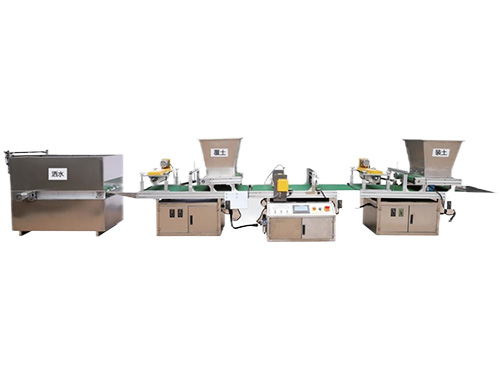
It adopts electrical integration and can be started by pressing the fully automatic button ...
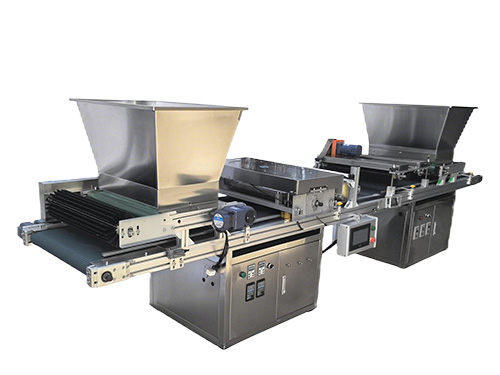
The XP750 seeder has stable performance, excellent product quality, simple and convenient o...
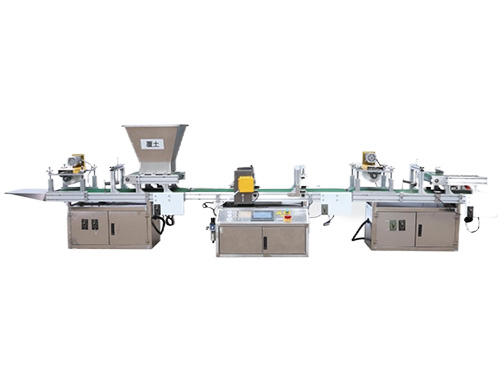
It adopts electrical integration and can be started by pressing the fully automatic button ...