





A Commercial Nursery Owner Guide to Scaling Seed Tray Operations
2026-06-20 17:33:31
Growing healthy seedlings begins long before seeds are placed into soil. The seed tray you choose shapes every stage of early plant development—from germination rates to root architecture at transplant time. Whether you operate a large commercial nursery or manage a small greenhouse operation, selecting the right tray can directly influence yield consistency and overall crop quality. The principles examined here draw on horticultural science research and manufacturer field experience to provide commercial growers with an evidence-based framework for seed tray decision-making.
Commercial seedling production is a precision operation where the choice of growing container directly affects the efficiency of every downstream process. Trays that are well-matched to their intended crop and growing conditions support uniform germination, healthy root development, and efficient transplant operations. Trays that are poorly matched create problems—root binding, uneven growth, transplant shock—that cost more to fix than the marginal price difference between a premium and an economy tray.

Bulk Procurement Strategies and Cost Optimization
Commercial nurseries producing at scale face procurement decisions that directly affect per-unit cost and supply chain reliability. Purchasing seed trays in bulk directly from a manufacturer typically yields 20 to 40 percent cost savings compared to retail channel procurement, and it ensures supply continuity during peak planting seasons when availability becomes constrained. However, bulk procurement introduces inventory carrying costs, storage requirements, and quality risk if the material does not meet specifications. The cost optimization calculation for bulk procurement must include all direct and indirect cost components. Direct costs include the purchase price, freight, and import duties where applicable. Indirect costs include inventory carrying cost (typically 15 to 25 percent of unit value per year when storage, capital, and insurance costs are included), quality failure cost (the expense of replacing non-conforming trays discovered after they enter production), and supply disruption cost (the revenue loss from running out of a critical tray format during peak season). Establishing clear quality specifications in advance protects the buyer and provides an objective basis for acceptance testing upon delivery. A specification document should cover material type and grade, cell count and dimensions with acceptable tolerance ranges, UV stabilization level, flexural modulus minimum values, color, surface finish, and any required certifications such as organic compliance declarations. A manufacturer that can commit to meeting these specifications in writing provides a level of quality assurance that verbal commitments cannot match.
Quality Control Checkpoints on Delivery
Acceptance testing upon delivery is a critical quality control checkpoint that should never be skipped, regardless of the reliability of the supplier relationship. A representative sample from each delivery batch should be inspected against the specification criteria before the batch is accepted into inventory. The minimum sampling rate should be one tray per 500 trays delivered, with a minimum sample size of five trays per batch regardless of batch size. Key inspection criteria include dimensional verification of cell count, cell spacing, and external tray dimensions using calipers or a coordinate measuring machine; visual inspection for surface defects, flash, and gate artifacts; flex test to verify wall stiffness meets minimum requirements; and a color comparison against the approved reference standard. Any tray batch failing to meet specification criteria should be documented, photographed, and reported to the manufacturer immediately for resolution through credit, replacement, or dispute resolution. Maintaining detailed receiving records—lot numbers, delivery dates, quantities, inspector names, and pass/fail results—creates a quality history database that enables trend analysis over time. A manufacturer with consistently passing quality records over multiple delivery cycles may be eligible for reduced inspection intensity, while a manufacturer with a pattern of minor non-conformances warrants enhanced inspection protocols.
Workflow Layout for Large-Volume Tray Handling
Large-volume tray operations require workflow layout planning that minimizes handling steps and optimizes the physical path that trays follow through the production system. The ideal layout positions receiving and storage areas adjacent to the tray preparation station, which flows directly into the seeder loading area, and then to the growing benches with direct access for the transplant team. Every additional transport step adds labor cost and handling damage risk. Tray cart design is a critical but often overlooked element of workflow optimization. Carts sized to the tray format with appropriate wheel diameter for the floor surface type, and with shelf heights set to a comfortable working height for loading and unloading, significantly reduce the ergonomic strain on workers. Overloaded carts cause handling difficulty, while underloaded carts represent inefficient equipment utilization. The number of carts needed in the system is determined by the production rate, cart cycle time, and the total number of stations in the workflow. Calculating the required cart inventory using a simple throughput model—the number of trays in process at any given time divided by the number of trays per cart—ensures sufficient equipment to sustain the target production rate without creating equipment bottlenecks that slow the line.
Tray Inventory Management and Rotation
Tray inventory management balances the cost of holding excess inventory against the risk of running short during peak production periods. Maintaining an inventory buffer of approximately 20 percent above peak-season tray requirements accounts for losses from cleaning damage, sorting rejects, and unexpected demand increases. This buffer should be recalculated each season based on actual usage data from the previous production cycle. FIFO inventory rotation—using the oldest trays in inventory first—is essential for maximizing tray service life and minimizing degradation-related losses. Trays degrade from UV exposure and surface wear with time in inventory, even when stored indoors. Using the oldest inventory first ensures that trays spend the minimum possible time in storage before entering production, maximizing the number of production cycles remaining before the tray reaches end-of-life. Inventory tracking systems, whether simple paper-based logs or integrated warehouse management software, should track tray format, quantity on hand, age or batch date, and usage cycle count. Knowing the approximate cycle count for each tray format in inventory enables proactive replacement planning rather than reactive responses to unexpected tray failures that can disrupt production.
Building Long-Term Manufacturer Relationships
Long-term relationships with tray manufacturers deliver tangible supply chain benefits that go beyond the transactional benefit of unit price. A manufacturer who understands your operation can provide proactive guidance on specification optimization, flag potential supply disruptions before they affect your production, and offer priority allocation during peak demand periods when tray availability is tight across the market. Effective long-term relationships require clear communication, mutual performance accountability, and periodic business reviews. Annual specification reviews provide an opportunity to refine requirements based on operational experience gained over the previous year. Quarterly or biannual performance reviews allow both parties to address quality trends and delivery performance before minor issues escalate into major disruptions. Many commercial operations establish a primary and secondary supplier relationship to balance the relationship depth benefits of a single preferred manufacturer with the supply security of a backup option. The secondary supplier serves as a contingency source and provides competitive pricing leverage that benefits the primary relationship. Both suppliers should be qualified to the same specification standard, with the primary supplier providing approximately 70 to 80 percent of annual volume and the secondary supplier providing the remainder.
Conclusion
Commercial growers who invest time in understanding tray specifications and matching them to their specific production requirements consistently outperform those who purchase on price alone. The right tray supports every stage of the seedling production cycle—from initial sowing through field transplant—and pays dividends in reduced crop losses, lower labor inputs, and more consistent harvest timing. Whether you are sourcing trays as a first-time commercial buyer or reviewing your current supplier against market alternatives, the principles outlined here provide a framework for making evidence-based decisions that protect your production outcomes.
University of California Agriculture and Natural Resources (UC ANR). (2022). Propagation of Nursery Crops: Principles and Practices. UC ANR Publications.
Australian Government Department of Agriculture, Fisheries and Forestry. (2023). Nursery Production and Biosecurity Guidelines. DAFF.

The CNC Seed Braiding Machine is a high-precision, fully automated agricultural equipment s...
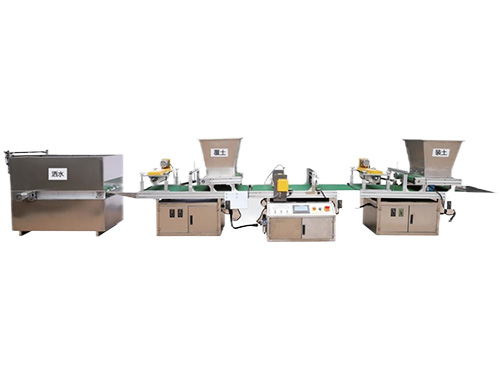
It adopts electrical integration and can be started by pressing the fully automatic button ...
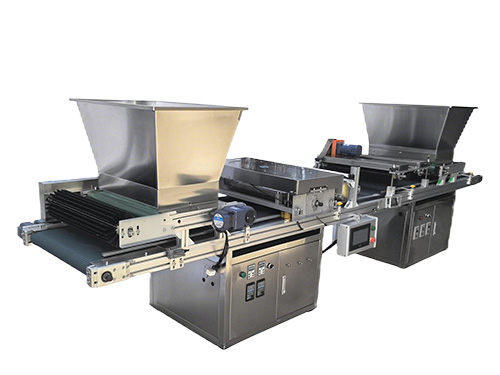
The XP750 seeder has stable performance, excellent product quality, simple and convenient o...
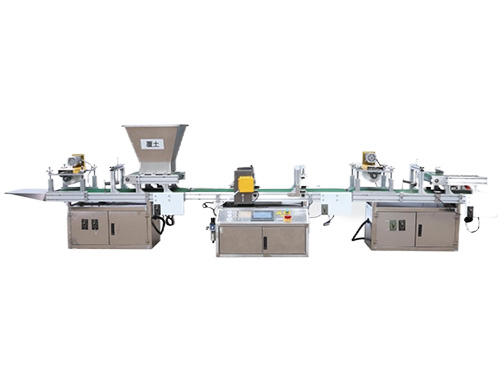
It adopts electrical integration and can be started by pressing the fully automatic button ...