





Seed Tray Selection Guide for Different Climate Zones and Growing Seasons
2026-06-17 17:13:30
Introduction
Growing healthy seedlings begins long before seeds are placed into soil. The seed tray you choose shapes every stage of early plant development—from germination rates to root architecture at transplant time. Whether you operate a large commercial nursery or manage a small greenhouse operation, selecting the right tray can directly influence yield consistency and overall crop quality. The principles examined here draw on horticultural science research and manufacturer field experience to provide commercial growers with an evidence-based framework for seed tray decision-making.
Commercial seedling production is a precision operation where the choice of growing container directly affects the efficiency of every downstream process. Trays that are well-matched to their intended crop and growing conditions support uniform germination, healthy root development, and efficient transplant operations. Trays that are poorly matched create problems—root binding, uneven growth, transplant shock—that cost more to fix than the marginal price difference between a premium and an economy tray.

Tropical Climate Considerations for Seed Tray Use
Tropical climates present the most demanding environment for plastic seed tray performance due to the combination of high temperatures, intense ultraviolet radiation, and elevated humidity that persists year-round. Trays deployed in tropical greenhouse environments face accelerated photodegradation compared to temperate zone operations, and the warm, humid conditions also accelerate biological fouling from algae, moss, and fungal growth on tray surfaces and in cell openings. For tropical production, tray material selection must prioritize UV stabilization and biological resistance. High-density polyethylene (HDPE) and UV-stabilized polypropylene copolymer trays are the preferred materials, with HALS-based UV stabilization packages providing the longest service life in high-UV environments. Unstabilized or low-stabilization trays in tropical environments can lose 40 to 60 percent of their flexural strength within a single production season, leading to premature cracking and breakage. Thermal expansion stress is another factor in tropical environments, where the temperature differential between hot daytime periods and cooler nighttime hours can cause cyclic expansion and contraction stresses in the tray material. While this thermal cycling does not typically cause immediate failure, it accelerates fatigue crack propagation in lower-quality materials. High-impact polymer grades with good fatigue resistance are preferred for tropical applications.
Temperate Climate and Seasonal Adaptation Strategies
Temperate climate zones offer more moderate production conditions but introduce the distinct challenge of freeze-thaw cycling during the shoulder seasons and in unheated structures. When moist growing medium in tray cells freezes, the expansion of water as ice can generate sufficient pressure to crack or distort lower-quality trays. This freeze damage may not be immediately apparent but becomes evident as the tray is handled during the subsequent production cycle, when cracked cells leak growing medium and compromise root zone integrity. For temperate operations using unheated or minimally heated structures, cold-tolerant tray materials are essential. Polypropylene copolymer grades formulated for low-temperature impact resistance maintain their flexibility and structural integrity at temperatures as low as minus 20 degrees Celsius, reducing freeze-damage risk. Trays manufactured from polystyrene may become brittle at cold temperatures and are more prone to freeze-damage cracking. The seasonal nature of temperate production creates scheduling challenges that affect tray inventory management. Spring planting season creates peak demand that can strain supply from manufacturers, while fall production periods often require different tray formats optimized for crops with shorter nursery residency in the cooling fall temperatures. Managing these seasonal format rotations efficiently requires advance planning and supplier coordination.
Arid and High-Temperature Growing Environments
Arid climates introduce thermal expansion stress and radiation loading challenges that require specific tray design considerations. The large diurnal temperature swings common in desert production regions—often 20 to 30 degrees Celsius between day and night—create repeated thermal expansion and contraction cycles that stress tray materials. Trays in these environments should be specified with high thermal stability polymer grades and wider dimensional tolerances to accommodate the thermal cycling without deformation. Low humidity in arid climates affects irrigation strategy and interacts with tray performance in ways that differ from humid environment growing. Rapid evaporation from exposed cell surfaces in arid conditions can lead to salt accumulation at the growing medium surface, which affects seed germination and seedling establishment. Trays with deeper cells provide a buffer zone of growing medium that resists rapid surface drying and salt accumulation, making them a practical choice for arid climate production. Radiation reflection from surrounding surfaces in arid growing environments adds to UV loading beyond direct solar exposure. Trays positioned on white reflective mulches or in structures with reflective glazing receive both direct and reflected UV radiation, effectively doubling the UV exposure intensity compared to standard greenhouse environments. Standard UV stabilization packages may be insufficient in these conditions, and enhanced UV stabilization should be specified.
UV Resistance Requirements by Climate Zone
UV resistance requirements scale roughly with the UV intensity of the production environment, which is determined by geographic latitude, altitude, and greenhouse glazing type. Tropical and equatorial regions with high year-round UV intensity require maximum UV stabilization levels. Temperate regions at mid-latitudes require moderate stabilization for seasonal outdoor use but can use standard stabilization for greenhouse-only applications. High-altitude production environments require upgraded stabilization regardless of latitude because UV intensity increases approximately 10 percent for every 1,000 meters of elevation gain. Greenhouse glazing type significantly modifies the UV environment inside the structure. Polycarbonate glazing with UV-inhibitor additives blocks most UV-B radiation and reduces tray UV loading compared to glass or standard polyethylene film. However, some growers intentionally use UV-transmitting glazing for crops where UV exposure produces desirable pigmentation or waxy cuticle development, which requires corresponding increases in tray UV stabilization. A manufacturer serving international markets typically offers multiple UV stabilization grades within the same product line, enabling buyers to select the appropriate stabilization level for their specific climate and glazing configuration. This tiered approach prevents growers from paying for unnecessary UV protection in low-UV environments while ensuring adequate protection for high-UV production environments.
Seasonal Rotation Planning for Commercial Nurseries
Commercial nurseries operating across multiple growing seasons benefit from a tray strategy that accommodates year-round production while managing inventory efficiently. This typically means maintaining a core tray format inventory for the primary season and supplementing with seasonal-format trays for secondary production cycles. Rotating between different cell count configurations across seasons maximizes bench utilization and smooths labor demand curves. Advance ordering from manufacturers is essential for securing tray allocation during peak demand periods, which typically occur in the eight weeks before the spring planting season and the four weeks before fall production. A manufacturer with sufficient production capacity and inventory management capability can support these advance ordering commitments, providing price advantages and allocation security for buyers who commit six to twelve months ahead.
Conclusion
Commercial growers who invest time in understanding tray specifications and matching them to their specific production requirements consistently outperform those who purchase on price alone. The right tray supports every stage of the seedling production cycle—from initial sowing through field transplant—and pays dividends in reduced crop losses, lower labor inputs, and more consistent harvest timing. Whether you are sourcing trays as a first-time commercial buyer or reviewing your current supplier against market alternatives, the principles outlined here provide a framework for making evidence-based decisions that protect your production outcomes.
University of Florida IFAS Extension. (2023). Nursery Container and Tray Selection for Landscape Plant Production. UF/IFAS.
Ontario Ministry of Agriculture, Food and Rural Affairs (OMAFRA). (2022). Greenhouse and Nursery Crop Production. OMAFRA.

The CNC Seed Braiding Machine is a high-precision, fully automated agricultural equipment s...
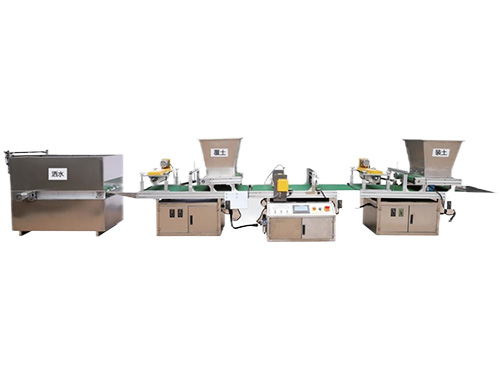
It adopts electrical integration and can be started by pressing the fully automatic button ...
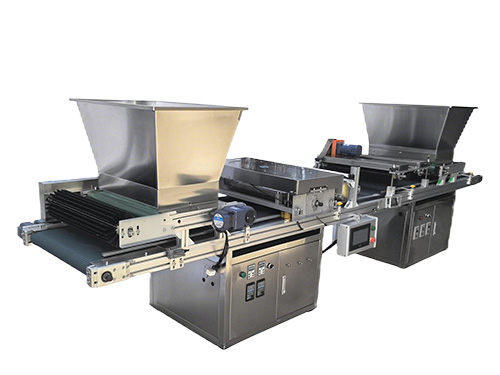
The XP750 seeder has stable performance, excellent product quality, simple and convenient o...
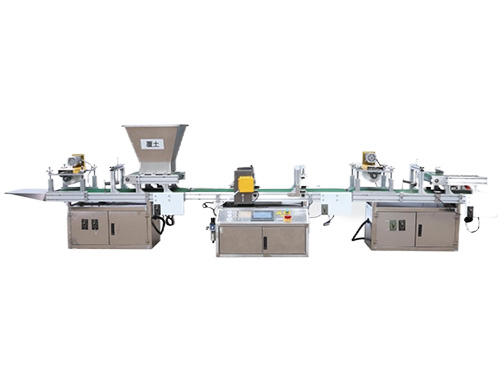
It adopts electrical integration and can be started by pressing the fully automatic button ...