





Round vs Square Seed Tray Cells: Which Shape Drives Better Growth
2026-06-14 17:11:21
Introduction
Growing healthy seedlings begins long before seeds are placed into soil. The seed tray you choose shapes every stage of early plant development—from germination rates to root architecture at transplant time. Whether you operate a large commercial nursery or manage a small greenhouse operation, selecting the right tray can directly influence yield consistency and overall crop quality. The principles examined here draw on horticultural science research and manufacturer field experience to provide commercial growers with an evidence-based framework for seed tray decision-making.
Commercial seedling production is a precision operation where the choice of growing container directly affects the efficiency of every downstream process. Trays that are well-matched to their intended crop and growing conditions support uniform germination, healthy root development, and efficient transplant operations. Trays that are poorly matched create problems—root binding, uneven growth, transplant shock—that cost more to fix than the marginal price difference between a premium and an economy tray.

Root Development and Air Pruning Behavior
The geometry of each cell in a seed tray fundamentally shapes how roots navigate the confined space of the plug. In traditional round cells, roots tend to grow along the curved wall in a spiraling pattern, following the path of least resistance as they encounter the smooth plastic surface. This behavior, known as root circling, is a well-documented phenomenon in containerized plant production. While mild root circling may not catastrophically harm the plant, severe circling creates a root architecture that is poorly suited for transplanting and slower to establish in the field. Square and pyramidal cell designs disrupt the smooth circular path and guide roots toward the corners and the drainage opening at the cell base. This geometric constraint encourages roots to reach the drainage hole more quickly, where air exposure at the root tip triggers air root pruning. The pruning signal stimulates lateral branching within the growing medium, producing a denser, more fibrous root system with more root tips per unit volume of medium. Research in horticultural science journals has documented transplant survival improvements of 15 to 30 percent for crops grown in air-pruning cell formats compared to standard round cells. The practical significance of this difference becomes apparent when crops are evaluated at transplant time. Seedlings from air-pruning cell formats typically show better root-to-shoot ratios, more uniform top growth, and faster field establishment. For commercial operations where stand uniformity directly affects yield and harvest timing, cell shape selection is an agronomic decision with measurable economic consequences.
Drainage and Moisture Distribution
Drainage performance differs between cell shapes in ways that affect growing medium moisture dynamics. Round cells tend to hold water in a cone-shaped zone at the cell center, which can create perched water tables in fine-textured growing media if drainage holes are undersized. Square cells with tapered walls promote more complete water drainage toward the corners where drainage holes are typically located, reducing the risk of waterlogging in the cell center. In automated irrigation systems where water delivery is precisely metered, cell-to-cell consistency in drainage behavior is essential for maintaining uniform moisture across all cells in a tray. Square cell designs with consistent taper angles produce more uniform drainage behavior from cell to cell, which supports precision irrigation programming and reduces overwatering or underwatering in specific cells.
Growing Medium Filling and Handling
Growing medium filling processes perform differently in round versus square cells. Round cells tend to create voids in the corners when the medium is dispensed, which can lead to uneven medium distribution and air pockets that cause inconsistent germination. Square cells fill more completely with fewer voids because the corners provide natural medium retention points. This difference is particularly significant in high-speed automated seeder lines where medium dispensing accuracy is critical. Hand-filling operations also benefit from square cell geometry. Workers filling trays by hand find it easier to compact medium uniformly into square cells because the corners provide tactile feedback that indicates when the cell is properly filled. Round cells offer fewer tactile cues and workers tend to underfill or overfill them inconsistently, leading to germination variability across the tray.
Machine Compatibility with Automated Systems
Automated systems for seedling production require consistent cell geometry to function reliably. Pneumatic seeder systems that dispense individual seeds into each cell depend on cell interior geometry being consistent within tight tolerances. Round cells have a natural circular cross-section that varies minimally between cells in the same tray, which provides good consistency for seed drop accuracy. Square cells with sharp corners can cause seed bounce and irregular positioning if the seeder head is not designed for non-round cell geometry. Robotic gripper systems for transplanting face similar constraints. Grippers designed for square-cell trays use corner engagement points that provide a secure hold on the root ball, while grippers for round cells use tapered cone engagement. Mixing cell geometries in an automated line requires multiple gripper configurations or a reconfigurable gripper system, both of which add cost and complexity. Standardizing on a cell geometry that matches the dominant automated equipment in the operation simplifies the system design.
Selecting the Right Cell Shape for Your Crop
Choosing between round and square cells ultimately depends on the specific priorities of each operation. For crops where air root pruning is agronomically beneficial—tree seedlings, shrub liners, and other long-nursery-phase crops—square or pyramidal cell formats provide meaningful advantages in root architecture and transplant performance. For short-cycle crops where nursery residency is brief and root quality at transplant is less critical, round cells offer cost advantages and simplicity that may outweigh the marginal performance benefits of square geometries. Many commercial growers maintain both cell geometries in their production system, deploying square or air-pruning formats for high-value crops where root quality translates directly to market price, and round cell formats for volume production of commodity vegetable transplants. A manufacturer offering both cell geometries in comparable quality grades enables this differentiated production strategy.
Conclusion
Commercial growers who invest time in understanding tray specifications and matching them to their specific production requirements consistently outperform those who purchase on price alone. The right tray supports every stage of the seedling production cycle—from initial sowing through field transplant—and pays dividends in reduced crop losses, lower labor inputs, and more consistent harvest timing. Whether you are sourcing trays as a first-time commercial buyer or reviewing your current supplier against market alternatives, the principles outlined here provide a framework for making evidence-based decisions that protect your production outcomes.
European Nursery Stock Association (ENA). (2023). Technical Guidelines for Commercial Nursery Production. ENA.
Royal Horticultural Society (RHS). (2023). Commercial Propagation and Seedling Production Guidelines. RHS.

The CNC Seed Braiding Machine is a high-precision, fully automated agricultural equipment s...
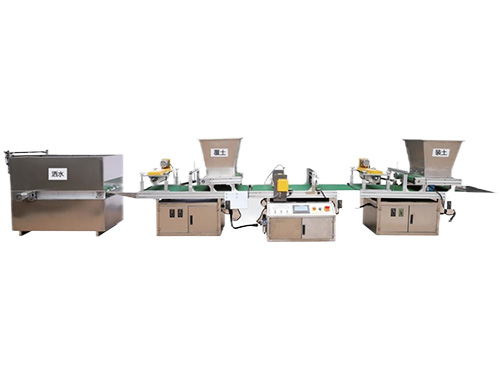
It adopts electrical integration and can be started by pressing the fully automatic button ...
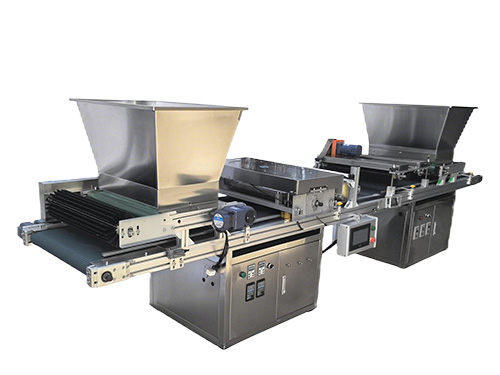
The XP750 seeder has stable performance, excellent product quality, simple and convenient o...
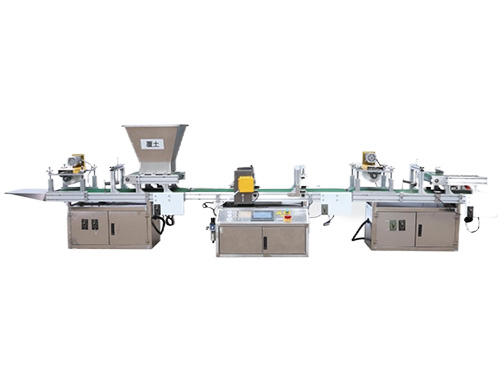
It adopts electrical integration and can be started by pressing the fully automatic button ...