





Using Seed Trays for Organic Seedling Production: Compliance and Best Practices
2026-06-26 18:13:53
Introduction
Growing healthy seedlings begins long before seeds are placed into soil. The seed tray you choose shapes every stage of early plant development—from germination rates to root architecture at transplant time. Whether you operate a large commercial nursery or manage a small greenhouse operation, selecting the right tray can directly influence yield consistency and overall crop quality. The principles examined here draw on horticultural science research and manufacturer field experience to provide commercial growers with an evidence-based framework for seed tray decision-making.
Commercial seedling production is a precision operation where the choice of growing container directly affects the efficiency of every downstream process. Trays that are well-matched to their intended crop and growing conditions support uniform germination, healthy root development, and efficient transplant operations. Trays that are poorly matched create problems—root binding, uneven growth, transplant shock—that cost more to fix than the marginal price difference between a premium and an economy tray.

Organic Certification Requirements for Seedling Production
Organic certification bodies impose specific requirements on all materials that contact organic crops during production, including seed trays. Under the USDA National Organic Program regulations, containers and tools used in organic production must not contain prohibited substances in amounts that could contaminate organic crops. While trays are not explicitly prohibited, the materials and additives used in their manufacture must be declared and verified to exclude substances that appear on the national list of prohibited materials. Key prohibited substances that may appear in lower-quality plastic tray formulations include bisphenol A (BPA), which has been the subject of regulatory attention due to endocrine disruption concerns; certain phthalate plasticizers used to improve flexibility in PVC-based tray materials; heavy metal stabilizers such as cadmium and lead compounds used in some lower-cost PVC formulations; and synthetic colorants or pigments that may contain restricted aromatic amines. A manufacturer serving the organic market should be able to provide a declaration of compliance that specifically addresses these substance categories. Organic inspectors will review tray sourcing records, material specification sheets, and compliance declarations as part of the annual certification audit. Operations that cannot document the organic compliance of their tray materials risk certification suspension or removal, making supplier documentation a critical compliance requirement. Some organic certifying agencies maintain lists of approved container and tool suppliers, and sourcing from an approved supplier list simplifies the documentation burden.
Tray Material Selection for Certified Organic Operations
Material selection for organic-compliant trays begins with choosing polymers that are inherently free of the most problematic additive categories. Polypropylene copolymer and high-density polyethylene are both thermoplastic polymers that can be manufactured without the prohibited additives common in PVC formulations, making them the preferred material base for organic-compliant trays. The specific polymer grades and additive packages used by each manufacturer should be verified with supporting documentation. Recycled-content trays are an area where organic compliance requires careful attention. Post-consumer recycled plastic may contain contaminants from its previous use cycle, and the recycling process may introduce processing aids or residual substances that are prohibited under organic regulations. Trays manufactured from post-industrial recycled content are generally lower-risk because the source materials are controlled manufacturing byproducts rather than post-consumer waste streams. Any recycled-content tray should be supported by a material declaration that lists all input materials and processing aids. Biodegradable or compostable tray materials are an emerging category that offers end-of-life disposal advantages but requires careful evaluation of their organic compliance status. Some biodegradable plastics are manufactured from bio-based feedstocks but still require synthetic polymerization catalysts or additives that may be prohibited under organic regulations. Products certified under the EN 13432 standard or equivalent compostability certifications have been tested for compostable disintegration and ecotoxicity, but organic certification bodies make their own determination of compliance independently of compostability certifications.
Preventing Contamination and Chemical Residues
Preventing chemical contamination in organic seedling production extends beyond the initial tray material selection to encompass the entire tray handling, cleaning, and storage lifecycle. Trays used in organic production should be dedicated exclusively to organic blocks, never shared with conventional production without a thorough cleaning and residue verification protocol. The risk of residual chemical contamination from previous conventional use—including pesticide residues on tray surfaces—cannot be fully eliminated by cleaning alone. Chemical sterilization agents used on organic trays must themselves be compliant with organic regulations. Hydrogen peroxide in 3 to 5 percent concentration is permitted in most organic certification programs as it decomposes to water and oxygen without leaving toxic residues. Peroxyacetic acid products are also generally permitted. Quaternary ammonium compounds are prohibited under many organic certification programs and should not be used in organic tray sanitation protocols. Steam sterilization at 80 degrees Celsius is the most straightforward approach for organic operations, as it requires no chemical agents at all. Spatial separation between organic and conventional production zones in the greenhouse prevents drift of prohibited substances from conventional areas into organic zones. Ventilation intakes, spray equipment, and material handling pathways should be designed to prevent cross-contamination. Organic certification inspectors will assess the adequacy of these separation measures as part of the organic system plan review.
Composting and Sustainable End-of-Life Disposal
End-of-life tray disposal is an increasingly important sustainability consideration for organic operations that wish to align their practices with the broader environmental values of organic agriculture. Standard polypropylene and polystyrene trays are technically recyclable through industrial plastic recycling streams, though the small cell size and contamination with growing medium residues can complicate processing. Growers should verify with their local recycling service provider that horticultural plastics are accepted in their program. An emerging alternative is tray take-back programs offered by select manufacturers, where spent trays are collected, professionally cleaned, and processed into recycled-content tray stock. These closed-loop programs divert plastic from landfill, reduce demand for virgin polymer production, and provide the organic grower with a documented end-of-life pathway. Some take-back programs are specifically positioned for organic-compliant trays, with third-party verification that the cleaning and recycling process maintains organic compliance. Composting of spent growing medium from organic seedling production is a core organic practice that reduces waste and produces a valuable soil amendment. The medium from organic seedling production should be composted according to organic program requirements, including temperature and residence time specifications that ensure pathogen destruction. Trays themselves are not typically compostable under these same requirements, but the medium residues they contain are a significant organic waste stream that deserves systematic management.
Documentation and Traceability Best Practices
Documentation and traceability are foundational requirements for organic certification and increasingly expected by commercial buyers in conventional supply chains. A complete traceability record for seed trays should include lot numbers linked to material compliance certificates, cleaning and sterilization logs showing the methods and agents used, storage conditions and duration records, and usage records by production block showing which tray lots were used for which organic crop batches. Digital record-keeping systems simplify this documentation burden and enable the efficient retrieval of records during organic certification audits. The most effective systems integrate tray traceability data with nursery management software, automatically generating the audit trail as production records are created rather than requiring manual compilation after the fact. A manufacturer that provides digitally accessible lot traceability documentation—including compliance declarations and material specification sheets—makes it much easier for growers to maintain these records.
Conclusion
Commercial growers who invest time in understanding tray specifications and matching them to their specific production requirements consistently outperform those who purchase on price alone. The right tray supports every stage of the seedling production cycle—from initial sowing through field transplant—and pays dividends in reduced crop losses, lower labor inputs, and more consistent harvest timing. Whether you are sourcing trays as a first-time commercial buyer or reviewing your current supplier against market alternatives, the principles outlined here provide a framework for making evidence-based decisions that protect your production outcomes.
Royal Horticultural Society (RHS). (2023). Commercial Propagation and Seedling Production Guidelines. RHS.
University of California Agriculture and Natural Resources (UC ANR). (2022). Propagation of Nursery Crops: Principles and Practices. UC ANR Publications.

The CNC Seed Braiding Machine is a high-precision, fully automated agricultural equipment s...
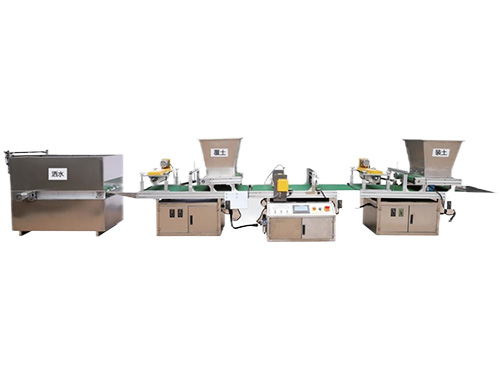
It adopts electrical integration and can be started by pressing the fully automatic button ...
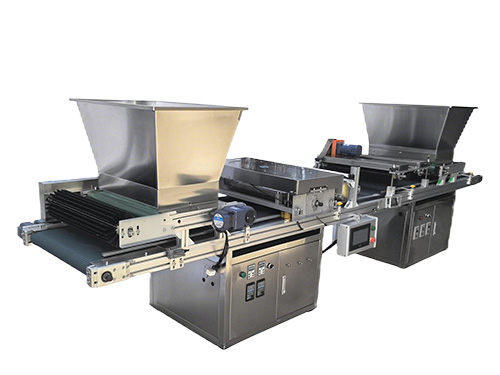
The XP750 seeder has stable performance, excellent product quality, simple and convenient o...
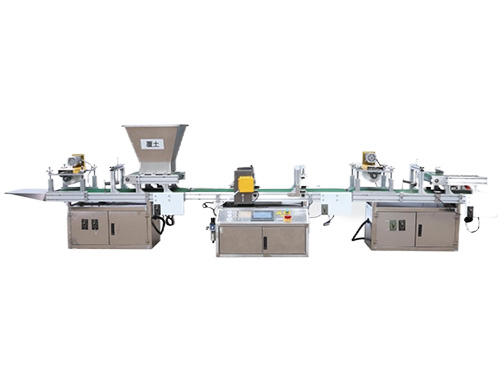
It adopts electrical integration and can be started by pressing the fully automatic button ...