





Seed Starter Trays for Agriculture: A Complete Guide for Modern Farmers
2026-04-25 17:05:49
Agricultural seed starter trays have emerged as a fundamental tool in contemporary farming practices, particularly in large-scale commercial operations and greenhouse cultivation. By enhancing the consistency of seed germination, optimizing root system development, and enabling streamlined transplanting processes, these trays empower farmers to boost productivity while cutting down on labor costs. This guide will delve into the working principles of agricultural seed starter trays, their various types, material compositions, practical applications, and key selection criteria, all tailored to meet the actual demands of agricultural production.
1. The Role of Seed Starter Trays in Modern Agriculture
Seed starter trays are engineered to provide a controlled growing environment for seed germination and the early growth phase of seedlings. In agricultural settings, they ensure consistent plant spacing, steady moisture retention, and more effective nutrient management during the most vulnerable stage of a plant’s life cycle. By adopting standardized agricultural seed starter trays, farmers can drastically reduce seed wastage, improve seedling emergence rates, and guarantee consistent crop growth—especially in mechanized farming systems where uniformity is key.
2. Why Seed Starter Trays Are Indispensable for Commercial Farming
Efficiency and uniformity are paramount in modern agriculture, and seed starter trays deliver on both fronts by allowing farmers to:
Standardize the growing conditions for all seedlings
Cut down on labor required for transplanting work
Enhance control over irrigation and fertilizer application
Boost the success rate of seed germination
Scale up production in an efficient manner
These advantages position agricultural seed starter trays as a core component in both open-field farming and greenhouse cultivation systems.
3. Main Types of Seed Starter Trays for Agriculture
Several types of trays are commonly used for starting seeds in agricultural settings, each designed for specific purposes:
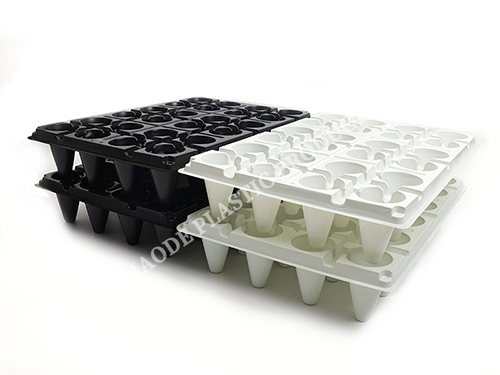
Plug trays (cell trays): Ideal for fostering individual seedling growth and enabling uniform transplanting without root disturbance
Propagation trays: Specifically designed for rooting cuttings and supporting early-stage seedling development
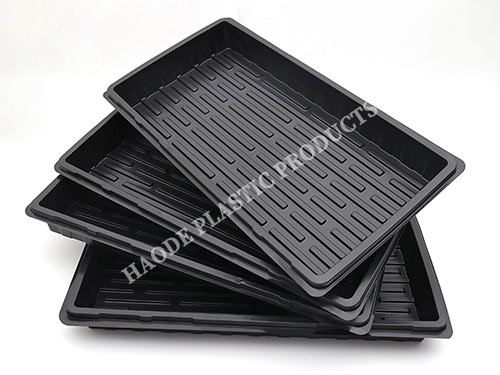
Flat trays: Suitable for dense sowing or temporary management of seedlings during the transition period
Deep cell trays: Crafted for crops that require robust, well-developed root systems to thrive
Each type plays a unique role in the agricultural production cycle, and the choice of tray depends on the crop type and farming method employed.
4. Material Selection and Durability Analysis
The majority of agricultural seed starter trays are manufactured using high-performance plastic materials, primarily polystyrene (PS) and polyethylene terephthalate (PET)—both of which are widely utilized in modern agricultural nursery production. PS seedling trays are lightweight, cost-effective, and offer high molding precision. They are commonly used for single-use or short-cycle seedling production, especially in large-scale commercial nurseries where cost efficiency is a top priority. In contrast, PET seedling trays boast greater strength and toughness, along with improved impact resistance and structural stability. This makes them suitable for repeated use and able to withstand the demanding conditions of agricultural environments. Key advantages of these plastic trays include:
Compatibility with mechanized sowing and standardized production systems
Excellent water resistance and environmental stability
Adaptability to different crop cycles and growing conditions
A balanced combination of cost efficiency and durability
Compared to other materials, PS and PET agricultural seed starter trays offer an optimal balance between cost and performance, making them the mainstream choice in modern commercial agriculture and greenhouse propagation systems.
5. Standard Sizes and Cell Configurations
Agricultural seed starter trays are available in a range of cell counts to accommodate the needs of different crops. Common configurations include 32, 50, 72, 105, 128, and 200 cells per tray. Trays with smaller cells are suitable for fast-growing crops, while larger cells are ideal for crops that require longer nursery periods or more robust root systems. Selecting the appropriate tray size helps balance root space, water use efficiency, and the optimal utilization of greenhouse or field space.
6. Agricultural Applications Across Different Crops
Agricultural seed starter trays are widely used across a variety of crop categories, including:
Vegetables: Tomatoes, peppers, cucumbers, and lettuce
Field crops: Maize seedlings, tobacco, and oil crops
Herbs and spices: Basil, coriander, and parsley
Forestry: Tree seedlings and reforestation initiatives
Their versatility makes them suitable for both small-scale farms and large industrial agricultural enterprises.
7. Efficiency Benefits in Modern Farming Systems
The use of seed starter trays significantly enhances agricultural efficiency by:
Improving the uniformity of seed germination
Reducing transplant shock and seedling mortality rates
Conserving water and fertilizer usage
Supporting the operation of mechanized farming systems
These benefits directly translate to more stable crop yields and lower production costs, making seed starter trays a worthwhile investment for modern farmers.
8. How to Choose the Right Seed Starter Trays
When selecting agricultural seed starter trays, farmers should take the following factors into consideration:
Crop type and the specific needs of root development
The quality and thickness of the tray material
The design of drainage and airflow features
Compatibility with seeding machines
Reusability and service life
Opting for low-quality trays can result in uneven germination, poor root development, and higher long-term production costs.
9. Industry Trend: Mechanization and Smart Agriculture
With the rise of smart agriculture and automated planting systems, seed starter trays are becoming increasingly standardized. Automated seeders and transplanting machines require trays with precise dimensions to ensure smooth and efficient operation. This trend is driving demand for high-precision plug trays that are compatible with modern agricultural equipment, further enhancing the efficiency of large-scale farming operations.
10. Expert Insight: Why Tray Quality Impacts Yield
From an agronomic perspective, the root development that occurs in the early seedling stage directly determines the final performance of the crop. Poorly designed trays can restrict root expansion, leading to weak seedlings and reduced crop yields. Experienced growers understand that investing in high-quality seed starter trays is more than just a material choice—it is a productivity strategy that directly influences the profitability of their farms.
Conclusion
Agricultural seed starter trays are essential tools in modern farming systems, as they improve germination rates, support uniform seedling growth, and enable efficient large-scale production. By selecting the right tray type, material, and size, farmers can significantly enhance both productivity and crop quality. For modern agriculture, seed starter trays are more than just containers—they are a key foundation of efficient, sustainable, and profitable farming systems.
References
GB/T 7714:Effects of Plug Tray Cell Volume on Seedling Vigour and Hydroponic Lettuce Production. Horticultura Brasileira
MLA:Optimizing Potato Seedling Production in Plug Trays: Effects of Substrate Properties and Watering Intervals. SpringerLink
APA:Standardization of Seed Starter Tray Sizes for Mechanized Agricultural Production. Journal of Horticultural Science & Biotechnology

The CNC Seed Braiding Machine is a high-precision, fully automated agricultural equipment s...
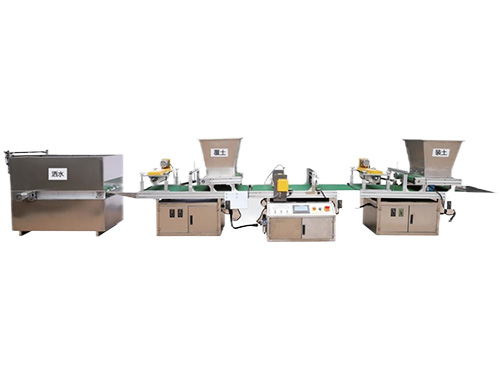
It adopts electrical integration and can be started by pressing the fully automatic button ...
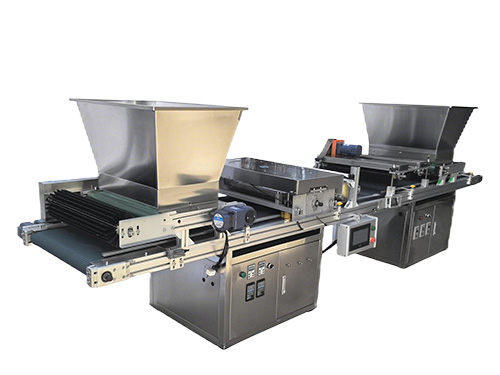
The XP750 seeder has stable performance, excellent product quality, simple and convenient o...
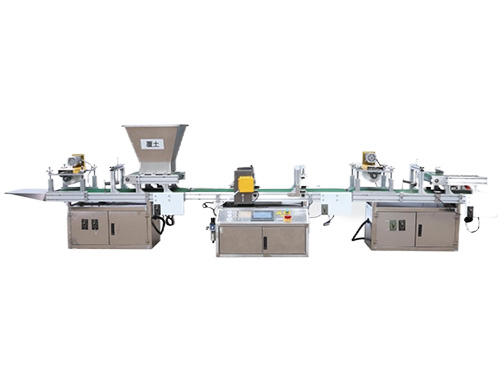
It adopts electrical integration and can be started by pressing the fully automatic button ...