





Best Seedling Trays for Greenhouse Use: Types, Sizes, and Applications
2026-04-22 17:02:05
Seedling trays designed for greenhouse applications are indispensable in contemporary horticultural practices, facilitating effective seed propagation, consistent plant growth, and scalable production capacity. Whether utilized in commercial nurseries or professional greenhouse farming operations, choosing an appropriate tray system exerts a direct influence on seed germination rates, root system development, and the overall quality of transplants. This article elaborates on the various types, specifications, and practical applications of greenhouse seedling trays, equipping growers with the knowledge to make well-informed, professional choices based on industry norms and hands-on experience.
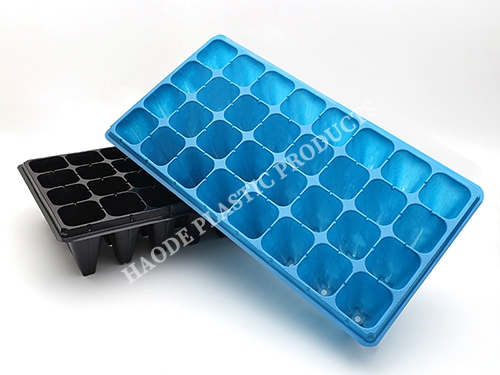
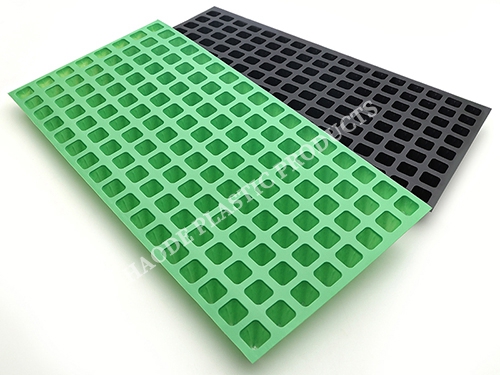
1. The Functional Importance of Seedling Trays in Greenhouse Cultivation
Seedling trays are engineered to establish a controlled microenvironment tailored to seed germination and the early growth stages of plants. Within greenhouse setups, they guarantee even moisture distribution, consistent plant spacing, and effective nutrient uptake by young seedlings. High-quality nursery trays minimize transplant shock and boost seedling survival rates, making them a cornerstone of large-scale propagation systems. From vegetable crops to ornamental plants, tray-based cultivation ensures uniformity in growth and enables seamless scaling of production.
2. Primary Types of Seedling Trays for Greenhouse Use
Greenhouse seedling trays are categorized into several types, each crafted to meet the specific needs of different crops:
Plug trays: Perfect for producing uniform seedlings, featuring individual cell structures that prevent root entanglement.
Propagation trays: Suited for the early rooting phase of cuttings and young plantlets.
Flat trays: Ideal for dense sowing or temporary holding of seedlings during the transition period.
Deep cell trays: Specifically designed for crops that require robust, well-developed root systems to support long-term growth.
Each type fulfills a unique role in greenhouse propagation, and selecting the right tray directly enhances overall production efficiency.
3. Standard Sizes and Cell Arrangements
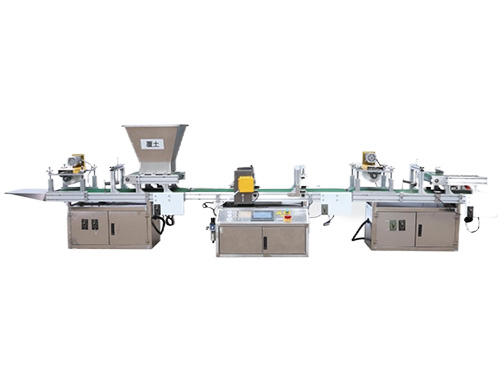
The size of seedling trays is generally determined by the number of cells and their depth. Common configurations include trays with 32, 50, 72, 105, 128, and 200 cells. Trays with smaller cells are used for fast-growing crops, while larger cell volumes cater to long-cycle plants that need more space for root development. Choosing the correct size is crucial for balancing root space, irrigation efficiency, and optimal utilization of greenhouse space. Professionally manufactured plastic seedling trays ensure dimensional precision, making them compatible with automated sowing equipment commonly used in modern greenhouses.
4. Material Choice: Plastic vs. Alternative Options
Most modern greenhouse operations depend on durable plastic materials for seedling trays, thanks to their reusability and cost-effectiveness.Polystyrene trays offer exceptional resistance to deformation and chemical damage from fertilizers or pesticides. On the other hand, biodegradable trays are gaining traction in sustainable agriculture initiatives, though they often have limitations in terms of durability and long-term reuse in greenhouse environments. For industrial-scale greenhouse operations, plastic seedling trays remain the preferred option due to their sturdiness, longevity, and compatibility with mechanized planting and transplanting systems.
5. Applications Across Various Greenhouse Crops
The use of seedling trays varies according to the type of crop being cultivated:
Vegetables: Seedlings of tomatoes, peppers, cucumbers, and other common greenhouse vegetables.
Floriculture: Ornamental flowers, bedding plants, and decorative foliage plants.
Herbs: Propagation of culinary herbs such as basil, parsley, and mint.
Forestry: Seedlings for tree planting and reforestation projects.
Each crop has distinct root system requirements and spacing needs, making tray selection a critical agronomic decision. Using appropriately designed propagation trays enhances transplant performance and reduces losses during the planting process.
6. Efficiency Advantages in Commercial Greenhouse Operations
Modern greenhouse management emphasizes precision and scalability, and seedling trays play a key role in boosting operational efficiency by:
Standardizing growing conditions for all seedlings, ensuring uniform growth.
Reducing labor costs associated with manual transplanting and seed sowing.
Improving the management of irrigation and fertilizer application, minimizing waste.
Enhancing the uniformity of seed germination, leading to more consistent crop stands.
These benefits make nursery trays an essential component of professional greenhouse infrastructure, particularly in large-scale agricultural production settings.
7. Key Quality Factors to Evaluate Before Purchase
When selecting seedling trays for greenhouse use, growers should carefully assess the following quality factors:
Material thickness and overall durability, ensuring long-term reuse.
Cell design and drainage efficiency, preventing waterlogging and root rot.
Reusability and resistance to deformation under repeated use and varying temperatures.
Compatibility with automated seeding and transplanting machines.
Resistance to heat and UV radiation, which can degrade materials over time in greenhouses.
Low-quality trays can result in uneven germination, structural damage, and increased long-term operational costs. Therefore, sourcing trays from reputable manufacturers is vital for maintaining consistent agricultural output.
8. Industry Trends and Integration with Smart Greenhouses
With the advancement of automated agriculture, seedling trays are increasingly integrated into smart greenhouse systems. Precision seeding machines and conveyor-based transplant systems require trays with standardized dimensions to ensure seamless operation. This trend is driving demand for high-precision plug trays and modular tray systems that support automation, thereby improving both the speed and accuracy of commercial farming operations.
9. Expert Perspective: How Tray Selection Affects Crop Yield
From an agronomic standpoint, the root architecture developed during the seedling stage directly influences the final productivity of plants. Poorly designed trays can restrict root expansion, resulting in weak transplants that yield less during harvest. Experienced greenhouse operators recognize that investing in professional-grade seedling trays is not merely a material choice—it is a strategic decision to optimize crop yields, backed by horticultural science and practical expertise.
Conclusion
Choosing the right seedling trays for greenhouse use is vital for achieving high germination rates, robust root systems, and efficient greenhouse operations. By understanding the different types, sizes, materials, and applications of these trays, growers can significantly improve production results and reduce operational risks. For professional greenhouse growers, a high-quality tray system serves as the foundation of successful seed propagation and long-term crop productivity.
References
GB/T 7714:Design and Optimization of an Intelligent Bidirectional Conveying Device for Greenhouse Seedling Trays. Transactions of the Chinese Society of Agricultural Engineering
MLA:The Assessment of Different Growth Mediums for Plug Cultivation in a Controlled Environment. Journal of Environmental Horticulture
APA:Effects of Plug Tray Cell Size on the Growth of Atractylodes Chinensis Seedlings. International Journal of Agricultural and Biological Engineering

The CNC Seed Braiding Machine is a high-precision, fully automated agricultural equipment s...
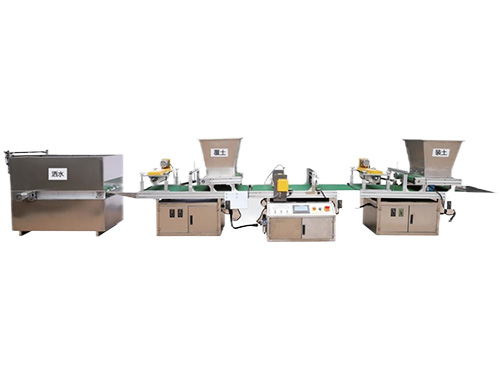
It adopts electrical integration and can be started by pressing the fully automatic button ...
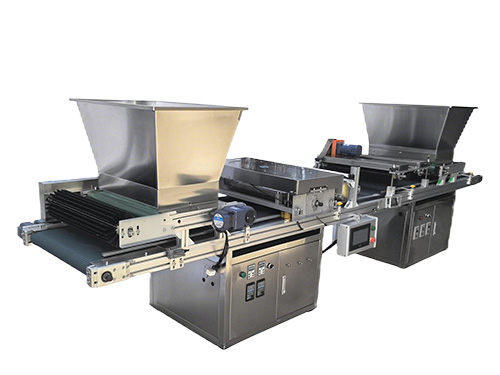
The XP750 seeder has stable performance, excellent product quality, simple and convenient o...
It adopts electrical integration and can be started by pressing the fully automatic button ...