





Nursery Trays Explained: Structure, Function, and Benefits
2026-01-23 17:27:12
Why Nursery Trays Matter in Modern Growing
In professional horticulture, efficiency and consistency define success. From commercial greenhouses to plant nurseries and agricultural startups, growers rely on controlled environments to produce healthy, uniform plants. One essential tool supporting this process is the nursery trays system.
Nursery trays provide structured spaces for seeds, cuttings, and young plants to develop stable root systems before transplanting. Compared with loose soil beds, nursery trays offer better organization, water management, and space utilization.
For buyers sourcing in volume, working with a nursery trays manufacturer with stable production and factory capacity is equally important. Factory-level manufacturing ensures consistent dimensions, material strength, and reliable bulk supply for long-term growing operations.
This article explains the structure, function, benefits, and production logic behind nursery trays, helping growers and buyers understand why they are a core component in modern propagation systems.
What Are Nursery Trays?
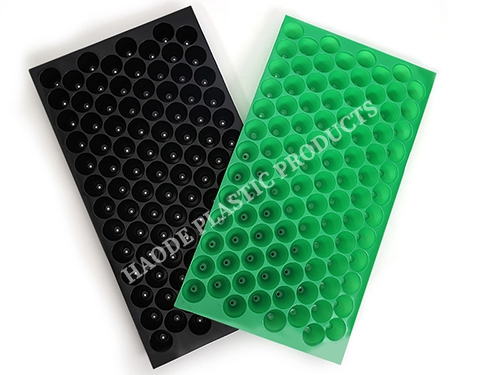
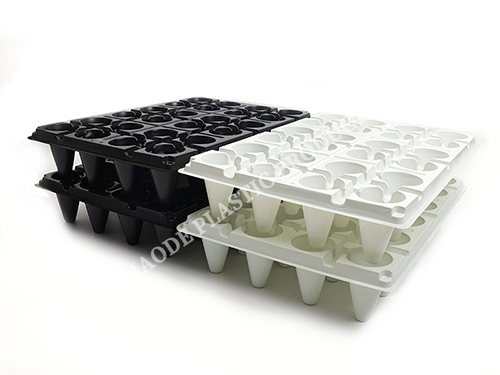
Nursery trays are molded planting containers designed to hold growing media and young plants during early growth stages. They are commonly used for seed germination, cloning, plug production, and transplant preparation.
Unlike traditional open beds, nursery trays divide space into uniform cells that support consistent moisture distribution and root development. Most trays are manufactured from durable polymer materials, making them lightweight, reusable, and easy to sanitize.
Key features include:
·Individual planting cells
·Bottom drainage openings
·Structural rigidity for handling
·Stackable transport design
·Long service life
Whether used in greenhouses, nurseries, or vertical farming, nursery trays improve control over plant density, irrigation, and hygiene during early growth stages.
Structural Design and Material Performance
The performance of nursery trays depends heavily on their structural geometry and material formulation. Factory-engineered trays are designed to balance strength, drainage, and root guidance.
Core design elements include:
·Cell shape and depth for root direction control
·Drainage holes to prevent waterlogging
·Reinforced edges for repeated handling
·Smooth interior surfaces to protect roots
·Polymer composition for flexibility and durability
The cell structure helps roots grow downward instead of spiraling, improving transplant success later. At the same time, drainage holes allow excess water to escape, preventing fungal growth and oxygen deficiency in the root zone.
From a manufacturer production perspective, precision molds and controlled polymer blends ensure that each nursery tray performs consistently across large planting areas.
Functional Role in Plant Propagation
Nursery trays serve multiple operational purposes beyond simply holding soil. They create an organized propagation system that supports plant health and labor efficiency.
Key functional roles include:
·Uniform germination control
·Efficient water distribution
·Root zone aeration
·Space optimization
·Easy plant transport
Because each plant grows in an individual cell, irrigation becomes more predictable and balanced. Growers can apply water and nutrients evenly across thousands of plants at once.
Nursery trays also simplify handling. Instead of moving individual pots, workers transport entire trays, improving labor productivity and reducing plant damage during movement between production stages.
Advantages of Using Nursery Trays
Using nursery trays offers technical, biological, and commercial benefits for growers and wholesale buyers.
1. Improved Root Development
Structured cells guide roots downward and outward, reducing tangling and improving transplant survival rates.
2. Moisture and Drainage Balance
Drainage openings prevent saturation while maintaining enough moisture for seedling development.
3. Space Efficiency
Nursery trays allow high-density planting without compromising airflow or plant health.
4. Reusability and Hygiene
Durable polymer trays can be cleaned and reused, reducing long-term operating costs and disease risks.
5. Factory-Controlled Consistency
A professional nursery trays factory with production capability ensures dimensional accuracy, uniform cell volume, and batch consistency for large-scale supply.
Together, these benefits make nursery trays essential for commercial propagation, transplant operations, and greenhouse production cycles.
Manufacturing and Production Process
Reliable nursery trays begin with professional factory manufacturing. A nursery trays manufacturer focuses on precision tooling, polymer formulation, and inspection systems.
Typical production workflow includes:
1.Raw material selection – high-grade polymer for flexibility and impact resistance
2.Injection molding or thermoforming – shaping tray geometry
3.Cooling and stabilization – locking in structure
4.Edge trimming and sizing – ensuring uniform dimensions
5.Surface finishing – improving handling comfort
6.Inspection and testing – verifying strength and drainage performance
Large-scale manufacturer production systems enable continuous output, making it possible to support greenhouse operations with predictable supply schedules.
Factory automation also ensures that every nursery tray matches the same specification, reducing variation that could affect irrigation behavior or plant spacing.
Applications Across Growing Industries
Nursery trays are widely used in many professional growing environments.
Common application areas include:
·Greenhouse seedling production
·Horticultural nurseries
·Vegetable transplant operations
·Flower propagation systems
·Vertical farming platforms
·Research and breeding programs
In greenhouse production, nursery trays help maintain clean, controlled planting cycles. In nurseries, they support high-volume propagation while reducing labor complexity.
With manufacturer-level production support, growers benefit from reliable tray supply throughout seasonal planting periods.
Quality Control and Long-Term Performance
Quality assurance is essential for nursery trays used repeatedly in commercial environments. A reliable nursery trays manufacturer implements factory testing to protect buyers from performance failure.
Key inspection elements include:
·Load and stacking strength
·Drainage hole accuracy
·Material aging resistance
·Dimensional tolerance checks
·Reuse cycle durability
Factory-controlled testing ensures that nursery trays can survive repeated planting, washing, and handling without cracking or deformation. This improves operational efficiency and lowers replacement costs over time.
How Buyers Choose the Right Nursery Trays Supplier
When sourcing nursery trays in bulk, production capability matters more than short-term pricing.
Key evaluation factors include:
·Manufacturer-level factory facilities
·Stable production capacity
·Mold precision and consistency
·Quality inspection systems
·Long-term supply reliability
A supplier with integrated production and factory manufacturing strength helps growers avoid delivery delays, inconsistent tray dimensions, and unexpected operational disruptions.
Wholesale buyers benefit most from partners who understand both plant science requirements and industrial manufacturing standards.
Conclusion: Building Growing Success with Nursery Trays
Nursery trays are a foundation tool in modern horticulture and greenhouse production. Their structured design, drainage control, and space efficiency support healthier plants and smoother transplant operations.
Backed by professional manufacturer production and factory supply systems, nursery trays provide consistent quality, scalable output, and dependable performance for commercial growers.
For operations seeking higher productivity, better plant uniformity, and long-term cost efficiency, choosing high-quality nursery trays ensures confidence across every stage of the growing lifecycle.
References
GB/T 7714:Soilless culture: Theory and practice: Theory and practice[M]. Elsevier, 2019.
MLA:Raviv, Michael, J. Heinrich Lieth, and Asher Bar-Tal, eds. Soilless culture: Theory and practice: Theory and practice. Elsevier, 2019.
APA:Raviv, M., Lieth, J. H., & Bar-Tal, A. (Eds.). (2019). Soilless culture: Theory and practice: Theory and practice. Elsevier.

The CNC Seed Braiding Machine is a high-precision, fully automated agricultural equipment s...
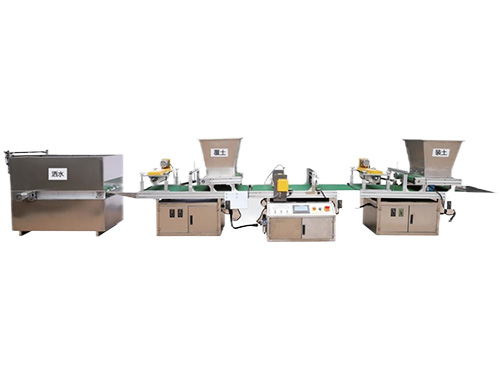
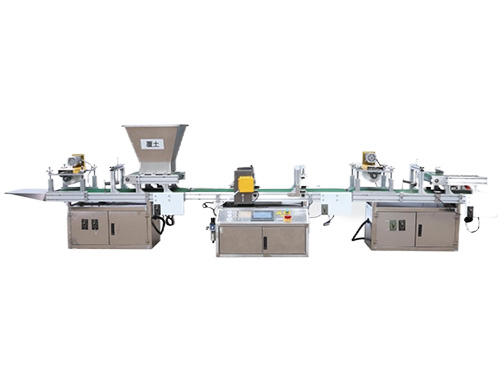
It adopts electrical integration and can be started by pressing the fully automatic button ...
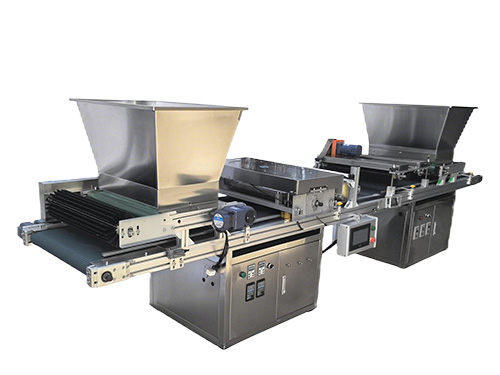
The XP750 seeder has stable performance, excellent product quality, simple and convenient o...
It adopts electrical integration and can be started by pressing the fully automatic button ...