





Common Applications of Growing Trays in Gardening
2026-01-24 18:19:12
Why Growing Trays Matter in Modern Gardening
Efficient plant cultivation depends on consistency, space management, and moisture control. In both commercial and home gardening, one of the most practical tools supporting these goals is the growing trays system. From seed starting to plant transportation, growing trays provide organized environments that help plants develop stronger roots and uniform growth patterns.
As gardening scales up, reliability becomes more important than convenience. That is why many operations rely on a professional growing trays manufacturer with stable production and factory supply capacity. Controlled manufacturing ensures that each tray delivers predictable performance, making large-scale gardening more efficient and easier to manage.
This article explores the most common applications of growing trays in gardening, explains how they work, and highlights how factory-level production supports consistent results for growers at every level.
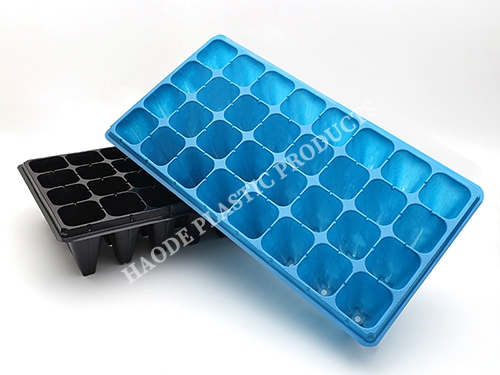
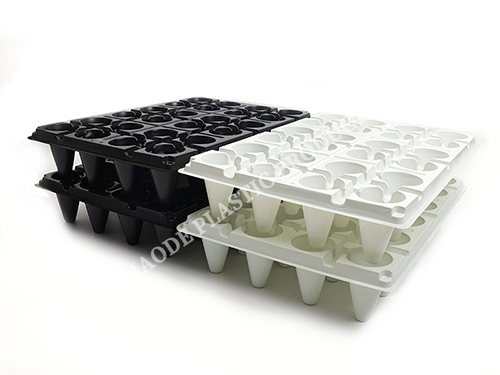
Growing trays are structured containers designed to hold soil, seedlings, or plant plugs during early and intermediate growth stages. They allow gardeners to organize plants in compact layouts while controlling moisture, airflow, and root development.
Most growing trays are formed from durable polymers using precision molding. Their shapes include cells, channels, or flat bases depending on the intended application. These designs help distribute water evenly and prevent overcrowding of roots.
Typical characteristics include:
Uniform cell spacing
Drainage openings for water control
Lightweight but strong structure
Reusable design for long-term use
Because of these features, growing trays are widely used in nurseries, greenhouses, landscaping operations, and even indoor gardening systems.
Structural Design and Performance Principles
The effectiveness of growing trays comes from their engineered structure. Each tray is designed to balance water retention with drainage so roots receive oxygen while staying hydrated.
Core design elements include:
Drainage holes to prevent water accumulation
Raised bases for airflow beneath roots
Reinforced edges for handling strength
Uniform cells for consistent plant spacing
When water is applied, excess moisture exits through the base while capillary action keeps the root zone evenly moist. This reduces the risk of root rot and uneven growth.
From a manufacturer production standpoint, precise molds and material control ensure every growing tray performs consistently across large batches. This consistency is essential for projects involving thousands of plants.
Common Applications of Growing Trays in Gardening
Growing trays support many stages of plant cultivation. Their versatility makes them suitable for a wide range of gardening environments.
Seed Starting and Propagation
One of the most common uses of growing trays is seed germination. Trays organize seeds into individual cells, preventing competition for nutrients and water.
Benefits include:
Faster germination rates
Controlled moisture conditions
Easier monitoring of seedlings
Efficient use of space
Gardeners can maintain uniform conditions for each seed, improving survival rates and early growth performance.
References
GB/T 7714:DeFacio P, Pickerel L, Rhyne S M. Greenhouse Operation and Management[J]. Instructional Materials Laboratory, Columbia MO: University of Missouri, 2002.
MLA:DeFacio, Patricia, Lynn Pickerel, and Susan M. Rhyne. "Greenhouse Operation and Management." Instructional Materials Laboratory, Columbia MO: University of Missouri (2002).
APA:DeFacio, P., Pickerel, L., & Rhyne, S. M. (2002). Greenhouse Operation and Management. Instructional Materials Laboratory, Columbia MO: University of Missouri.

The CNC Seed Braiding Machine is a high-precision, fully automated agricultural equipment s...
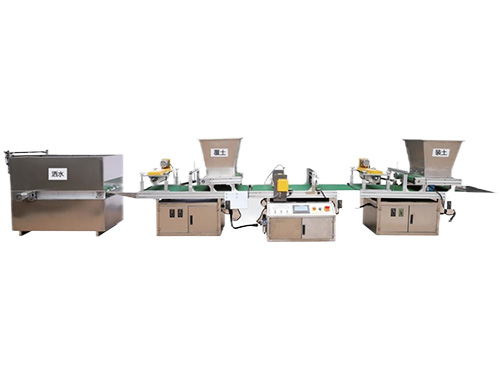
It adopts electrical integration and can be started by pressing the fully automatic button ...
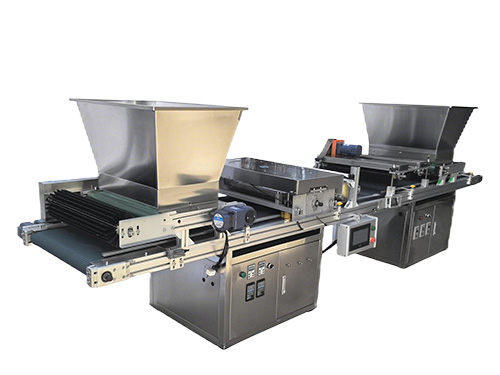
The XP750 seeder has stable performance, excellent product quality, simple and convenient o...
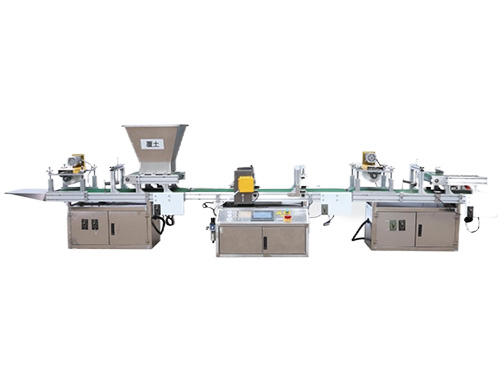
It adopts electrical integration and can be started by pressing the fully automatic button ...