





What Is a Plastic Drainage Mat and How It Works in Landscaping
2026-02-17 20:44:50
Why Plastic Drainage Mat Matters in Landscaping
Water management is one of the most important aspects of successful landscaping. Poor drainage can lead to soil erosion, root rot, unstable pavements, and damaged structures. This is where the plastic drainage mat becomes an essential solution.
A plastic drainage mat creates a controlled pathway for excess water to move away from surfaces, protecting soil layers, plant roots, and structural foundations. With professional manufacturer-controlled production and standardized factory manufacturing processes, modern plastic drainage mat systems are designed for durability, load resistance, and large-scale batch supply for landscaping and construction projects.
From green roofs and garden beds to retaining walls and sports fields, plastic drainage mats improve long-term performance by managing water efficiently.
What Is a Plastic Drainage Mat?
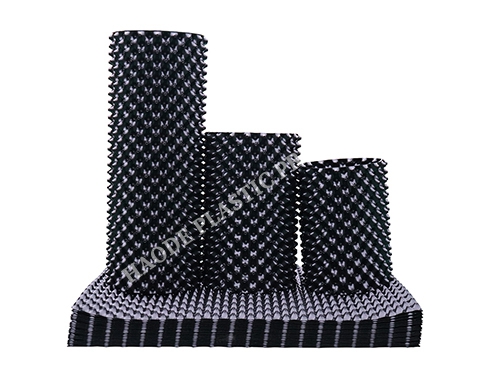
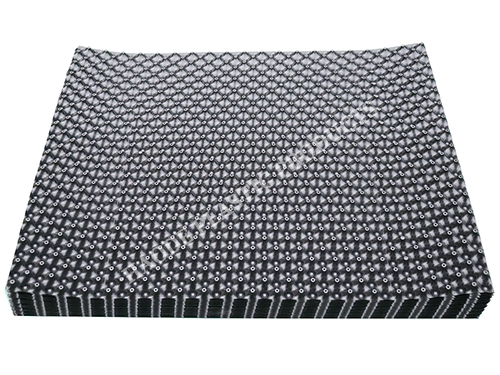
A plastic drainage mat is a lightweight, molded sheet made from durable polymers such as HDPE or PP. It features raised dimples, channels, or grid structures that create void spaces for water flow beneath soil, concrete, or landscaping layers.
These mats act as a separation and drainage layer, preventing water from accumulating while supporting loads from above. Factory production ensures consistent thickness, geometry, and compressive strength across batch-supplied mats, making them suitable for both residential and commercial landscaping use.
Unlike traditional gravel drainage layers, plastic drainage mats reduce material weight and installation complexity.
How Plastic Drainage Mat Works
The working principle of a plastic drainage mat is based on creating an air and water flow layer beneath surfaces.
When rain or irrigation water penetrates soil or paving, it enters the channels of the drainage mat. The mat then guides water horizontally toward collection points or outlets, preventing water pressure buildup.
Manufacturer production allows precise molding of drainage cells, ensuring uniform flow paths and load distribution. Factory manufacturing also guarantees that the mat maintains shape even under soil and pedestrian loads.
Structural Design and Load Performance
Modern plastic drainage mats are engineered for both drainage and structural support.
The raised structure distributes loads from above while maintaining open channels for water movement. This prevents soil compaction from blocking drainage paths.
During factory production, compression testing and dimensional inspection ensure the mat can withstand landscaping loads such as soil, stone, and foot traffic. Manufacturer quality control ensures stable mechanical performance across large-scale projects.
Key Benefits of Using Plastic Drainage Mat
Using a plastic drainage mat offers several advantages:
·Improved water control by preventing pooling and saturation
·Reduced soil erosion in landscaped areas
·Protection of plant roots from waterlogging
·Lightweight installation compared to gravel systems
·Long-term durability from polymer materials
·Lower maintenance costs
With factory batch supply, large landscaping projects can use uniform drainage solutions without variation in performance.
Applications in Landscaping
The plastic drainage mat is widely used in many landscaping scenarios:
·Green roofs and rooftop gardens
·Planter boxes and raised beds
·Retaining walls
·Sports fields
·Courtyards and walkways
·Driveways and terraces
Manufacturer production supports different sizes, thicknesses, and load classes, allowing plastic drainage mat systems to adapt to diverse landscape designs.
Installation Process
Installing a plastic drainage mat is straightforward and efficient.
First, the sub-base is leveled and compacted. Then the drainage mat is laid with channels facing downward or according to design orientation. Overlaps ensure continuous flow paths. A filter fabric is often placed above the mat to prevent soil migration into the drainage cells.
Factory production provides consistent edge profiles and roll dimensions, simplifying installation and reducing on-site adjustments. Manufacturer packaging also supports bulk transportation for large projects.
Material Quality and Durability
Material selection is critical for long-term drainage performance.
High-quality plastic drainage mats are produced using polymers that resist moisture, chemicals, temperature changes, and biological degradation.
Through controlled factory manufacturing, mats achieve stable thickness and flexibility without cracking. Manufacturer testing ensures resistance to compression, impact, and long-term creep, making the plastic drainage mat suitable for permanent landscaping systems.
Sustainability and Environmental Value
Plastic drainage mats also contribute to sustainable construction.
Their lightweight nature reduces transportation energy compared to heavy gravel layers. Many mats are recyclable and designed for long service life, reducing material waste.
Factory production minimizes scrap through optimized molding cycles, and manufacturer quality control ensures fewer replacements over time.
How Manufacturer and Factory Production Improve Performance
Working with a professional plastic drainage mat manufacturer provides clear advantages:
·Stable raw material sourcing
·Precision molding technology
·Quality inspections
·Compression and flow testing
·Bulk factory batch supply
Factory production ensures each plastic drainage mat meets structural and drainage standards, providing consistent performance for landscaping contractors and developers.
Common Mistakes to Avoid
Some common mistakes include:
·Installing mats without filter fabric
·Blocking drainage outlets
·Using low-grade plastic
·Ignoring load capacity requirements
By relying on manufacturer production standards and correct installation methods, these problems can be avoided.
Future Trends in Plastic Drainage Mat Technology
As landscaping becomes more technical, plastic drainage mat designs continue to evolve.
Factory production now integrates automation and digital inspection to improve dimensional precision and load resistance. New materials enhance flexibility and environmental performance.
The demand for efficient water management will keep driving innovation in plastic drainage mat systems for urban and commercial landscapes.
Conclusion: Choose Reliable Plastic Drainage Mat for Long-Term Landscaping Success
The plastic drainage mat is a key component in modern landscaping, providing efficient water control, load support, and durability.
By selecting products supported by professional manufacturer production and stable factory batch supply, developers and landscapers gain consistent quality, easy installation, and reliable long-term drainage performance.
Whether used for green roofs, gardens, or hardscape areas, the plastic drainage mat remains an essential solution for sustainable and effective landscape engineering.
References
GB/T 7714:Koerner R M, Koerner G R, Fahim A K, et al. Long-term performance of geosynthetics in drainage applications[M]. 1994.
MLA:Koerner, Robert M., et al. Long-term performance of geosynthetics in drainage applications. No. Project 15-13 FY'90. 1994.
APA:Koerner, R. M., Koerner, G. R., Fahim, A. K., & Wilson-Fahmy, R. F. (1994). Long-term performance of geosynthetics in drainage applications (No. Project 15-13 FY'90).

The CNC Seed Braiding Machine is a high-precision, fully automated agricultural equipment s...
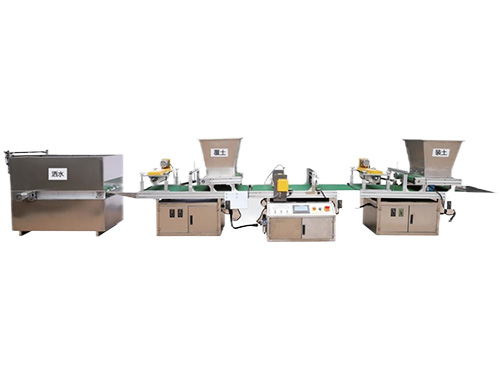
It adopts electrical integration and can be started by pressing the fully automatic button ...
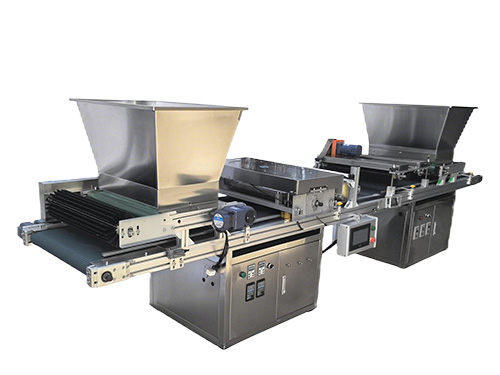
The XP750 seeder has stable performance, excellent product quality, simple and convenient o...
It adopts electrical integration and can be started by pressing the fully automatic button ...