





Upgrading Automatic Seedling Seeders with Smart Sensors
2026-01-13 09:21:06
As an experienced automatic seedling seeder manufacturer with mature production capability and bulk supply capacity, we have witnessed a growing shift in modern agriculture toward intelligent automation. Traditional automatic seedling seeders have already improved planting efficiency, but the integration of smart sensor technology is now redefining precision, consistency, and productivity.
Upgrading automatic seedling seeders with smart sensors allows growers, nurseries, and agricultural operations to reduce waste, improve seedling uniformity, and optimize labor usage. From commercial greenhouses to large-scale agricultural production, sensor-enabled systems are becoming a key competitive advantage.
This article explores how smart sensors enhance automatic seedling seeders, the benefits they deliver, and why manufacturer-level production expertise matters in this upgrade process.
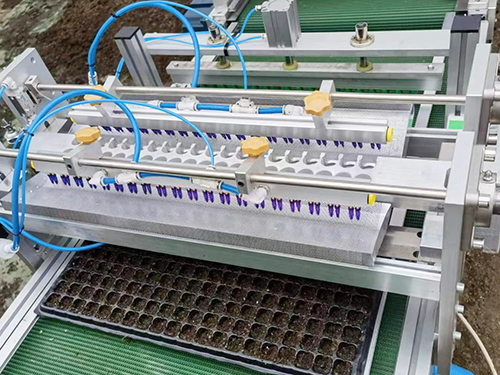
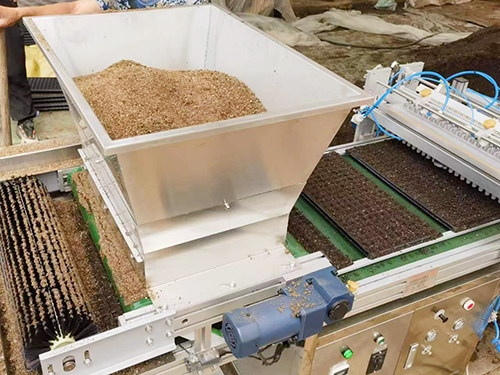
What Is an Automatic Seedling Seeder?
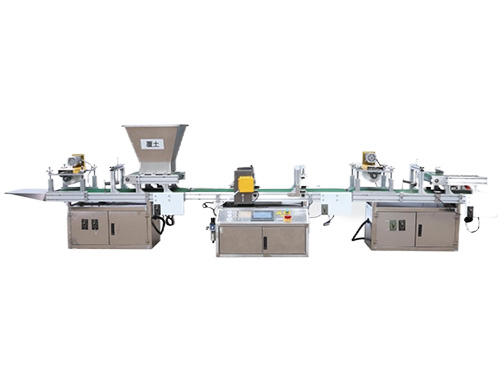
An automatic seedling seeder is a mechanized planting system designed to place seeds accurately into trays or soil media at high speed. Compared to manual seeding, automatic seedling seeders improve planting accuracy, reduce labor costs, and ensure consistent seed depth and spacing.
Manufacturers with integrated production lines and quality control processes focus on durability, modular design, and compatibility with different tray formats. These fundamentals make it easier to upgrade machines with advanced technologies such as smart sensors.
Why Smart Sensors Matter in Modern Seeding Systems
Smart sensors bring real-time data collection and feedback into the seeding process. When integrated into automatic seedling seeders, sensors help monitor and control variables that were previously difficult to manage.
Key parameters monitored by smart sensors include:
·Seed presence and placement accuracy
·Tray positioning and alignment
·Soil or substrate fill levels
·Operational speed and consistency
By embedding sensors into the production design stage, manufacturers ensure better system stability and long-term performance.
Improving Seeding Accuracy and Uniformity
One of the biggest advantages of upgrading an automatic seedling seeder with smart sensors is enhanced accuracy.
Sensors can detect:
·Missing seeds
·Double seeding
·Blocked or misaligned seed tubes
When irregularities occur, the system can automatically adjust or alert operators. This level of precision significantly improves seedling uniformity, which is critical for transplant success and crop yield. From a production standpoint, manufacturers engineer sensor placement to minimize false readings and maintain consistent operation under high-speed conditions.
Reducing Waste and Operational Costs
Seed waste and substrate loss are common challenges in large-scale seeding operations. Smart sensors help reduce these losses by ensuring that each tray cell receives the correct number of seeds.
Benefits include:
·Lower seed consumption
·Reduced replanting needs
·Less downtime caused by errors
For buyers sourcing equipment from an automatic seedling seeder manufacturer with bulk production capability, these efficiency gains translate into faster return on investment and lower long-term operating costs.
Enhancing Automation and Labor Efficiency
Labor shortages continue to affect agricultural operations worldwide. Sensor-enabled automatic seedling seeders reduce dependence on manual supervision by enabling semi-autonomous or fully automated workflows.
Smart sensors allow machines to:
·Self-correct minor errors
·Maintain consistent speed
·Provide diagnostic feedback
Manufacturers that design seeders for mass production often prioritize automation readiness, ensuring that sensor upgrades integrate seamlessly without extensive retrofitting.
Real-Time Monitoring and Data Integration
Modern smart sensors do more than detect physical conditions—they generate data. This data can be used to analyze performance trends, maintenance needs, and operational efficiency.
Examples include:
·Monitoring seeding rates over time
·Identifying recurring mechanical issues
·Scheduling preventive maintenance
From a manufacturing perspective, producing seeders with standardized sensor interfaces simplifies future upgrades and supports long-term scalability.
Reliability and Durability Considerations
Adding smart sensors to automatic seedling seeders requires careful attention to environmental factors such as dust, moisture, and vibration.
Professional manufacturers address these challenges through:
·Protective sensor housing
·Industrial-grade wiring
·Rigorous production testing
Reliable sensor integration ensures that upgraded seeders perform consistently even in demanding greenhouse or field conditions.
Why Manufacturer-Level Production Experience Matters
Not all automatic seedling seeders are designed with smart upgrades in mind. Choosing equipment from a manufacturer with established production experience and bulk supply capability ensures better compatibility, technical support, and long-term availability of components.
Manufacturer-level advantages include:
·Standardized production processes
·Consistent quality across batches
·Customization options for sensor integration
These factors are especially important for distributors and large-scale agricultural projects.
Conclusion
Upgrading automatic seedling seeders with smart sensors represents a significant step toward more efficient, precise, and data-driven agriculture. From improving seeding accuracy to reducing waste and labor costs, sensor-enabled systems deliver measurable benefits across the entire planting process.
As an automatic seedling seeder manufacturer with scalable production and bulk supply capabilities, focusing on smart-ready design, durable construction, and quality-controlled production ensures that upgraded equipment meets the evolving demands of modern agriculture. Investing in sensor-enhanced seedling seeders today lays the foundation for higher productivity and sustainable growth tomorrow.
References
GB/T 7714:Pedersen S M, Fountas S, Have H, et al. Agricultural robots—system analysis and economic feasibility[J]. Precision agriculture, 2006, 7(4): 295-308.
MLA:Pedersen, Søren Marcus, et al. "Agricultural robots—system analysis and economic feasibility." Precision agriculture 7.4 (2006): 295-308.
APA:Pedersen, S. M., Fountas, S., Have, H., & Blackmore, B. S. (2006). Agricultural robots—system analysis and economic feasibility. Precision agriculture, 7(4), 295-308.

The CNC Seed Braiding Machine is a high-precision, fully automated agricultural equipment s...
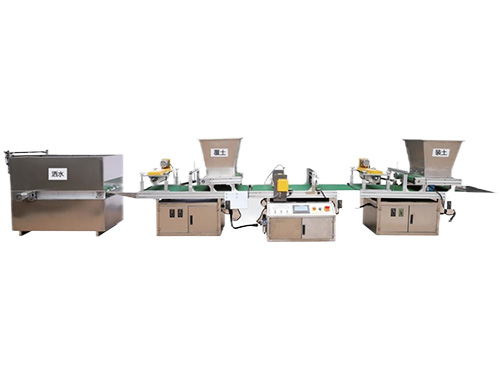
It adopts electrical integration and can be started by pressing the fully automatic button ...
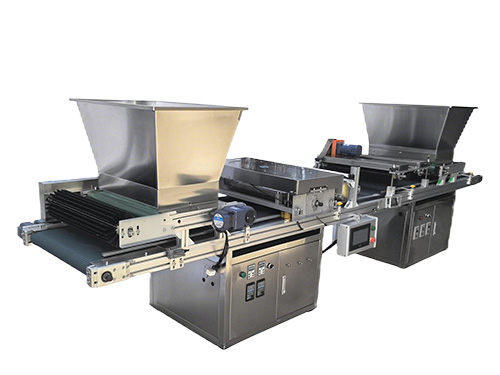
The XP750 seeder has stable performance, excellent product quality, simple and convenient o...
It adopts electrical integration and can be started by pressing the fully automatic button ...