





Strawberry Seedling Trays: A Complete Guide for Commercial Runners and Plug Production
2026-10-10 17:17:15
Strawberries are one of the most demanding crops to propagate commercially. The difference between a strong, uniform plug and a weak, stunted one shows up in the field within weeks — in runner establishment, crown development and ultimately, yield. Dedicated strawberry seedling trays are engineered to solve the specific challenges of strawberry propagation that generic trays cannot.
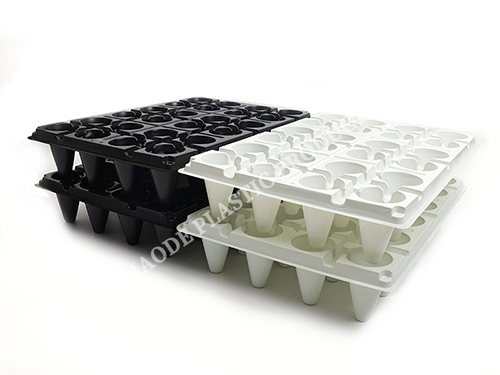
Unlike vegetables, strawberries are propagated largely from runners and tissue-culture plantlets, which have unique rooting requirements. The right tray provides the drainage, aeration and cell geometry these delicate plants need to build vigorous root systems before field planting.
This guide explains how strawberry seedling trays work, what to look for, and how to propagate strawberry plugs that establish quickly and produce well.
Why Strawberry Propagation Needs Dedicated Trays
Strawberry plants are shallow-rooted and highly sensitive to waterlogging. Generic trays with poor drainage quickly lead to root rot, crown disease and uneven establishment. Dedicated strawberry trays address these issues with optimized cell depth, drainage and spacing designed specifically for runner rooting and plug development.
The commercial stakes are high. Strawberry plugs command a premium and are planted on strict schedules. Uniform, healthy plugs mean predictable planting, even fruit set and consistent harvest windows — the foundation of profitable strawberry production.
Anatomy of a Strawberry Seedling Tray
A strawberry seedling tray typically consists of a propagation board with multiple cells, each sized to hold a single runner or plantlet. Key design features include open drainage holes at the base of every cell, adequate cell depth for root elongation, and spacing that prevents leaf overlap and disease spread between neighboring plants.
Material matters too. Durable PET or food-grade plastic trays resist degradation, can be cleaned and reused across seasons, and hold their shape through repeated handling — all critical for a crop with tight production margins.
Cell Size and Runner Establishment
Cell size directly influences how well a runner establishes. Cells that are too small restrict root growth and produce weak plugs that struggle after transplant. Cells that are too large waste medium and bench space. Strawberry trays typically use moderate to large cells that give runners enough room to develop a solid root ball within the production window.
Proper cell depth also encourages downward root growth, producing a root structure that transplants cleanly and anchors quickly in the field — a key factor in early establishment and survival.
Drainage, Aeration and Root Development in Strawberries
Strawberries demand excellent drainage. Saturated medium rapidly suffocates strawberry roots and invites phytophthora and other pathogens. Every cell must drain freely, and the tray should sit on a drainage mat or chassis that prevents standing water.
Aeration is equally important. Well-ventilated cells keep the root zone oxygenated, encouraging fine, healthy root development. Combined with bottom watering, good drainage and aeration produce plugs with robust, disease-resistant root systems.
Plug Production vs Bare-Root Propagation
| Factor | Plug Production | Bare-Root |
|---|---|---|
| Establishment speed | Fast | Slower |
| Transplant shock | Low | Higher |
| Disease control | Excellent | Variable |
| Cost per plant | Higher | Lower |
| Planting flexibility | Extended window | Limited |
Plug production from trays has become the preferred method for premium strawberry operations, offering faster establishment, lower transplant shock and a longer planting window. The trade-off is higher per-plant cost, which is offset by improved survival and earlier yield.
Best Practices for Strawberry Plug Propagation
Success starts with clean, sanitized trays and healthy plant material. Maintain consistent moisture without waterlogging, using bottom watering where possible to keep crowns dry. Provide adequate airflow to prevent foliar disease, and time transplanting so plugs move to the field before they become root-bound.
Regular sanitation between cycles is essential, as strawberry pathogens can persist in trays. A disciplined cleaning protocol protects both plug quality and tray longevity.
How to Source Strawberry Trays from the Factory
For commercial volumes, sourcing strawberry seedling trays directly from the manufacturer offers lower cost and greater specification control. Confirm the tray's cell count, depth, drainage design and material grade, and request samples to test with your propagation system before committing to bulk orders.
Haode New Material manufactures strawberry seedling trays and matched drainage systems at its factory in Hebei Province, China, supplying strawberry propagators and nurseries worldwide at factory-direct prices.
Frequently Asked Questions
What makes a strawberry seedling tray different from a vegetable tray?
Strawberry trays are designed for runner and plantlet rooting, with cell depth, drainage and spacing optimized for shallow-rooted, waterlogging-sensitive strawberry plants.
How many cells should a strawberry tray have?
Strawberry trays typically use moderate to large cells to give runners room to develop a strong root ball; exact count depends on your propagation system and plug size target.
Can strawberry trays be reused?
Yes. Durable PET or food-grade plastic trays can be cleaned, sanitized and reused across multiple propagation seasons.
Why is drainage so important for strawberries?
Strawberries are highly sensitive to waterlogging, which causes root rot and crown disease. Free-draining cells are essential for healthy plug production.
What is the advantage of plug production over bare-root?
Plugs establish faster, suffer less transplant shock, offer better disease control and provide a longer planting window, though at a higher per-plant cost.
How should strawberry trays be sanitized?
Rinse, soak in a sanitizing solution, scrub and air-dry completely between cycles to prevent pathogen buildup that can persist in trays.
Conclusion
Dedicated strawberry seedling trays are a foundational investment in plug quality and yield. With the right cell design, drainage and aeration — and a disciplined propagation protocol — growers can produce uniform, vigorous plugs that establish quickly and fruit reliably.
Explore strawberry seedling trays and matched drainage systems at haodeseedtray.com to strengthen your propagation program.

The CNC Seed Braiding Machine is a high-precision, fully automated agricultural equipment s...
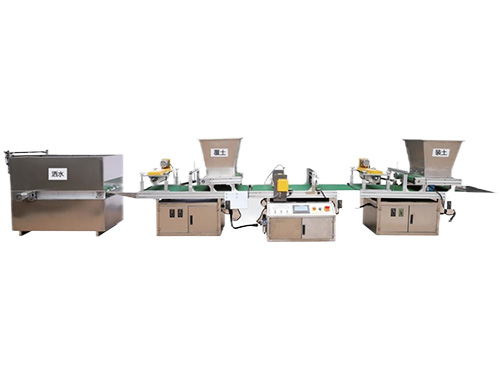
It adopts electrical integration and can be started by pressing the fully automatic button ...
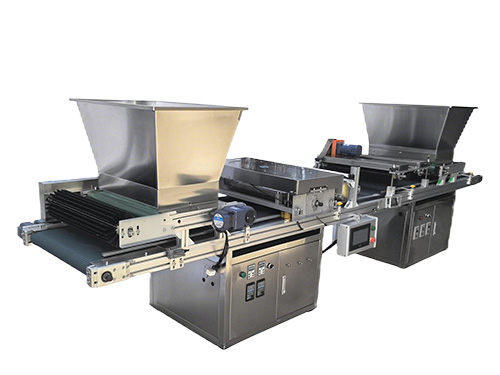
The XP750 seeder has stable performance, excellent product quality, simple and convenient o...
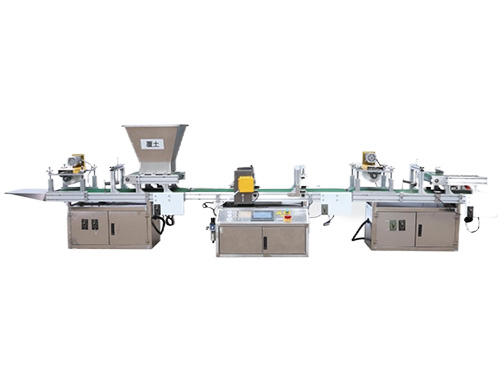
It adopts electrical integration and can be started by pressing the fully automatic button ...