





Preventing Common Seedling Diseases in Tray-Based Production Systems
2026-07-21 16:37:27
Introduction
Disease outbreaks in seedling production are among the most financially damaging events a commercial nursery can experience. Unlike field crops where an infected plant represents a localized loss, seedling trays concentrate hundreds of plants in intimate contact within a shared environment. A pathogen that establishes in one cell can spread rapidly through splash dispersal, shared irrigation water, and handling contamination to affect the entire tray within days. Prevention is not merely a best practice—it is the only economically rational approach to disease management in high-density tray production.
The science of seedling disease prevention is well-developed, but its application in commercial operations requires consistent implementation across every production cycle. This article examines the pathogen biology, environmental triggers, and management practices that commercial growers use to keep their seedling production clean and productive.
Understanding the Major Pathogens in Seedling Production
The most economically significant seedling diseases share a common characteristic: they thrive in wet, poorly drained, and oxygen-depleted growing conditions. Pythium species cause waterlogging-related root rot and are among the most common seedling pathogens in commercial production. Pythium reproduces through motile zoospores that swim through water films between growing medium particles, which means that any condition that keeps the medium saturated favors Pythium proliferation. The pathogen is ubiquitous in agricultural environments and enters production systems through contaminated water, contaminated growing medium, and infected plant material. Phytophthora species are closely related to Pythium and produce similar symptoms, but they are more aggressive and more difficult to control once established. Phytophthora produces survival structures called oospores that can persist in tray residues, growing medium, and greenhouse structures for years. Unlike Pythium, Phytophthora can also infect through splashing water onto above-ground plant tissues, not only through the root system. Fusarium species cause wilting and vascular discoloration and can be seed-borne or soil-borne. Fusarium colonizes the vascular tissue of the seedling, blocking water transport and causing progressive wilting that is often mistaken for drought stress. By the time Fusarium symptoms are visible, the infection is usually too advanced for effective intervention. Rhizoctonia attacks the stem at the soil line, causing the distinctive brown lesion that gives damping-off its name. Rhizoctonia produces sclerotia—hard survival structures—that persist in tray residues and can contaminate subsequent crops.
How Tray Design and Handling Practices Spread Disease
Tray surfaces and cell interiors are the primary reservoirs for pathogen carryover between production cycles. Even trays that appear clean after washing may harbor microscopic pathogen structures in surface scratches, cell wall crevices, and drainage hole margins. The biofilm that naturally accumulates on tray surfaces during use—composed of organic residues, mineral deposits, and microbial communities—provides a protective matrix that shields embedded pathogens from cleaning agents and sterilization treatments. Handling practices in commercial operations can also spread disease. Workers who move from infected trays to healthy trays without changing gloves or washing hands transfer pathogen inoculum directly into clean production blocks. Irrigation water that contacts infected plants and then drains back into a shared reservoir becomes a distribution system for pathogens throughout the operation. Reusing irrigation water without treatment is one of the most common sources of recurring disease problems in commercial seedling production. Benching, carts, and propagation盖布 that contact infected trays become secondary contamination sources that are often overlooked in disease prevention programs. A comprehensive disease prevention strategy addresses all of these potential contamination pathways, not just the tray surface itself.
Environmental Triggers and Their Role in Disease Outbreaks
Environmental conditions in the greenhouse are the trigger that determines whether a given pathogen load will produce a clinical disease outbreak or remain subclinical. Temperature is the primary environmental driver, with Pythium and Phytophthora activity peaking in the 18 to 24 degree Celsius range commonly maintained in heated greenhouses. Temperatures above 28 degrees Celsius suppress these water molds but favor other pathogens such as Botrytis and certain bacterial species. Humidity interacts with temperature to determine leaf wetness duration and surface moisture periods, which control the window of vulnerability for foliar infection. Relative humidity above 85 percent in the plant canopy creates conditions favorable for Botrytis gray mold and bacterial leaf spot diseases, while lower humidity reduces but does not eliminate these risks. Irrigation timing is the most actionable environmental variable for disease management. Watering in the morning rather than the evening allows leaf surfaces to dry before nighttime temperature drops, reducing the duration of leaf wetness periods. Avoiding irrigation in the late afternoon and evening prevents extended periods of saturated growing medium that favor root rot pathogens overnight when temperatures are lowest.
Integrated Disease Prevention Protocols for Commercial Operations
An integrated disease prevention approach combines cultural practices, physical barriers, biological controls, and chemical interventions in a coordinated program that addresses all points in the pathogen lifecycle. Cultural practices—including proper drainage design, appropriate irrigation scheduling, and adequate plant spacing—create an environment less favorable for disease development. These practices cost nothing extra and provide the foundation on which all other interventions build. Physical sanitation measures—thorough tray cleaning and sterilization between cycles, use of clean irrigation water, and worker hygiene protocols—address the pathogen introduction pathway. Chemical interventions using protectant fungicides applied preventatively at sowing provide an additional protective barrier during the most vulnerable early growth stages. Biological control agents applied to the growing medium or as seed treatments offer an increasingly effective alternative to chemical fungicides in organic and reduced-input production systems. The timing and sequence of these interventions matters. Applying a protectant fungicide to an already-infected crop is ineffective; applying it at sowing before pathogen pressure builds creates a protective barrier that lasts through the vulnerable emergence window. The integrated program must be planned and implemented systematically, not reactively in response to observed symptoms.
Monitoring and Early Detection Systems for Tray Production
Regular crop monitoring is the early warning system that makes integrated disease management responsive rather than passive. Scouting for disease symptoms should occur at least twice weekly during active production, with particular attention to tray edges and corners where irrigation distribution may be uneven and stress conditions more likely. Early detection of the first symptomatic plants in a tray enables removal before the pathogen spreads to neighboring cells. Keeping records of disease occurrences by tray batch, crop variety, and greenhouse zone enables pattern recognition over time that identifies recurring problem areas and informs long-term prevention strategy. Operations that track their disease history systematically can identify which tray batches, greenhouse zones, or production periods carry elevated risk and adjust their prevention programs accordingly.
Conclusion
Commercial growers who understand the full scope of factors affecting their seedling tray performance—and who work with suppliers and manufacturers that provide genuine technical depth rather than just catalog products—consistently achieve better production outcomes than those who treat tray selection as a commodity decision. The investment of time and attention in understanding tray science and matching specifications to operational requirements pays compounding returns across every production cycle and every market season.
University of Florida Institute of Food and Agricultural Sciences (UF IFAS). (2023). Nursery Production Best Management Practices. UF IFAS Extension.
Cornell University College of Agriculture and Life Sciences. (2021). Optimizing Seedling Production in Controlled Environments. Cornell CALS.

The CNC Seed Braiding Machine is a high-precision, fully automated agricultural equipment s...
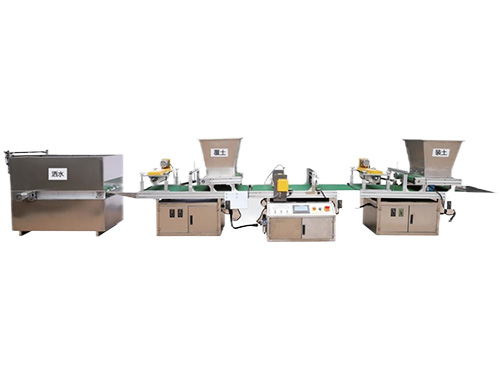
It adopts electrical integration and can be started by pressing the fully automatic button ...
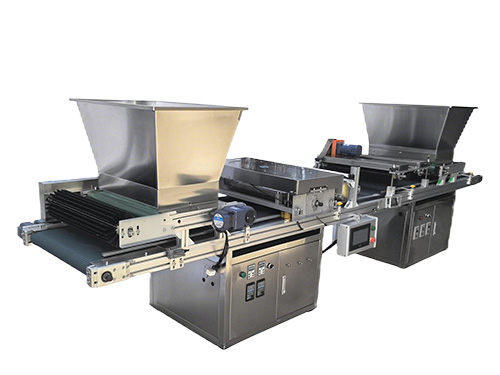
The XP750 seeder has stable performance, excellent product quality, simple and convenient o...
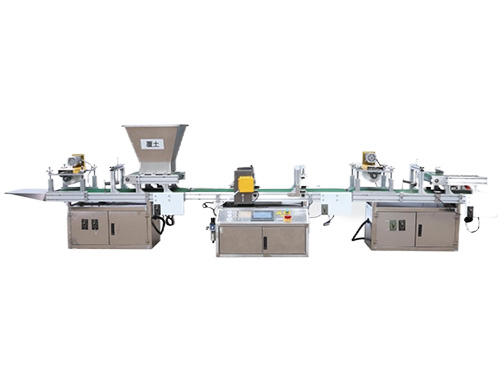
It adopts electrical integration and can be started by pressing the fully automatic button ...