





Using Seedling Trays in Hydroponic and Soilless Growing Systems
2026-07-18 16:36:31
Introduction
Hydroponic and soilless growing systems are among the fastest-expanding segments of commercial horticulture, driven by the demand for year-round local food production, controlled-environment agriculture, and water-efficient growing methods. Seedling production for these systems has unique requirements that standard soil-based nursery trays do not fully address, and the market for specialized hydroponic seedling tray formats is growing accordingly.
The principles that govern seedling tray performance in hydroponic systems differ fundamentally from those in soil-based production. Without the buffering capacity of soil, every aspect of the tray—its material, geometry, and drainage configuration—directly and immediately influences the root environment and plant nutrition.
How Hydroponic Seedling Production Differs from Soil-Based Nursery Methods
In soil-based seedling production, the growing medium provides a buffering layer between the plant root and the irrigation system, moderating moisture levels, pH, and nutrient concentrations through physical and chemical interactions. In hydroponic systems, the root zone is in direct contact with the nutrient solution or with a soilless substrate that has minimal buffering capacity compared to soil. This direct-contact environment means that tray design must manage root zone conditions with greater precision than in soil-based production. The oxygen supply to the root zone is the most critical environmental parameter in hydroponic seedling systems. Unlike soil, where oxygen fills the pore spaces between water-holding particles, hydroponic systems must actively manage the dissolved oxygen content of the nutrient solution or ensure that the soilless substrate structure provides adequate air-filled porosity. Tray design affects both of these pathways: cell geometry determines the air space available in the substrate block, and drainage design controls how quickly the root zone can drain and re-aerate between irrigation cycles. pH stability in the root zone is another area where hydroponic and soil-based production differ fundamentally. In soil, pH is moderated by the mineral fraction and organic matter of the growing medium. In hydroponic substrate blocks, pH can drift rapidly in response to nutrient solution composition and plant uptake patterns, requiring active monitoring and adjustment. Trays and substrate blocks that promote good drainage and root zone aeration help moderate pH drift by supporting the microbial activity that contributes to pH buffering.
Floating Raft Systems and Their Tray Configuration Requirements
Deep water culture and floating raft systems use seedling trays as platforms that float on the surface of a nutrient solution reservoir. In these systems, the tray does not provide drainage in the conventional sense—instead, the growing medium or net pots in each cell sit in continuous contact with the aerated nutrient solution below. The tray in this application functions as a plant support platform and a physical barrier that prevents light from reaching the nutrient solution reservoir. The critical engineering requirement for floating raft trays is buoyancy stability and chemical compatibility with the nutrient solution. The tray material must resist the constant exposure to mineralized water without degrading, warping, or leaching prohibited substances into the solution. Polypropylene copolymer is the preferred material for floating raft applications because of its chemical resistance and its ability to be manufactured with controlled density that ensures reliable buoyancy characteristics. Cell geometry in floating raft trays is optimized for net pot compatibility rather than for conventional drainage performance. Each cell typically receives a net pot filled with a soilless substrate such as rockwool, coco coir, or peat-perlite mix, and the net pot sits in direct contact with the nutrient solution. The net pot material, not the tray cell itself, provides the root zone physical environment.
NFT Channel Production for Seedling Staging
Nutrient film technique channels are another hydroponic configuration used for seedling staging, particularly in commercial leafy greens production. NFT channels are narrow, sloping troughs through which a thin film of nutrient solution flows continuously, providing both water and nutrients to the root zone as the solution passes beneath the plant containers. Seedling trays used at the staging area of NFT systems must be compatible with the channel geometry and flow characteristics of the production system. Modular tray systems designed for NFT compatibility typically feature cells with drainage holes that allow excess nutrient solution to return to the channel flow without ponding in the cell. The cell depth must be sufficient to support the root system during the nursery residency period without excessive medium volume that would block the channel flow, and the tray footprint must match the channel width precisely to prevent bypass flow around the tray edges.
Rockwool and Soilless Substrate Blocks: Tray Compatibility
Rockwool cubes and slabs are the most widely used soilless substrate in commercial hydroponic production, particularly for high-value vegetable crops such as tomatoes, cucumbers, and peppers. Rockwool cubes—typically 2.5 to 4 centimeter cubes for seedling production—require matching tray cell configurations to hold them securely without crushing the cube or allowing them to fall through. A manufacturer that produces trays specifically calibrated for standard rockwool cube dimensions provides a plug-and-play solution for hydroponic seedling staging. Coco coir and peat-based substrate blocks offer alternative soilless options with different water-holding and aeration characteristics. Coco coir has excellent water-holding capacity combined with good air-filled porosity, making it well-suited for tray configurations with moderate drainage rates. Peat-based substrates hold more water but drain less freely, requiring tray designs with more generous drainage to prevent saturation in the root zone. The compatibility between substrate block and tray cell is not merely dimensional—it also involves thermal properties, wettability characteristics, and the interaction between the substrate surface and the tray material. These material science interactions are where a manufacturer with deep horticultural engineering expertise adds genuine value beyond catalog product selection.
Disease Management Considerations for Hydroponic Seedling Trays
Disease management in hydroponic seedling systems requires a different approach than in soil-based production because the hydroponic environment can spread pathogens rapidly through the recirculating nutrient solution. Once a pathogen such as Pythium or Fusarium enters the nutrient solution, it can circulate throughout the entire system and affect all plants connected to it within hours. Tray hygiene in recirculating hydroponic systems is therefore more critical than in soil-based operations. Trays used in these systems should be dedicated to the hydroponic application, never shared with soil-based production, and cleaned and sterilized with validated protocols between each production cycle. The chemical sterilization agents used must be compatible with the hydroponic nutrient solution formulation to prevent residual contamination that could affect the subsequent crop. A preventive approach to disease management in hydroponic seedling systems includes the use of beneficial microorganisms applied to the root zone as biological control agents. Some manufacturers now offer trays with antimicrobial surface treatments that support biological control agent colonization and suppress pathogen establishment in the root zone during the critical early nursery phase.
Conclusion
Commercial growers who understand the full scope of factors affecting their seedling tray performance—and who work with suppliers and manufacturers that provide genuine technical depth rather than just catalog products—consistently achieve better production outcomes than those who treat tray selection as a commodity decision. The investment of time and attention in understanding tray science and matching specifications to operational requirements pays compounding returns across every production cycle and every market season.
United States Department of Agriculture (USDA) Agricultural Research Service. (2023). Controlled Environment Agriculture and Seedling Production Systems. USDA ARS.
Ontario Ministry of Agriculture, Food and Rural Affairs (OMAFRA). (2022). Greenhouse Environmental Management. OMAFRA Publications.

The CNC Seed Braiding Machine is a high-precision, fully automated agricultural equipment s...
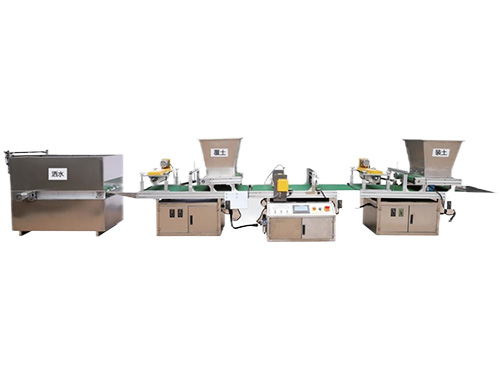
It adopts electrical integration and can be started by pressing the fully automatic button ...
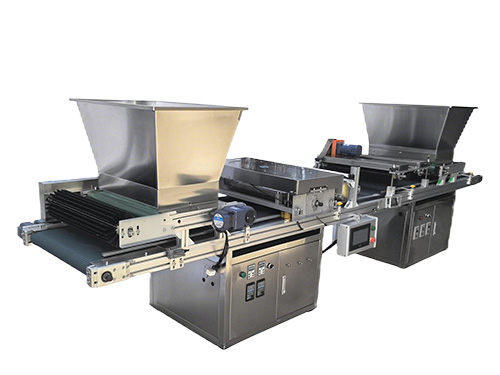
The XP750 seeder has stable performance, excellent product quality, simple and convenient o...
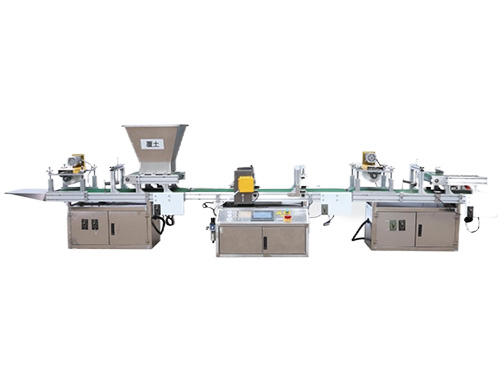
It adopts electrical integration and can be started by pressing the fully automatic button ...