





Greenhouse Ventilation Management and Its Interaction with Seedling Tray Systems
2026-07-15 16:27:55
Introduction
Greenhouse ventilation is the primary tool for controlling temperature, humidity, and air quality in the growing environment, and every decision about ventilation configuration and operation has direct consequences for the seedling trays and the crops they contain. The interplay between ventilation design, tray layout, and irrigation management determines whether the greenhouse environment supports healthy, uniform seedling development or creates a stressful, disease-conducive microclimate.
For commercial operations, optimizing the interaction between ventilation and tray management is a systems engineering challenge that goes beyond simple ventilation sizing calculations. The goal is to create a growing environment that supports the specific needs of the seedling stage—moderate temperatures, adequate humidity, good air circulation, and consistent light—across the entire production area, not just in the zones closest to ventilation intakes.
How Ventilation Systems Control the Greenhouse Growing Environment
Natural ventilation systems based on ridge and sidewall vents operate on the principle of buoyancy-driven airflow: warm, moist air rises and exits through upper vents while cooler, drier air enters through lower sidewall openings. The effectiveness of this system depends on the vent area relative to floor area, the temperature differential between inside and outside air, and the wind speed across the greenhouse surface. In poorly designed natural ventilation systems, air exchange rates vary dramatically across the greenhouse length and height, creating zones of stagnant air that are problematic for seedling production. Mechanical ventilation using exhaust fans creates more predictable and controllable air exchange rates, which is particularly valuable in large commercial greenhouses where natural ventilation alone cannot provide adequate air movement throughout the production space. Fan ventilation systems can be configured with circulation fans to create horizontal air movement within the house, reducing temperature stratification and improving humidity distribution across the tray layout. Positive-pressure ventilation systems that introduce fresh air through filtered intake vents and exhaust through passive openings provide the most uniform air exchange and the best protection against airborne pathogen introduction. These systems are more expensive to install and operate than simple exhaust fan configurations but are increasingly adopted by commercial operations in high-value crop segments where disease pressure is a primary concern.
The Relationship Between Air Circulation and Seedling Vigor
Air circulation within the greenhouse—the horizontal movement of air across the plant canopy—is as important for seedling health as fresh air exchange through ventilation. Stagnant air in poorly-circulated zones creates localized humidity buildup, temperature variation, and carbon dioxide depletion that reduce photosynthesis rates and promote disease development. Circulation fans positioned at regular intervals throughout the production area maintain continuous gentle air movement that supports uniform growth across all tray positions. The target air velocity for seedling production is approximately 0.5 to 1.5 meters per second—fast enough to remove boundary layer resistance from the leaf surface and maintain active gas exchange, but not so fast that it causes physical stress to the delicate seedling tissue. Excessively high air velocities can cause wind stress in seedlings, producing symptoms similar to drought stress even when the growing medium is adequately moist. In multi-tier tray production systems, the circulation pattern between tiers becomes critical. Cool air tends to pool in lower tiers while warm air rises to upper tiers, creating vertical temperature gradients of 3 to 5 degrees Celsius that translate directly into growth rate variation between tiers. A ventilation engineer familiar with multi-tier commercial production can specify circulation configurations that minimize these vertical gradients.
Humidity Management in Tray-Based Seedling Production
Relative humidity in the 60 to 80 percent range is generally considered optimal for seedling production, providing sufficient atmospheric moisture to prevent excessive transpiration stress while remaining low enough to discourage disease development on plant surfaces and in the growing medium. Maintaining this target range requires coordinated management of ventilation, irrigation, and heating systems. Tray positioning in the greenhouse affects the humidity environment each tray experiences. Trays positioned near ventilation intakes experience lower humidity and faster drying rates than those in interior zones or near walls where air circulation is reduced. This positional variation in humidity translates directly to variation in irrigation requirements, which is why zone-based irrigation management—adjusting watering frequency based on the specific environmental conditions in each zone—is increasingly adopted in commercial operations. High-humidity events during the night when ventilation is reduced are a particular concern for disease management. As temperatures drop after sunset, the greenhouse air becomes capable of holding less moisture, and relative humidity rises even if no additional moisture is added. A ventilation strategy that maintains some air exchange during nighttime hours—using controlled low-rate ventilation rather than complete closure—prevents the extreme humidity spikes that favor disease development.
Ventilation Configuration for Multi-Tray Commercial Layouts
Commercial tray layouts should be designed with ventilation in mind from the outset, not retrofitted after the greenhouse is built. The minimum recommended aisle width between tray rows is 60 centimeters for manual handling operations and 90 centimeters for operations using carts or automated transport systems. Rows of trays should be oriented perpendicular to the prevailing ventilation airflow direction to maximize air exchange through the canopy. Zone-based production management divides the greenhouse into distinct environmental zones based on their ventilation characteristics, and manages irrigation, temperature setpoints, and crop monitoring separately for each zone. This approach acknowledges the reality that uniform environmental conditions across a large commercial greenhouse are rarely achievable and provides a framework for managing the variation rather than ignoring it.
Seasonal Ventilation Adjustments for Year-Round Production
Seasonal transitions require proactive ventilation system adjustments to maintain optimal growing conditions as outside temperature and humidity conditions shift. Spring and fall seasons with large diurnal temperature swings require the most frequent adjustments, with ventilation setpoints adjusted daily based on weather forecasts. Summer peak production requires maximum ventilation capacity and may require supplemental cooling through shade cloth, evaporative cooling, or mechanical refrigeration to maintain temperatures within acceptable ranges. Winter production presents opposite challenges, with insufficient ventilation rather than excessive ventilation being the primary constraint. Maintaining adequate air exchange in heated winter greenhouses while preserving energy requires careful balancing of ventilation rate against heating demand. Heat recovery ventilation systems that capture sensible heat from exhaust air to preheat incoming fresh air provide a partial solution that reduces the energy cost trade-off.
Conclusion
Commercial growers who understand the full scope of factors affecting their seedling tray performance—and who work with suppliers and manufacturers that provide genuine technical depth rather than just catalog products—consistently achieve better production outcomes than those who treat tray selection as a commodity decision. The investment of time and attention in understanding tray science and matching specifications to operational requirements pays compounding returns across every production cycle and every market season.
Pennsylvania State University College of Agricultural Sciences. (2022). Commercial Plant Propagation and Container Production. Penn State Extension.
Purdue University Department of Horticulture and Landscape Architecture. (2022). Integrated Pest Management in Greenhouse Production. Purdue HORT.

The CNC Seed Braiding Machine is a high-precision, fully automated agricultural equipment s...
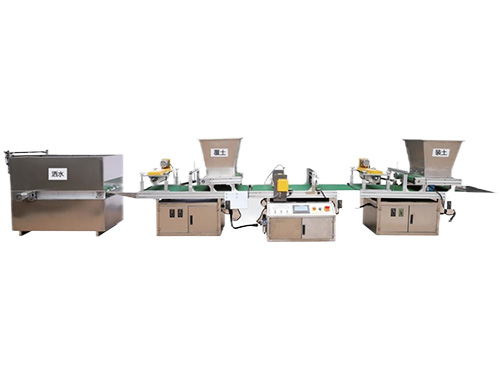
It adopts electrical integration and can be started by pressing the fully automatic button ...
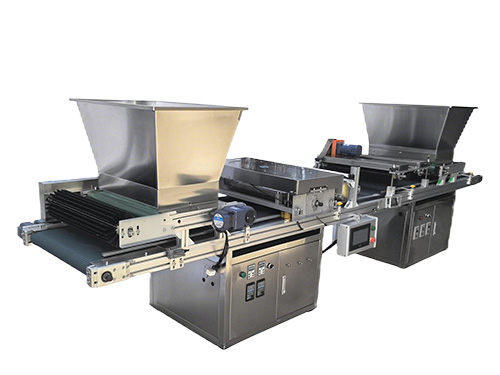
The XP750 seeder has stable performance, excellent product quality, simple and convenient o...
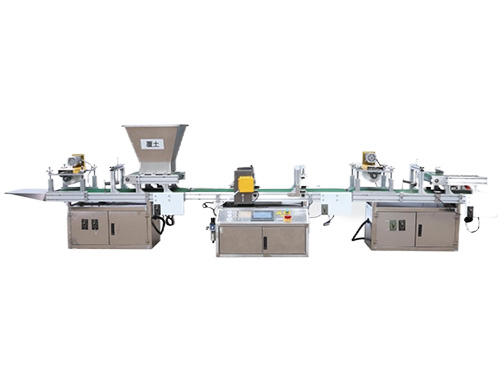
It adopts electrical integration and can be started by pressing the fully automatic button ...