





How Cell Density in Seedling Trays Affects Germination Uniformity and Crop Quality
2026-07-12 16:18:29
Introduction
Cell density—how many cells a tray contains and how closely they are spaced—is one of the most consequential specification decisions in seedling production, yet it is often treated as a simple volume question rather than a complex interaction of plant biology, growing environment, and production economics. Higher-density trays maximize the number of plants produced per square meter of bench space, but this efficiency gain comes with trade-offs in germination consistency, seedling vigor, and post-transplant performance that commercial growers must understand.
The optimal cell density for a given operation depends on the specific crop, growing conditions, nursery cycle length, and the production economics of the target market. There is no universally correct cell density—only the correct density for each specific situation, and finding it requires understanding the underlying biological and environmental mechanisms that drive the density-performance relationship.
The Biology of Plant Competition in High-Density Tray Environments
Plants in adjacent cells begin competing with each other earlier than most growers realize. Even before the above-ground shoots are large enough to shade neighboring plants, root systems are exploring the boundaries between cells and competing for water, nutrients, and oxygen in the shared zone between adjacent cell root zones. This below-ground competition begins within the first two to three weeks of germination in high-density tray formats and intensifies as the plants grow. The primary resources subject to competition in dense tray formats are light, water, and nutrients. Light competition is the most visible effect: plants in the interior of a densely-packed tray receive less photosynthetically active radiation than those at the edges, producing the characteristic variation in height and vigor across a tray that undermines uniformity. Water competition becomes significant when multiple cells deplete the available moisture between irrigation events, creating variability in moisture stress levels across the tray. Nutrient competition is most significant for phosphorus and micronutrients, which diffuse more slowly through the growing medium than nitrogen and potassium. In very high cell density trays, plants at the periphery of each cell zone may access a larger volume of nutrient-rich medium than those in the interior, compounding the growth variation produced by light and water competition. This is one reason why nutrient deficiency symptoms often appear first in the interior cells of dense tray blocks.
How Cell Spacing Affects Air Circulation and Disease Pressure
Air circulation around and between cells is dramatically reduced in high-density tray formats, creating a microclimate with elevated humidity, reduced gas exchange, and higher average temperatures than the surrounding greenhouse air. This modified microclimate is particularly favorable for fungal pathogen development and for the stretch response in seedlings that causes excessive elongation as plants compete for light. Cell spacing that maintains adequate air circulation channels between cells—typically a minimum of 3 to 5 millimeters between adjacent cell walls—allows better humidity dissipation from the canopy and supports more uniform drying rates across the tray surface. Some manufacturers offer high-density tray formats with integrated ventilation channels or modified cell wall geometries that improve air circulation even at very high cell counts. Disease pressure is measurably higher in dense tray formats because the elevated humidity in poorly-ventilated cell zones creates extended leaf wetness periods and supports pathogen proliferation. Botrytis gray mold, powdery mildew, and downy mildew all establish and spread more rapidly in dense canopy conditions than in well-ventilated tray formats. The disease management cost associated with high cell density must be factored into the total cost comparison against lower-density alternatives.
Light Competition and Seedling Vigor in Dense Tray Formats
Light competition in dense tray formats triggers a stretch response in seedlings as they elongate in search of available photons. This elongation produces leggy seedlings—tall, weak plants with insufficient structural strength to support themselves after transplanting. Legginess is one of the most common quality defects in seedling production and is directly attributable to inadequate light availability in high-density tray formats during the later nursery stages. The target light level for most vegetable and ornamental seedlings is 200 to 400 micromoles of photosynthetically active radiation per square meter per second, which is the range that supports compact, well-branched growth without photoinhibition. Achieving these light levels throughout a dense tray block requires supplemental lighting in many greenhouse configurations, particularly during winter production seasons when natural light levels are low. The quality of light spectrum also matters. Blue light promotes compact growth and chlorophyll development, while red light promotes stem elongation. Some supplemental lighting systems are specifically tuned to favor blue light spectra that suppress the stretch response, supporting compact growth even in high-density tray environments where light competition is unavoidable.
Finding the Optimal Cell Density for Different Crops and Markets
The optimal cell density for each crop is determined by a combination of the target nursery cycle length, the market specification for seedling quality, and the available greenhouse infrastructure. For short-cycle crops grown for field vegetable production, high-density trays in the 200 to 500 cells per tray range are standard because the brief nursery residency limits the severity of competition effects. For longer-cycle crops or premium market segments, lower cell density in the 50 to 150 cells per tray range produces superior seedling quality that commands higher prices. The break-even calculation for cell density selection compares the increased production capacity and lower per-plant tray cost of higher-density formats against the increased culling rate, slower growth rates, and higher disease management costs associated with competition stress. This calculation varies by crop, season, and market price, which means that the optimal density may shift seasonally even within the same operation. Most commercial operations find that running two to three cell density tiers—one for commodity vegetable production, one for premium transplants, and one for slow-growing or high-value crops—provides the flexibility to optimize for each market segment without forcing all crops into a single compromise format.
Managing High-Density Trays to Minimize Competition Stress
When high cell density formats are selected, management practices can partially offset the competition and disease pressure they create. Increasing bench spacing to allow better air circulation around tray edges reduces humidity accumulation and light competition at the tray periphery. Adjusting irrigation frequency to deliver smaller, more frequent water applications reduces the moisture variability between well-watered and water-stressed cells. Supplemental lighting, particularly during the early morning and late afternoon periods when natural light is lowest, extends the effective light period and reduces the stretch response even in dense tray environments. Growing medium with excellent drainage and air-filled porosity supports healthier root systems that tolerate the competition stress of dense tray environments better than poorly-draining media. A manufacturer that understands the trade-offs between cell density and crop quality can advise on the specific density recommendations for each crop type and growing configuration, helping buyers avoid the most common specification errors that lead to poor germination uniformity and excessive culling rates.
Conclusion
Commercial growers who understand the full scope of factors affecting their seedling tray performance—and who work with suppliers and manufacturers that provide genuine technical depth rather than just catalog products—consistently achieve better production outcomes than those who treat tray selection as a commodity decision. The investment of time and attention in understanding tray science and matching specifications to operational requirements pays compounding returns across every production cycle and every market season.
United States Department of Agriculture (USDA) Agricultural Research Service. (2023). Controlled Environment Agriculture and Seedling Production Systems. USDA ARS.
European Nursery Stock Association (ENA). (2023). Technical Guide for Nursery Production Systems. ENA Brussels.

The CNC Seed Braiding Machine is a high-precision, fully automated agricultural equipment s...
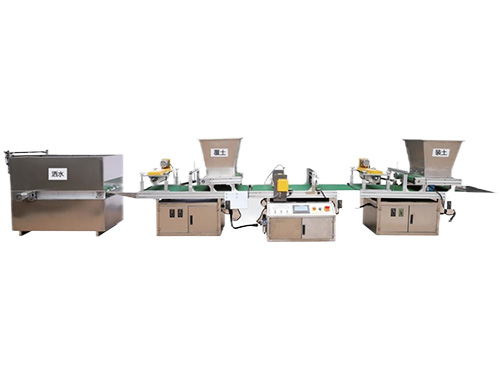
It adopts electrical integration and can be started by pressing the fully automatic button ...
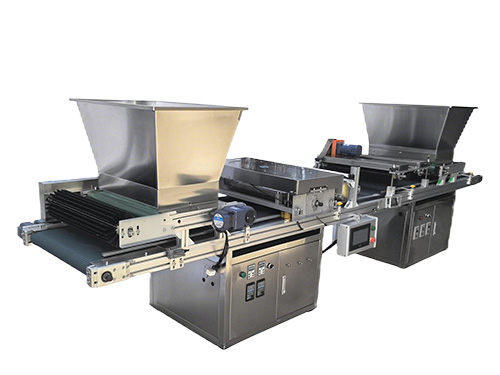
The XP750 seeder has stable performance, excellent product quality, simple and convenient o...
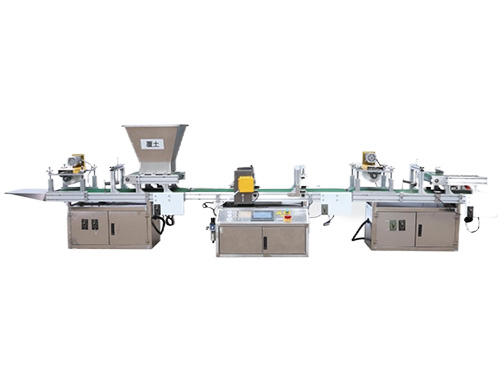
It adopts electrical integration and can be started by pressing the fully automatic button ...