





How Modern Seedling Trays Are Powering Precision Agriculture Transformation
2026-07-06 15:57:06
Introduction
Precision agriculture—the application of data, sensors, and automated control to optimize crop management decisions—is transforming field crop and greenhouse vegetable production. The same principles are now being applied to seedling nursery production, where they have the potential to improve quality consistency, reduce input waste, and increase production efficiency in ways that have not been achievable with traditional manual nursery management methods.
The seed tray is at the center of this transformation. As the primary physical container for the seedling during its most vulnerable and consequential developmental phase, the tray is the logical integration point for sensors, data collection systems, and automated process controls that enable precision nursery management.
The Data Revolution in Commercial Seedling Production
Commercial seedling production generates enormous amounts of data that has historically gone uncollected and unanalyzed: germination timing by cell, growth rate variation across the tray, water consumption patterns, temperature exposure history, and disease incidence by position in the greenhouse. Precision agriculture brings data collection, integration, and analysis to these processes, enabling the transition from reactive management—responding to observed problems—to predictive management that prevents problems before they occur. The foundational data layer for precision nursery management begins with the seed itself: germination rate, germination energy, seed vigor, and seed health. This data, combined with growing medium characteristics, irrigation records, and environmental data from sensors throughout the greenhouse, creates a comprehensive picture of the production process that enables root cause analysis of quality issues and systematic improvement of production protocols. Commercial nursery management software platforms are increasingly incorporating seedling production modules that integrate tray-level data with enterprise resource planning systems, enabling the kind of lot traceability and quality tracking that is standard in other food production sectors but relatively new to commercial horticulture. A manufacturer that can provide data-compatible tray formats that integrate with these emerging software platforms positions their customers for the precision agriculture transition.
Sensor-Integrated Tray Technologies for Real-Time Monitoring
Sensor-integrated seedling trays represent the next frontier in nursery monitoring technology. Research systems incorporating moisture sensors, temperature sensors, and even root imaging systems into tray designs have been demonstrated in university and commercial research facilities, though widespread commercial adoption is still emerging. These sensor systems provide continuous, cell-level data on the growing environment rather than the spot measurements from handheld sensors or bench-level environmental stations. The practical near-term application of sensor technology in commercial nursery production is less about replacing existing monitoring methods and more about supplementing them with continuous data streams that capture variability within the tray population. Traditional monitoring captures what is happening in representative trays; sensor-integrated trays can capture what is happening across the full population of trays in the greenhouse, including the outlying trays at edges and corners that typically experience different conditions than centrally-located trays. The engineering challenge for sensor-integrated trays is achieving the required sensor accuracy and reliability while maintaining the cost, durability, and food safety compliance of a production-grade growing container. Durability—the ability to withstand repeated cleaning and sterilization cycles without sensor degradation—is the primary technical barrier to commercial adoption, and manufacturers with advanced polymer engineering capabilities are actively working on solutions.
Automated Irrigation Control Driven by Tray-Level Data
Automated irrigation control driven by real-time tray-level data is perhaps the most commercially mature application of precision agriculture principles in seedling production. Systems that continuously monitor growing medium moisture in representative trays and adjust irrigation valve opening times accordingly can maintain more consistent moisture levels than timer-based systems that apply the same water volume regardless of actual plant demand. The water savings from precision irrigation control are significant—research in commercial greenhouse operations has documented 20 to 30 percent reductions in irrigation water use with precision irrigation control compared to timer-based scheduling, with simultaneous improvements in seedling uniformity. These water savings translate directly to reduced fertilizer use, lower energy costs for water treatment and pumping, and smaller environmental footprint. The integration between automated irrigation control and tray design is direct: the irrigation control system must be calibrated to the drainage characteristics of the specific tray format in use, and tray manufacturers that can provide detailed drainage flow rate data enable more accurate calibration of the automated irrigation control algorithms.
Machine Learning and Predictive Models for Seedling Quality Assessment
Machine learning models trained on historical production data are beginning to enable predictive quality assessment in commercial seedling operations. By analyzing the relationships between seed lot characteristics, growing medium properties, environmental conditions, irrigation inputs, and final seedling quality metrics, these models can identify the parameter combinations that predict good or poor production outcomes before the symptoms are visible to the human eye. The practical application of predictive models in commercial operations is still emerging, but early adopters are using them to optimize seed lot selection, adjust growing medium formulations, and fine-tune environmental control setpoints based on predicted rather than historical performance. As these models improve with more training data, their predictive accuracy will increase and their commercial value will grow. The data requirements for effective machine learning models are substantial, which favors larger commercial operations with the production volume to generate sufficient training data and the IT infrastructure to manage it. Smaller operations may benefit from shared model access through industry consortiums or manufacturer-provided analytics services that aggregate data across multiple operations.
The Road Ahead: Emerging Technologies and Their Implications for Tray Design
The tray of the future will likely be a smart growing platform that integrates sensors, data connectivity, and active environmental management functions into the container itself. Research prototypes have demonstrated trays with embedded micro-fluidic systems that deliver precise water and nutrient doses to individual cells, active heating elements that manage root zone temperature, and integrated light-emitting diode arrays that supplement photosynthetically active radiation at the canopy level. These advanced tray technologies are likely to be adopted first in high-value crop segments—pharmaceutical plant production, high-end ornamental horticulture, and specialty food crops—where the cost per plant justifies the investment in precision tray technology. As manufacturing costs decrease and the technology matures, broader adoption across commercial vegetable and ornamental production is plausible. For the immediate future, commercial growers should focus on building the data collection and analysis infrastructure that will enable them to take advantage of these emerging technologies as they mature. The foundation of precision nursery management—good data, systematic analysis, and evidence-based decision making—is valuable regardless of which specific technology platform ultimately prevails.
Conclusion
Commercial growers who understand the full scope of factors affecting their seedling tray performance—and who work with suppliers and manufacturers that provide genuine technical depth rather than just catalog products—consistently achieve better production outcomes than those who treat tray selection as a commodity decision. The investment of time and attention in understanding tray science and matching specifications to operational requirements pays compounding returns across every production cycle and every market season.
Washington State University Center for Sustaining Agriculture and Natural Resources. (2022). Nursery Crop Nutrition and Water Management. WSU CSANR.
University of California Division of Agriculture and Natural Resources. (2022). Greenhouse Management for Commercial Plant Production. UC ANR Publications.

The CNC Seed Braiding Machine is a high-precision, fully automated agricultural equipment s...
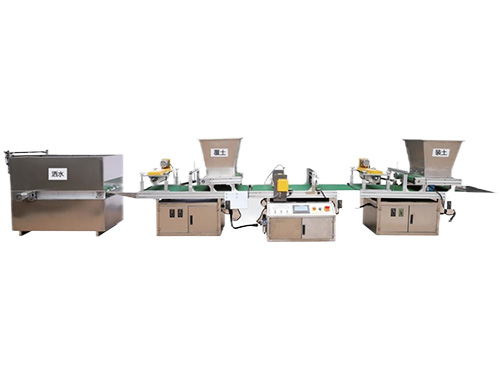
It adopts electrical integration and can be started by pressing the fully automatic button ...
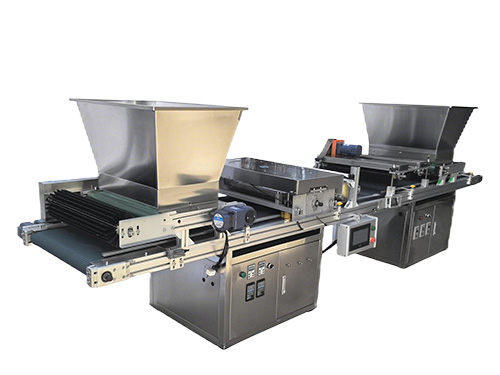
The XP750 seeder has stable performance, excellent product quality, simple and convenient o...
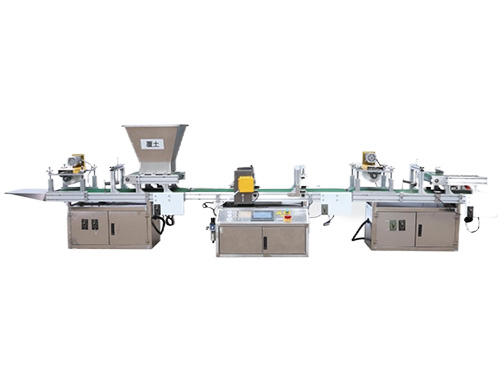
It adopts electrical integration and can be started by pressing the fully automatic button ...