





Plastic Drainage Mat vs Traditional Drainage Systems for Projects
2026-03-01 21:47:25
In modern construction and landscaping projects, drainage performance plays a crucial role in protecting structures, improving soil stability, and extending service life. Among various solutions, the plastic drainage mat has become a popular alternative to traditional drainage systems.
As a professional plastic drainage mat manufacturer with factory-scale production and bulk supply capability, understanding the differences between new-generation drainage mats and conventional systems helps project planners choose the most efficient and cost-effective solution. This article compares plastic drainage mats with traditional drainage methods in terms of performance, installation, durability, and project efficiency.
Why Drainage Systems Matter in Projects
Water accumulation is one of the main causes of structural damage, soil erosion, and material degradation. Poor drainage can lead to:
·Foundation weakening
·Mold and moisture issues
·Landscape failure
·Reduced lifespan of buildings
·Increased maintenance costs
Whether for rooftops, basements, green roofs, sports fields, or landscaping, choosing the right drainage system directly affects long-term project success.
What Is a Plastic Drainage Mat?
A plastic drainage mat is a molded sheet made from durable polymer materials designed to manage water flow efficiently. It typically features raised dimples or channels that create a gap between surfaces and allow water to move freely to outlets.
Modern plastic drainage mat production focuses on strength, permeability, and lightweight construction, making the mats easy to transport and install on both small and large-scale projects.
Key Characteristics
·Lightweight yet strong
·High water flow capacity
·Resistant to chemicals and moisture
·Easy to cut and shape
·Suitable for vertical and horizontal use
Professional drainage mat factory manufacturing ensures uniform structure and reliable performance across bulk supply orders.
What Are Traditional Drainage Systems?
Traditional drainage systems usually involve layers of gravel, sand, pipes, and geotextile fabrics to direct water away from structures. These methods have been used for decades in construction and landscaping.
Common Traditional Methods
·Gravel drainage layers
·French drains
·Perforated pipe systems
·Sand-based filtration
·Natural slope channels
While effective, these systems often require heavy labor, large material volume, and longer installation times compared to modern plastic drainage mat solutions.
Plastic Drainage Mat vs Traditional Drainage Systems
Let’s compare both options across important project factors.
1. Installation Efficiency
Plastic drainage mats are quick to install. They arrive in sheets or rolls and can be placed directly over surfaces without heavy excavation.
Traditional systems require:
·Digging trenches
·Transporting gravel
·Layering materials
·Precise leveling
For large projects, plastic drainage mat factory supply significantly reduces labor time and installation cost.
Winner: Plastic Drainage Mat
2. Load-Bearing Performance
High-quality plastic drainage mats are engineered to handle pressure from soil, concrete, and foot traffic without collapsing the drainage channels.
Traditional gravel layers can shift over time, reducing void space and drainage efficiency.
With professional manufacturer-level production, plastic drainage mats maintain consistent water flow even under heavy loads.
Winner: Plastic Drainage Mat
3. Drainage Capacity
Plastic drainage mats create controlled channels for water movement, ensuring fast and predictable drainage paths.
Traditional systems rely on natural voids between stones, which can become blocked by soil migration over time.
Modern plastic drainage mat production integrates filtration layers to reduce clogging and improve long-term performance.
Winner: Plastic Drainage Mat
4. Material Weight and Transport
Plastic drainage mats are lightweight and easy to handle, making transportation and on-site installation simpler.
Traditional drainage materials such as gravel and sand are heavy, increasing transportation cost and labor intensity.
Bulk orders from a drainage mat factory can supply large project areas with minimal logistics burden.
Winner: Plastic Drainage Mat
5. Maintenance Requirements
Plastic drainage mats resist corrosion, decay, and microbial growth. Once installed, they require minimal maintenance.
Traditional drainage systems may clog, shift, or collapse, requiring periodic inspection and repair.
Professional plastic drainage mat manufacturer designs focus on durability to reduce long-term maintenance expenses.
Winner: Plastic Drainage Mat
6. Environmental Impact
Plastic drainage mats use optimized material volumes and reduce the need for large amounts of mined gravel.
Traditional drainage depends heavily on natural aggregate extraction, which increases environmental footprint.
With responsible factory production processes, plastic drainage mats can support sustainable project development.
Winner: Plastic Drainage Mat
Applications of Plastic Drainage Mats
Plastic drainage mats are widely used across industries:
·Building foundations
·Green roofs
·Basement waterproofing
·Retaining walls
·Landscape projects
·Sports fields
·Planter drainage
Thanks to scalable plastic drainage mat factory production, these mats can serve both small landscaping jobs and massive infrastructure projects.
Why Choose Factory-Produced Plastic Drainage Mats?
Working with a reliable plastic drainage mat manufacturer ensures:
·Stable quality control
·Precision molding
·Bulk production capability
·Consistent material strength
·Custom size options
·Cost efficiency for large orders
Modern plastic drainage mat production facilities use advanced equipment to guarantee uniform thickness, load resistance, and drainage performance, giving project managers confidence in long-term system reliability.
Cost Comparison in Projects
While traditional drainage systems may appear cheaper initially, they often involve:
·Higher labor cost
·More material volume
·Longer installation time
·Higher maintenance
Plastic drainage mats reduce total project cost by improving speed, reducing labor, and minimizing future repair needs. With bulk factory supply, unit costs become even more competitive for commercial and infrastructure projects.
Which One Should You Choose?
Traditional drainage systems still work for simple, low-risk environments. However, for modern projects that demand efficiency, durability, and scalability, the plastic drainage mat offers clear advantages.
Especially when sourced from a professional manufacturer with large-scale factory production, plastic drainage mats provide predictable performance, easier installation, and long-term project protection.
Final Thoughts on Plastic Drainage Mat Solutions
Choosing the right drainage system directly affects the success and lifespan of any project. Compared with traditional drainage methods, plastic drainage mats deliver faster installation, stronger load performance, better water control, and lower maintenance requirements.
With advanced plastic drainage mat production, dependable factory bulk supply, and manufacturer-level quality control, drainage mats are becoming the preferred solution for construction and landscaping professionals worldwide.
If your project requires reliable, scalable, and cost-effective drainage, investing in high-quality plastic drainage mats from a trusted production factory is a smart and future-ready decision.
References
GB/T 7714:Lahouar S, Al-Qadi I L, Loulizi A, et al. Quantifying the Benefits of a Geocomposite Membrane as a Pavement Moisture Barrier Using Ground Penetrating Radar and Falling Weight Deflectometer[C]//82nd Annual Meeting of the Transportation Research Board, Washington, DC. 2003.
MLA:Lahouar, Samer, et al. "Quantifying the Benefits of a Geocomposite Membrane as a Pavement Moisture Barrier Using Ground Penetrating Radar and Falling Weight Deflectometer." 82nd Annual Meeting of the Transportation Research Board, Washington, DC. 2003.
APA:Lahouar, S., Al-Qadi, I. L., Loulizi, A., Elseifi, M., Wilkes, J. A., & Freeman, T. E. (2003, January). Quantifying the Benefits of a Geocomposite Membrane as a Pavement Moisture Barrier Using Ground Penetrating Radar and Falling Weight Deflectometer. In 82nd Annual Meeting of the Transportation Research Board, Washington, DC.

The CNC Seed Braiding Machine is a high-precision, fully automated agricultural equipment s...
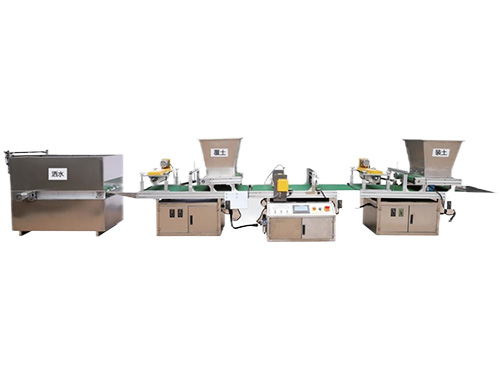
It adopts electrical integration and can be started by pressing the fully automatic button ...
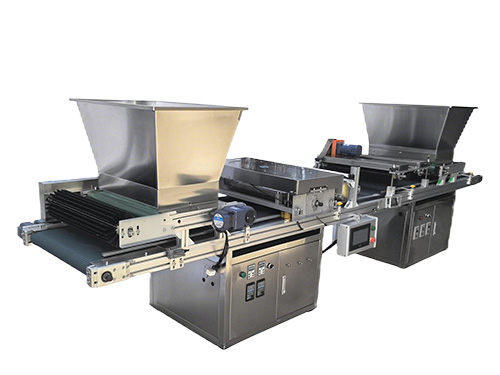
The XP750 seeder has stable performance, excellent product quality, simple and convenient o...
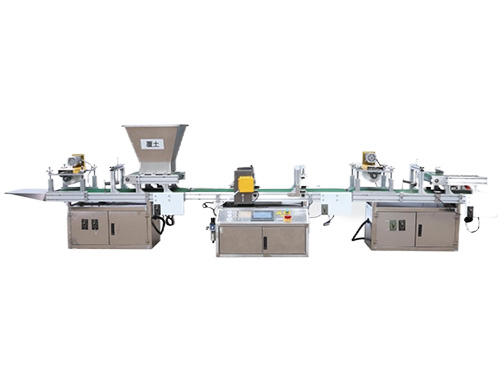
It adopts electrical integration and can be started by pressing the fully automatic button ...