





How AI Is Changing Automatic Seedling Seeding Technology
2025-12-02 16:44:10
The rapid modernization of agriculture has placed enormous pressure on growers to improve seedling uniformity, expand nursery output, and operate with fewer labor resources. As a result, the automatic seedling seeder has emerged as a central technology in modern nursery production. Today, artificial intelligence is pushing this machine into a new era—one defined by higher accuracy, data-driven decision-making, and smarter adjustment capabilities.
For manufacturers with established production strength and the ability to offer consistent bulk supply, integrating AI into their equipment has become the next major competitive advantage.
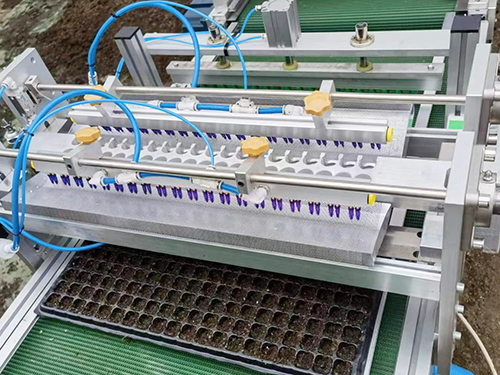
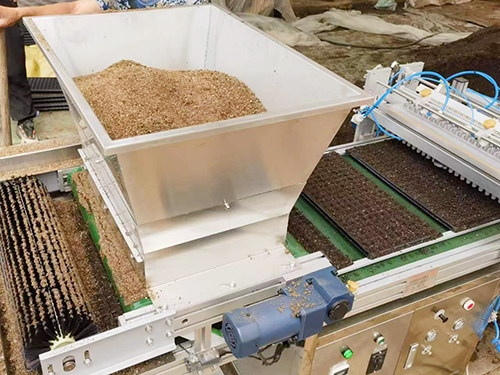
AI Creates Unprecedented Accuracy in Seeding Operations
One of the most significant improvements AI brings to nursery automation is the dramatic increase in seeding precision. Traditional seeders—whether manual or mechanical—often struggle with inconsistent seed recognition or irregular material movement. AI technology solves this through intelligent sensing and rapid decision-making.
AI-Powered Seed Recognition
New systems can analyze hundreds of images per second using vision algorithms. They evaluate:
·Seed dimensions
·Irregular seed shapes
·Surface characteristics
·Orientation before suction
This ensures that the automatic seedling seeder identifies and processes seeds more reliably than ever before.
Self-Correcting Seeding Behavior
AI doesn’t simply detect seeds; it actively responds to issues in real time. If a seed is misaligned or stuck, the system can:
·Adjust suction pressure
·Trigger a double-check pick-up
·Realign the nozzle angle
·Skip defective seeds to maintain tray quality
The result is a more uniform tray layout and a higher germination rate—especially important for large nurseries relying on bulk production cycles.
Intelligent Speed Control Enhances Productivity
Speed has always been a priority in nursery automation, but high speed often compromises accuracy. AI changes this equation by managing movement patterns and mechanical timing more precisely than human operators could.
Optimized Tray Filling
AI adjusts conveyor speed and nozzle coordination based on:
·Tray model
·Substrate density
·Seed size
·Environmental humidity
Instead of running at a fixed speed, the automatic seedling seeder dynamically modifies its workflow for maximum efficiency.
Adaptive Seeding Profiles for Multiple Crops
The machine can store program profiles for different varieties—vegetables, herbs, flowers, tobacco, and more. With AI support, switching crops becomes a process of choosing a preset rather than recalibrating equipment manually.
Manufacturers with large-scale production capacity are now embedding these “smart presets” into every bulk-supplied unit.
Predictive Maintenance Reduces Downtime
Downtime in a nursery can jeopardize planting schedules. AI prevents these disruptions through predictive monitoring.
Real-Time Component Health Tracking
Sensors in the automatic seedling seeder constantly measure:
·Motor load
·Vacuum fluctuation
·Nozzle wear
·Drive belt movement
·Temperature abnormalities
AI evaluates this information to predict when components may fail.
Maintenance Alerts Before Problems Occur
Instead of reacting to breakdowns, operators receive early warnings and maintenance suggestions. This significantly extends equipment lifespan and reduces unexpected repair costs—an advantage that appeals deeply to growers planning long-term production.
AI Improves Seed Quality Control Before Planting
Seed quality plays a crucial role in nursery performance. AI is increasingly used to detect seed viability and integrity before they enter the trays.
Seed Grading and Sorting
AI systems can identify:
·Damaged seeds
·Color variation linked to maturity
·Non-seed material or debris
·Underweight or irregular seeds
High-quality seeds lead to stronger seedlings and more predictable crop outcomes. This elevates the entire value of the automatic seedling seeder for growers focused on large-scale operations.
Data Intelligence Connects the Seeder to Digital Farming Systems
Modern greenhouses rely on data to optimize every stage of production. AI-equipped seedling seeders can collect and upload key operational metrics to cloud-based platforms.
Comprehensive Operational Insights
Users can track:
·Daily seeding volumes
·Precision rates
·Crop-specific performance trends
·Seasonal comparisons
·Substrate influence on success rates
Enhanced Traceability and Planning
By integrating with digital agriculture systems, the machine becomes part of a larger ecosystem—supporting crop scheduling, resource forecasting, and production cost optimization.
Manufacturers offering long-term bulk supply are increasingly incorporating these intelligent data features to meet modern greenhouse requirements.
AI Makes Seeders More Versatile Across Different Trays and Substrates
Nursery trays vary by region and crop. AI helps the machine adapt without manual measurement.
Automatic Tray Detection
Cameras or sensors identify tray:
·Shape
·Cell depth
·Cell diameter
·Material type
The machine then adjusts its drop height and timing.
Substrate Condition Monitoring
AI reads substrate density and moisture content, enabling the machine to regulate seed placement force to avoid burying or bouncing seeds.
This level of adaptability greatly enhances the machine’s practicality, especially in regions where growers use a wide range of tray formats.
AI Enhances Quality Assurance During Manufacturing
AI is not only used in machine operation—it is increasingly used in the manufacturing stage as well. Factories with strong production lines now use AI to inspect component assembly and ensure consistency.
Benefits Include:
·More accurate part alignment
·Faster identification of assembly errors
·Consistency verification across batch production
·Automated calibration before shipment
This allows manufacturers to guarantee that every bulk-delivered automatic seedling seeder performs at the same high standard.
Conclusion: AI Drives the Next Generation of Seedling Automation
The integration of artificial intelligence into the automatic seedling seeder marks a major milestone in agricultural automation. From precision seed handling to adaptive speed control, predictive maintenance, advanced grading systems, and data-driven decision-making, AI significantly elevates the reliability and efficiency of nursery operations.
Manufacturers with strong production capacity and a proven ability to deliver stable bulk supply are leading this transition. As AI technology continues to evolve, automatic seedling seeding machines will become even smarter, more accurate, and more essential to the global agricultural landscape.
References
GB/T 7714:Bechar A, Vigneault C. Agricultural robots for field operations: Concepts and components[J]. Biosystems engineering, 2016, 149: 94-111.
MLA:Bechar, Avital, and Clément Vigneault. "Agricultural robots for field operations: Concepts and components." Biosystems engineering 149 (2016): 94-111.
APA:Bechar, A., & Vigneault, C. (2016). Agricultural robots for field operations: Concepts and components. Biosystems engineering, 149, 94-111.

The CNC Seed Braiding Machine is a high-precision, fully automated agricultural equipment s...
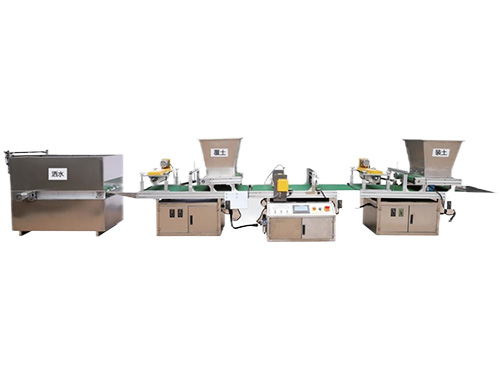
It adopts electrical integration and can be started by pressing the fully automatic button ...
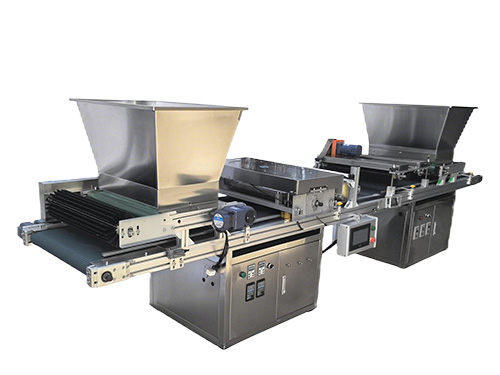
The XP750 seeder has stable performance, excellent product quality, simple and convenient o...
It adopts electrical integration and can be started by pressing the fully automatic button ...