





Customizing Seedling Trays for Specific Crop Needs
2026-01-03 10:40:53
Seedling trays play a foundational role in modern horticulture, acting as the first controlled environment where crops establish root systems, develop early structure, and adapt to growing conditions. While standard seedling trays can support basic germination, professional growers increasingly rely on customized seedling trays to meet the specific biological and operational needs of different crops.
From a manufacturer and production perspective, seedling trays are no longer generic consumables. They are engineered tools designed to improve uniformity, reduce transplant shock, and support large-scale cultivation. This article examines how seedling trays can be customized to align with specific crop requirements while maintaining consistency in bulk supply and production efficiency.
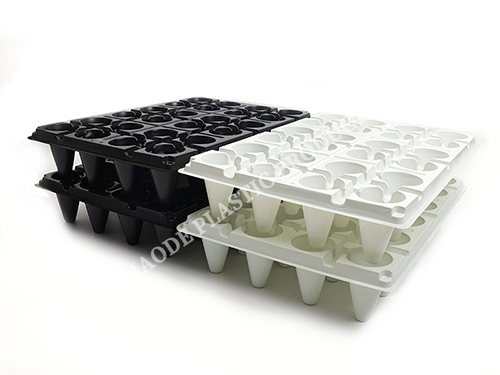
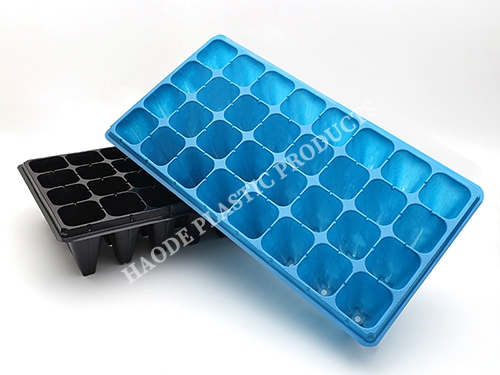
Why Crop-Specific Customization Matters
Different crops exhibit distinct root structures, growth rates, and moisture sensitivities. A one-size-fits-all approach to seedling trays often leads to uneven development, restricted root growth, or excessive water retention.
Customizing seedling trays allows growers to:
·Improve root aeration and structure
·Control moisture distribution
·Enhance seedling uniformity
·Reduce losses during transplantation
For crops grown at scale, even small improvements in early-stage performance can result in measurable gains across the entire production cycle.
Cell Size and Depth Optimization
Matching Root Architecture
Cell size and depth are among the most critical design variables in seedling trays. Shallow-rooted crops benefit from wider, shallower cells, while deep-rooted plants require increased depth to prevent root circling and compaction.
Custom-designed seedling trays consider:
·Expected root length at transplant stage
·Growth duration in the tray
·Nutrient uptake behavior
From a production standpoint, standardized tooling ensures that customized cell geometries can be replicated accurately across large manufacturing batches.
Drainage and Aeration Design
Balancing Water Retention and Oxygen Supply
Drainage hole configuration directly affects oxygen availability and moisture control within seedling trays. Crops sensitive to excess moisture require enhanced drainage, while others benefit from moderate water retention.
Customization options include:
·Number and diameter of drainage openings
·Hole placement relative to cell geometry
·Base structure that promotes airflow
For large-scale growers, consistent drainage performance across thousands of seedling trays is essential. Production-level quality control ensures uniform water behavior throughout bulk supply.
Material Selection for Crop Compatibility
Structural Stability and Root Health
Material choice influences durability, flexibility, and thermal behavior. Seedling trays designed for repeated use often require reinforced materials that maintain shape under load, while single-cycle applications may prioritize cost efficiency.
Material considerations include:
·Resistance to cracking and deformation
·Surface texture affecting root pruning
·Compatibility with automated handling systems
From a manufacturer perspective, material selection must support stable production output while meeting the functional requirements of specific crops.
Tray Layout and Spacing Configuration
Optimizing Density Without Compromising Growth
Crop-specific spacing is another important factor in seedling tray customization. High-density layouts increase production efficiency but may restrict airflow and light penetration.
Custom layouts are designed to:
·Balance plant density and uniform growth
·Reduce competition during early stages
·Align with downstream transplanting equipment
In mass production, tray layout consistency ensures predictable performance across cultivation cycles.
Integration with Cultivation Systems
Customized seedling trays must integrate seamlessly with irrigation, lighting, and transport systems. Tray dimensions, edge design, and stacking features are often tailored to existing greenhouse or nursery infrastructure.
For growers operating at scale, compatibility reduces labor requirements and minimizes handling damage. From a production standpoint, this integration supports efficient manufacturing and reliable bulk supply delivery.
Manufacturing and Production Considerations
Custom seedling trays must be designed not only for plant performance but also for efficient manufacturing. Tooling precision, cycle time, and material utilization all influence production scalability.
Key production factors include:
·Repeatable mold accuracy
·Consistent wall thickness
·Stackability for logistics efficiency
A seedling tray designed for manufacturer-level production ensures that customization does not compromise supply stability or product consistency.
Quality Control and Consistency
Uniformity is essential when seedling trays are used across large cultivation areas. Variations in cell volume or drainage behavior can lead to uneven crop development.
Production-level quality control focuses on:
·Dimensional accuracy
·Material consistency
·Functional performance validation
This approach supports long-term reliability for professional growers relying on bulk quantities of seedling trays.
Conclusion: The Strategic Value of Customized Seedling Trays
Seedling trays are a critical component in modern crop production systems. Customizing seedling trays for specific crop needs enhances early-stage plant health, improves operational efficiency, and supports predictable outcomes at scale.
From a manufacturer and bulk production perspective, well-designed seedling trays combine biological understanding with engineering precision. When customization is aligned with scalable production, seedling trays become a strategic asset rather than a simple accessory—supporting consistent performance, reliable supply, and long-term cultivation success.
References
GB/T 7714:NeSmith D S, Duval J R. The effect of container size[J]. HortTechnology, 1998, 8(4): 495-498.
MLA:NeSmith, D. Scott, and John R. Duval. "The effect of container size." HortTechnology 8.4 (1998): 495-498.
APA:NeSmith, D. S., & Duval, J. R. (1998). The effect of container size. HortTechnology, 8(4), 495-498.

The CNC Seed Braiding Machine is a high-precision, fully automated agricultural equipment s...
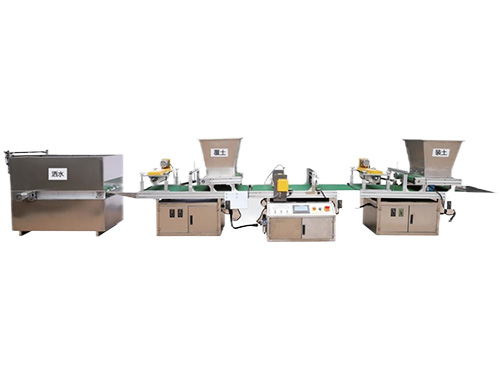
It adopts electrical integration and can be started by pressing the fully automatic button ...
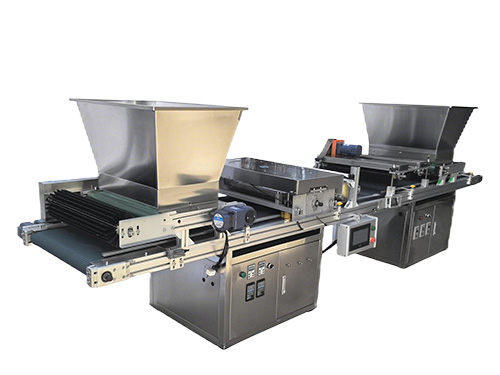
The XP750 seeder has stable performance, excellent product quality, simple and convenient o...
It adopts electrical integration and can be started by pressing the fully automatic button ...