





How to Choose the Right Size Seed Tray for Your Greenhouse
2026-05-30 16:48:02
Introduction
Growing healthy seedlings begins long before seeds are placed into soil. The seed tray you choose shapes every stage of early plant development—from germination rates to root architecture at transplant time. Whether you operate a large commercial nursery or manage a small greenhouse operation, selecting the right tray can directly influence yield consistency and overall crop quality. The principles examined here draw on horticultural science research and manufacturer field experience to provide commercial growers with an evidence-based framework for seed tray decision-making.
Commercial seedling production is a precision operation where the choice of growing container directly affects the efficiency of every downstream process. Trays that are well-matched to their intended crop and growing conditions support uniform germination, healthy root development, and efficient transplant operations. Trays that are poorly matched create problems—root binding, uneven growth, transplant shock—that cost more to fix than the marginal price difference between a premium and an economy tray.

Assess Your Crop Type and Growth Cycle
Commercial seedling production begins with a decision that many growers underestimate: which seed tray size will best serve the target crop and growing environment. The dimensions, cell count, and volume of a tray are not arbitrary numbers—they determine how much root space each seedling receives, how long the plant can remain in the nursery phase, and how efficiently the transplant process will proceed. Getting this selection right the first time avoids the cascading costs of root binding, transplant shock, and uneven crop stands that result from mismatched tray specifications. Nurseries ranging from small-scale operations producing a few thousand transplants per season to large commercial facilities turning out millions of plugs annually all face the same fundamental challenge: matching tray geometry to agronomic requirements. A manufacturer that understands these interactions can guide buyers through the specification process, but it is useful for growers to develop their own working knowledge of tray sizing principles. This article provides that foundation.
Understand Cell Volume and Plug Count Specifications
Cell volume, measured in milliliters per cell, is one of the most practical metrics for matching a seed tray to a production goal. Smaller cell volumes in the 8 to 15 milliliter range are appropriate for short-cycle crops such as lettuce, basil, and other leafy greens that spend only two to three weeks in the tray before transplant. These crops need rapid turnover and benefit from high-density tray formats that maximize greenhouse bench utilization per square meter. Fruiting vegetables including tomatoes, peppers, and eggplant require more extensive root development before transplanting and typically need cells in the 40 to 80 milliliter range. The additional root volume supports longer nursery residency and produces a more robust seedling that establishes faster in the field. Specialty crops such as cucurbits and certain herbs may push cell volume requirements even higher depending on their nursery phase duration. Root vegetables present a distinct challenge because their morphology depends on unobstructed downward growth. Carrots, for example, require open-bottom trays or deep cell configurations that prevent the taproot from encountering physical barriers in the early growth phase. Standard closed-bottom trays cause root forking and deformation in these crops, which directly reduces marketable yield at harvest.
Match Tray Dimensions to Your Growing Medium
The growing medium selected interacts closely with seed tray dimensions. Fine-textured peat-based mixes fill smaller cells more uniformly but can become overly moisture-retentive if cell depth is insufficient for proper drainage. Coarser perlite-amended media require more generous drainage hole sizing and may benefit from deeper cells that provide a longer water column for moisture regulation. A manufacturer producing trays in multiple depth configurations allows growers to optimize this medium-to-tray relationship for their specific substrate formulation. Tray wall thickness also matters for growing medium selection. Thicker-walled trays retain moisture more consistently by reducing thermal fluctuation at the root zone, which benefits moisture-sensitive crops. Thinner-walled trays in lighter-gauge plastics offer cost advantages for high-density, single-use operations but may not provide the thermal stability that longer-cycle crops require.
Evaluate Root Development and Transplant Timing
Root development patterns vary significantly by crop species and directly determine the appropriate nursery residency period. Shallow-rooted crops reach optimal transplant readiness in two to three weeks, while deep-rooted species may require four to six weeks or more in the nursery. Monitoring root development through the drainage holes at the tray base is a practical field technique for assessing transplant readiness without disturbing the root zone. Overcrowded root systems in undersized cells become rootbound, producing spiraling roots that fail to establish normally after transplanting. The cost of this outcome goes beyond the seedling itself: rootbound transplants experience transplant shock, suffer delayed establishment, and often produce lower yields throughout the growing season. Choosing cell volume generous enough to accommodate the expected root volume eliminates this problem at its source.
Plan Greenhouse Space and Operational Workflow
Greenhouse space is a finite and expensive resource in commercial production. High-density tray formats with smaller cells allow more plants per bench area, improving space productivity during peak production periods. However, this efficiency must be balanced against the longer nursery residency of slower-growing crops, which occupy bench space for extended periods and may create scheduling conflicts in multi-crop operations. Operational workflow is another dimension of tray sizing that affects labor efficiency. Standardized external tray dimensions across different cell counts simplify tray cart configuration, stacking, and bench loading. When tray formats are inconsistent between crop types, workers must constantly adjust handling procedures, which adds friction and increases labor cost per plant. A manufacturer offering multiple cell counts within a standardized external footprint solves this problem for diversified nurseries.
Conclusion
Commercial growers who invest time in understanding tray specifications and matching them to their specific production requirements consistently outperform those who purchase on price alone. The right tray supports every stage of the seedling production cycle—from initial sowing through field transplant—and pays dividends in reduced crop losses, lower labor inputs, and more consistent harvest timing. Whether you are sourcing trays as a first-time commercial buyer or reviewing your current supplier against market alternatives, the principles outlined here provide a framework for making evidence-based decisions that protect your production outcomes.
Washington State University Extension. (2022). Nursery Crop Production Best Management Practices. WSU Extension.
University of Florida IFAS Extension. (2023). Nursery Container and Tray Selection for Landscape Plant Production. UF/IFAS.

The CNC Seed Braiding Machine is a high-precision, fully automated agricultural equipment s...
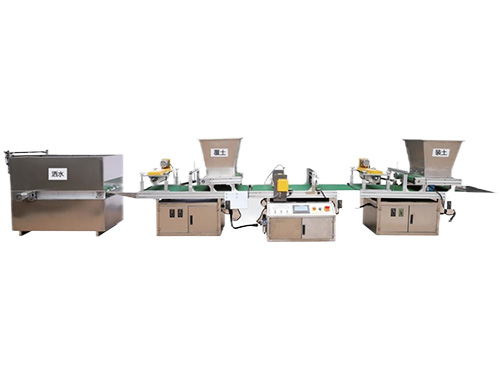
It adopts electrical integration and can be started by pressing the fully automatic button ...
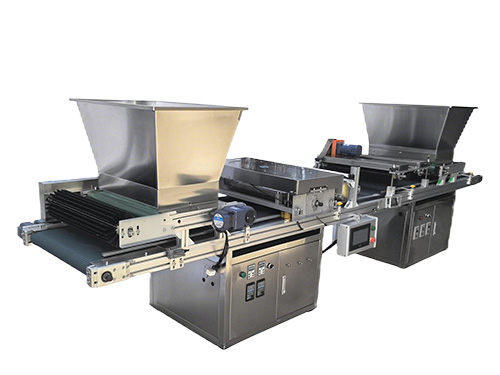
The XP750 seeder has stable performance, excellent product quality, simple and convenient o...
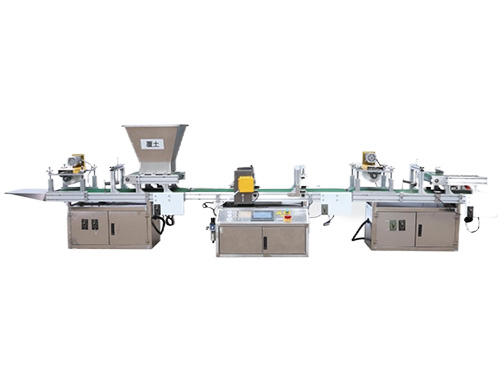
It adopts electrical integration and can be started by pressing the fully automatic button ...