





The Complete Guide to Seedling Trays (Plug Trays) — Types, Sizes, Materials & How to Choose
2026-07-30 17:41:57
Seedling trays—also called plug trays or cell trays—are the foundation of modern commercial plant propagation. Whether you're growing tomatoes for a greenhouse operation or raising millions of vegetable plugs for a large-scale farm, the right tray can mean the difference between uniform, vigorous seedlings and a patchy, inconsistent crop. This guide covers everything you need to know to make the right choice.
What Is a Seedling Tray (Plug Tray)?
A seedling tray, also known as a plug tray, cell tray, or hole tray, is a rigid or semi-rigid tray with multiple individual cells (holes) used to germinate and grow seedlings before transplanting. Each cell holds a single plant in its own pocket of growing medium.
The modern plug tray system emerged as part of the factory seedling production revolution in the late 20th century, replacing traditional bare-root and direct-sowing methods. Today, plug tray seedling cultivation is recognized as one of the most fundamental advances in commercial horticulture and vegetable production worldwide.
Why Plug Tray Seedlings Dominate Modern Agriculture
Commercial growers choose plug trays over bare-root or direct-sowing for compelling reasons:
Seed savings: Each cell gets exactly one (or a controlled number of) seeds, reducing seed waste by up to 40% compared to broadcast seeding.
Uniform germination: Controlled environment in each cell produces even, consistent germination rates across the entire tray.
Mechanical compatibility: Plug trays work seamlessly with manual and automated seeding machines, enabling high-throughput production lines.
Zero root damage at transplant: Seedlings are extracted with an intact root plug, causing no transplant shock. Survival rates reach 95–90%.
Extended growing window: Seedlings can be held in trays longer, giving growers flexibility to time transplanting with field or greenhouse conditions.
Scalability: From 72 cells to 800+ cells per tray, operations can match tray density to their crop cycle and market timing.
Materials: PET, PS, PVC, PP — Which Is Best?
Four main plastics are used to manufacture plug trays. Each has distinct characteristics:
PET (Polyethylene Terephthalate)
PET is currently the most popular material for commercial plug trays. It offers an excellent balance of durability, chemical resistance, and recyclability. PET trays are rigid yet slightly flexible, making them easy to handle and clean. They can be reused for 3–5+ seasons with proper care.
PS (Polystyrene) — Foam Trays
Available as rigid PS sheets or expanded polystyrene foam (EPS). Foam trays offer superior insulation—important in cold climates or early-season production. White PS foam reflects light, reducing root zone temperatures in warm conditions. However, foam trays are less durable and harder to clean thoroughly.
PVC (Polyvinyl Chloride)
PVC trays are cost-effective and provide good rigidity. However, they are less commonly used in modern commercial operations due to lower impact resistance and environmental concerns.
PP (Polypropylene)
PP is highly resistant to chemicals and high temperatures, making it suitable for sterilization processes (steam or chemical). PP trays are lightweight and durable, though generally more expensive.
Hole Shapes: Square vs Round — Which Is Better?
The shape of each cell directly affects root development and water distribution:
Square holes contain approximately 30% more growing medium than round holes of the same top diameter. Water distribution is more uniform, and roots tend to grow straighter and more fully developed, forming a better root plug.
Round holes are simpler and less expensive to manufacture. They work well for shallow-rooted crops and situations where root volume is less critical.
For commercial vegetable and ornamental plant production, square-cell trays are widely considered the industry standard due to superior root architecture and media efficiency.
Standard Sizes & Cell Counts Explained
The universal standard plug tray measures 540 mm × 280 mm (21.3 in × 11 in). Cell count varies inversely with cell size:
| Cell Count | Best Use | Cell Diameter (approx.) | Growing Time |
|---|---|---|---|
| 18–24 cells | Large vegetables (cucumbers, melons), shrubs | 60–80 mm | 4–6 weeks |
| 32–50 cells | Peppers, eggplant, mid-size transplants | 45–60 mm | 3–5 weeks |
| 72–128 cells | Tomatoes, lettuce, herbs, bedding plants | 30–45 mm | 2–4 weeks |
| 200–288 cells | Fast-turnover greens, microgreens base | 20–30 mm | 1–3 weeks |
| 400–800 cells | Research trays, micropropagation, very fast crops | 10–20 mm | 7–14 days |

The CNC Seed Braiding Machine is a high-precision, fully automated agricultural equipment s...
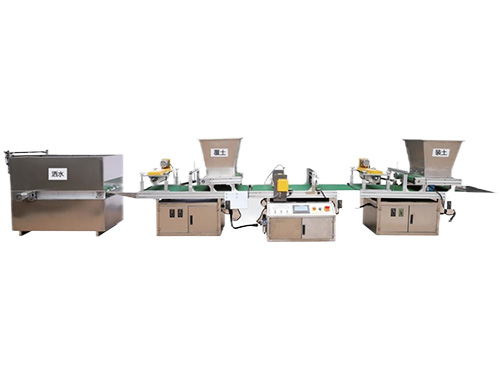
It adopts electrical integration and can be started by pressing the fully automatic button ...
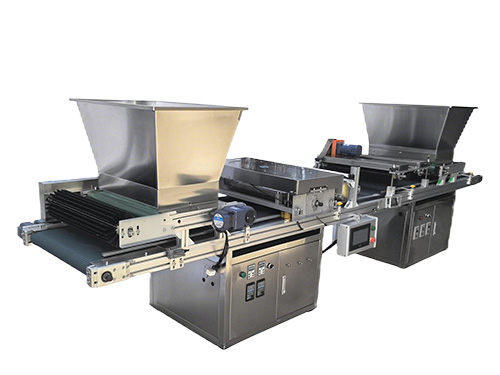
The XP750 seeder has stable performance, excellent product quality, simple and convenient o...
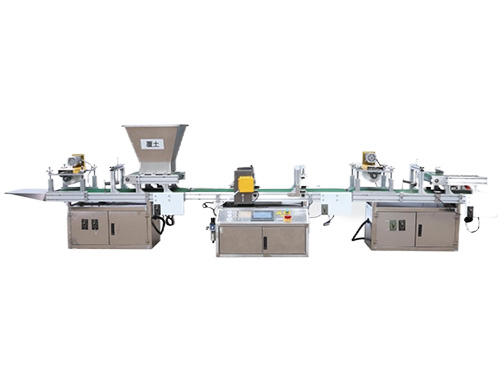
It adopts electrical integration and can be started by pressing the fully automatic button ...