





NEWSINFORMATION
10 Common Mistakes in Seedling Production and How to Avoid Them
2026-08-19 19:09:44
Commercial seedling production is high-stakes: one tray of damping-off can wipe out a week's work. This guide identifies the 10 most costly mistakes we see in commercial operations — and the practical fixes that prevent them.
1Overwatering
Symptoms: Wilting despite wet soil, yellowing
lower leaves, algae on soil surface, fungus gnats, Pythium root rot,
mushy stems at the base (damping-off).
Fix: Water only when the soil surface appears
dry. Use the "finger test": insert your finger 2 cm into the medium — if
it feels moist, don't water. Switch to bottom watering (capillary mats
or flood tables) to deliver water directly to the root zone and keep
foliage dry. Improve air circulation with fans.
2Insufficient Light
Symptoms: Leggy, elongated seedlings with long
stems and small leaves; pale green or yellow leaves; seedlings leaning
toward the light source; poor internode development.
Fix: Provide 14–16 hours of quality light
daily. Position grow lights 5–10 cm above seedlings. If using natural
light, ensure at least 6–8 hours of direct sunlight. Increase vertical
spacing between trays to reduce shading. Rotate trays regularly for even
light exposure.
3Planting Seeds Too Deep
Symptoms: Poor or very slow germination; seedlings that emerge but fail to unfurl cotyledons; sparse, uneven emergence across the tray.
Fix: Follow the 2–3× seed diameter rule for
planting depth. For very small seeds (lettuce, basil, petunia),
surface-sow and press lightly into the medium — do not cover deeply. Use
fine vermiculite as a light covering layer that retains moisture
without blocking light.
4Using Garden Soil Instead of Seed-Starting Mix
Symptoms: Poor germination, compaction,
waterlogging, damping-off outbreaks, weed seedlings appearing in trays,
inconsistent seedling growth.
Fix: Always use a sterile, specifically
formulated seed-starting mix. Ideal composition: peat moss or coco coir +
perlite + vermiculite. Commercial seed-starting mixes are pH-adjusted
and nutrient-stripped for optimal germination. Never use garden soil,
topsoil, or reused potting mix from other plants.
5Reusing Trays Without Proper Sterilization
Symptoms: Recurring disease problems that
appear in the same crops year after year; Fusarium, Pythium, or
Phytophthora infections that persist despite other hygiene measures.
Fix: Clean trays immediately after use (don't
let medium dry in cells). Soak in warm water + detergent, scrub
thoroughly, then sanitize with 10% bleach solution for 15 minutes, or
use commercial greenhouse disinfectants. Rinse completely. Dry fully
before storage. PET trays (like Haode's) are the easiest to sterilize
effectively.
6Ignoring Air Circulation
Symptoms: Higher humidity around seedlings,
condensed water on foliage, increased botrytis (gray mold) pressure,
weak stems, higher disease incidence overall.
Fix: Install horizontal airflow (HAF) fans in
the greenhouse to maintain constant gentle air movement. This removes
boundary layer moisture from leaves, prevents condensation, strengthens
stems through gentle air stress, and reduces fungal spore germination.
One small fan per 3–4 meters of bench is sufficient for most operations.
7Skipping the Hardening-Off Process
Symptoms: Severe transplant shock (wilting,
leaf scorch, growth stall); high early mortality after transplant; poor
establishment in the field or greenhouse.
Fix: Begin hardening off 7–14 days before
transplant. Reduce watering, lower temperatures slightly, and increase
airflow. Remove humidity domes. Expose seedlings to direct sun
gradually. For tender crops, start with 1–2 hours outdoors in shade,
extending time and sun exposure daily. Never rush this process.
8Feeding Too Early or Too Much
Symptoms: Salt burn on leaf edges (brown,
crispy margins); stunted growth; root damage from fertilizer salts;
excessive leaf growth with weak stems.
Fix: Do not fertilize until seedlings have
their first true leaves (not the cotyledons). Start with half-strength
fertilizer (e.g., 100 ppm N from a balanced liquid fertilizer). Apply at
every second watering, not every watering. Use a fertilizer with higher
phosphorus than nitrogen for root development early on.
9Transplanting Too Late (Root-Bound Seedlings)
Symptoms: Roots growing out of drainage holes;
seedlings stunted with yellowing lower leaves; roots visible at the
surface circling the cell; hard, matted root ball that doesn't break
apart easily.
Fix: Monitor seedling growth daily in the final
1–2 weeks before transplant. Transplant at 2–4 true leaf stage. Choose a
cell count that matches your growing cycle — if you tend to hold
seedlings, use a larger cell (fewer cells per tray) to extend your
window. If a seedling does become root-bound, gently loosen the outer
root layer before planting.
10Not Adjusting pH of Water or Growing Medium
Symptoms: Nutrient deficiencies appearing even
when fertilizer is applied (especially iron, manganese, phosphorus);
interveinal chlorosis; stunted growth; leaf discoloration despite
adequate nutrition.
Fix: The ideal pH for seedling production is 5.8–6.2.
Test your water and growing medium pH monthly with a simple pH meter or
test kit. If water pH is above 7.0, acidify with phosphoric acid or
citric acid. Most seed-starting mixes are pH-adjusted — don't add lime
or alkaline materials to the mix.
Quick Reference: Problem → Diagnosis → Fix
| Symptom | Most Likely Cause | First Action |
|---|---|---|
| Leggy, tall seedlings | Insufficient light | Add or reposition grow lights |
| Wilting in wet soil | Overwatering / root rot | Stop watering, improve drainage, add fans |
| Brown leaf edges | Fertilizer burn / low humidity | Flush with plain water, reduce fertilizer |
| Yellow leaves (oldest first) | Nitrogen deficiency | Apply half-strength balanced fertilizer |
| Pale leaves (newest) | Iron deficiency (high pH) | Check and lower pH of water/medium |
| Stems rotting at base | Damping-off (fungal) | Remove infected trays, improve air flow, reduce moisture |
| Roots growing out of tray | Transplant window missed | Transplant immediately; use larger cells next time |
| Algae on soil surface | Overwatering + direct light | Reduce watering, add air circulation, use light-colored trays |

CNC Seed Braiding Machine
The CNC Seed Braiding Machine is a high-precision, fully automated agricultural equipment s...
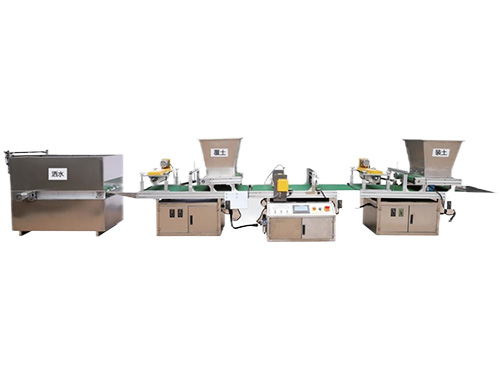
XP-330-2 Seeder
It adopts electrical integration and can be started by pressing the fully automatic button ...
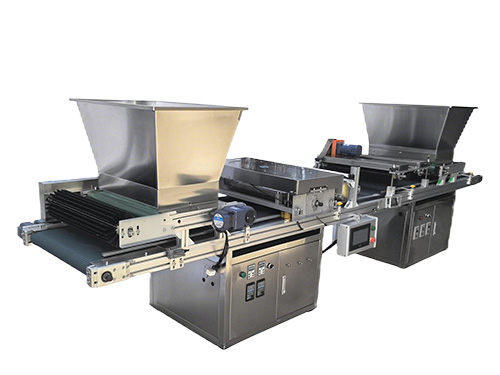
XP750 Seeder
The XP750 seeder has stable performance, excellent product quality, simple and convenient o...
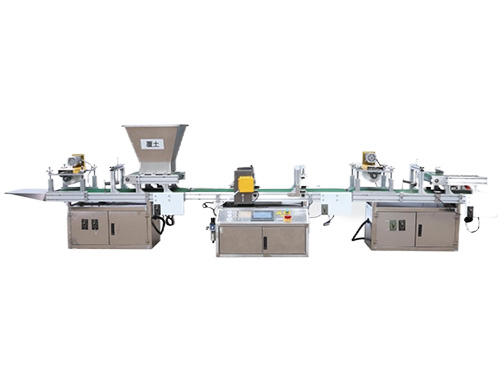
XP-330 Seeder
It adopts electrical integration and can be started by pressing the fully automatic button ...