





How Irrigation Systems Work with Seedling Trays: A Complete Guide
2026-08-28 16:27:58
In commercial nursery production, the way you water your seedlings is as critical as the substrate mix or the genetics of your plant material. An mismatched irrigation system for seedling trays can undo weeks of careful propagation—leading to uneven germination, disease pressure, rootbound plants, or wasted water. Conversely, a well-matched system turns a propagation bench into a high-throughput production line.
Haode works with commercial growers worldwide who operate greenhouses ranging from 500 m² to 50,000 m². Based on those real-world deployments, this article breaks down the four most common irrigation strategies—drip, overhead misting, capillary mat, and flood-and-drain—explaining how each integrates with different seedling tray types, cell counts, and crop profiles.
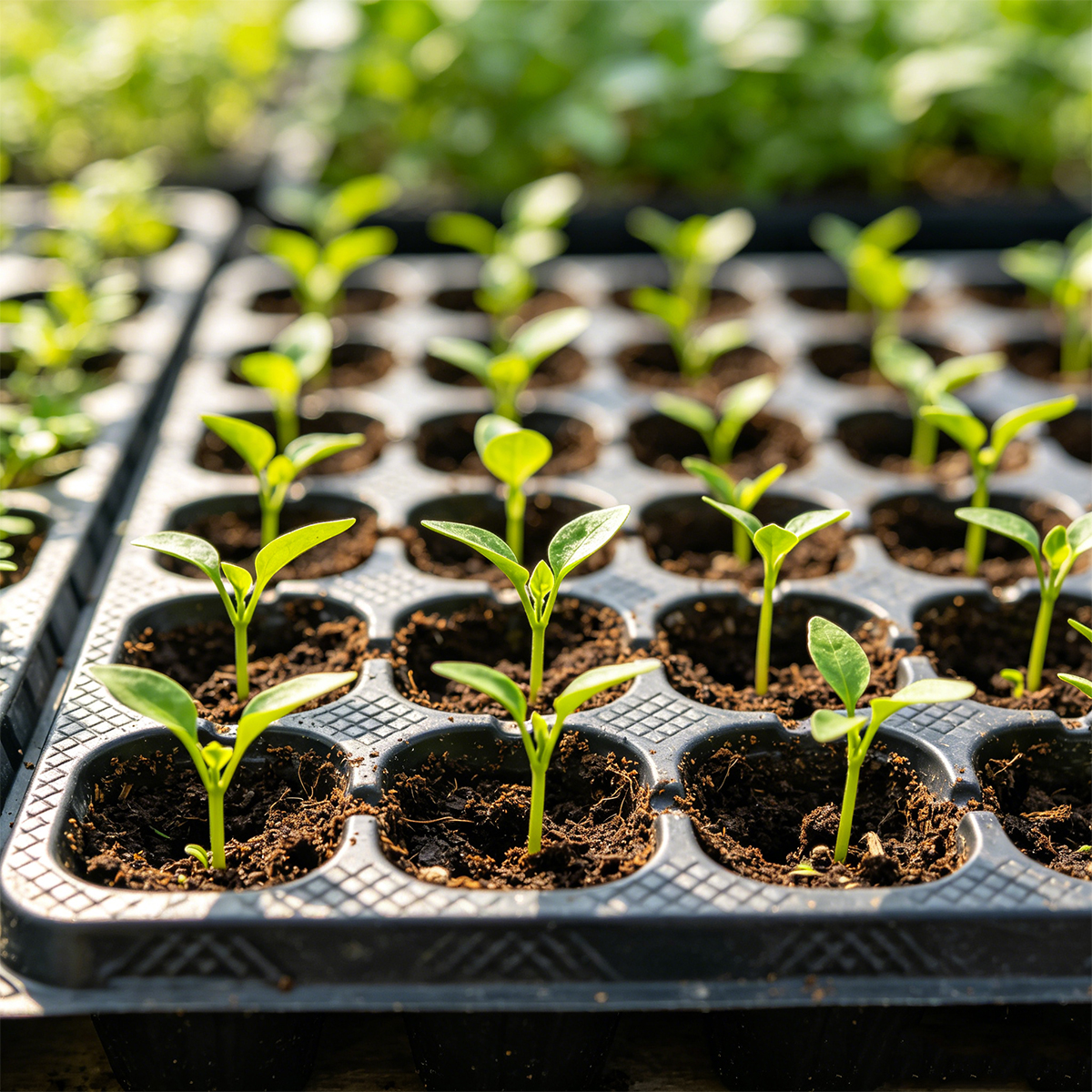
1. Drip Irrigation for Seedling Trays
Drip irrigation delivers water through low-flow tubing with either button drippers or micro-sprinklers positioned above or within each tray cell. It is the most mechanically precise method and scales well from small benches to full greenhouses.
How It Works
A pressurized water line runs along a plug tray bench, with individual drippers or spaghetti tubing feeding each cell or cell cluster. Pressure-compensating drippers (typically 0.5–2 L/hr) ensure every plant receives the same volume regardless of position on the line.
Best Tray Pairings
50-cell to 200-cell trays: Individual drip stakes per cell or per 2–4 cells provide excellent uniformity for standard plug trays.
Deep cells (Root Control Containers, 50-cell deep): Drip stakes inserted into the growing medium penetrate deeply, ideal for crops with extensive root systems like tomatoes or peppers.
Larger format trays (32-cell, 24-cell): One or two drippers per cell deliver higher volumes needed for larger root balls.
Key Considerations
Drip systems require filtration (120–150 mesh) to prevent dripper clogging, and the flush velocity must be calculated per tray width. For automated operations, drip is compatible with fertigation controllers, allowing precise nutrient delivery alongside water. Initial setup cost is moderate, but operational cost per plant is low once installed.
2. Overhead Misting Systems
Misting systems emit fine water droplets (typically 10–50 microns) through nozzles mounted above the bench. Their primary function is humidity management and surface hydration during germination—making them indispensable in early-stage propagation.
How It Works
High-pressure lines (typically 40–80 psi) feed misting nozzles spaced 30–60 cm apart above the tray surface. Cycles are controlled by timer or, more effectively, by a humidity sensor that triggers pulses of 5–15 seconds every 5–30 minutes based on ambient conditions.
Best Tray Pairings
50-cell to 288-cell shallow trays: High cell count, shallow-depth trays benefit most from misting because the small root volume dries quickly and requires frequent, light applications.
Seed germination phase: Misting keeps the seed zone consistently moist without washing out small seeds—a critical advantage over any top-down drip approach.
Low-density trays used for delicate ornamental seedlings: Ornamental plugs (begonia, impatiens, petunia) often thrive under mist during weeks 1–3.
Key Considerations
Misting creates wet foliage, which can encourage botrytis and pythium if ventilation is poor. It is not a standalone irrigation strategy for later growth stages—most nurseries use misting for weeks 1–3 and switch to drip or bottom watering thereafter. Water quality matters; hard water causes nozzle scaling and must be treated.
3. Capillary Mat Irrigation
Capillary mat (or mat-and-tray) irrigation is a passive, bottom-fed system where water rises through the growing medium via capillary action. It is widely regarded as one of the most water-efficient and uniform delivery methods for seedling trays.
How It Works
Trays are placed on top of a porous geotextile mat that sits on a slightly sloped bench or trough. Water is supplied to one end of the mat via a low-pressure header (often from a tank and float valve), and capillary tension draws moisture across the entire mat surface. Seedling roots growing through the drainage holes of the tray access this moisture reservoir.
Best Tray Pairings
72-cell, 105-cell, and 128-cell trays: Uniform cell density means uniform wicking across the mat. These are the most common commercial pairings.
Root Control Containers: The structured root guidance in Haode's Root Control Containers pairs well with capillary mat because the fabric restricts root egress while the bottom wicks water efficiently.
Any tray with open drainage holes on the bottom: The tray must have adequate bottom drainage for capillary contact—verify hole size and pattern before deployment.
Key Considerations
Mat irrigation achieves 30–50% water savings versus overhead sprinklers in commercial trials. However, it requires a perfectly level bench and a consistent water source. Fertilizer must be mixed into the water supply (fertigation) since top-dressing is not practical. EC (electrical conductivity) can build up on the mat over time and requires periodic flushing.
4. Flood-and-Drain (Ebb-and-Flow) Systems
Flood-and-drain irrigation floods the bench surface with a shallow water layer and then drains it away, watering all trays simultaneously. It is the gold standard for fully automated, high-throughput commercial nurseries.
How It Works
A sloped or flat bench is enclosed with low sidewalls. Water is pumped in from a reservoir to flood the bench surface to a depth of 3–8 mm, held for 5–20 minutes (allowing all cells to absorb water from below), then drained back to the reservoir. One cycle typically waters an entire bench of 40–200 trays in minutes.
Best Tray Pairings
Standard 72-cell and 105-cell trays: All cells drain evenly during the drain phase, delivering consistent moisture.
Deep 50-cell and 32-cell trays: The extended water column during flood reaches the deeper root zones of large cell formats effectively.
Propagation benches dedicated to a single crop: Flood-and-drain works best when all trays on a bench have similar growth stage and water demand.
Key Considerations
Initial infrastructure cost is the highest of the four methods—requiring sloped benches, pumps, drains, and a reservoir—but the per-plant operational cost is very low. Disease transmission risk exists if the reservoir is shared across multiple benches without UV or chemical treatment. A typical cycle schedule for seedling production is 2–4 cycles per day, adjusting for seasonal evapotranspiration rates.
System Comparison at a Glance
| System | Best Tray Type | Uniformity | Water Efficiency | Setup Cost | Best Stage |
|---|---|---|---|---|---|
| Drip | 50–200 cell, Root Control Containers | High | High | Moderate | All stages |
| Misting | 50–288 cell (shallow) | Moderate | Low | Low–Moderate | Germination only |
| Capillary Mat | 72–128 cell, Root Control Containers | Very High | Very High | Low–Moderate | All stages |
| Flood-and-Drain | 32–200 cell (all formats) | Very High | High | High | All stages |
Choosing the Right System for Your Nursery
No single irrigation system is universally best. The right choice depends on your tray format, crop type, greenhouse size, automation level, and water quality. Here is a practical decision framework:
Evaluate These Four Factors First
1. Tray Cell Count and Depth
High-density shallow trays (200+ cells) respond best to misting or capillary mat. Medium-density trays (50–128 cells) work with all four systems. Large-format deep trays (24–50 cells) require drip or flood-and-drain for adequate water volume per cell.
2. Crop Water Demand and Growth Stage
Germination (weeks 1–3) favors misting or capillary mat. Vegetative growth (weeks 3–8) shifts toward drip or flood-and-drain. Transitioning hardening-off benefits from reduced frequency on any system rather than a complete method change.
3. Automation and Labor Availability
Manual overhead watering is the least efficient and most labor-intensive. Capillary mat with float valves is semi-automatic. Drip and flood-and-drain systems integrate with climate controllers and fertigation systems for fully automated nursery operations.
4. Water Source and Quality
Recaptured drainage water (common in flood-and-drain and capillary mat closed-loop systems) must be filtered and EC-managed. Misting with borehole or hard municipal water requires softening or reverse osmosis filtration to prevent nozzle blockages.
Final Recommendations
For most commercial operations producing vegetable and ornamental seedlings in PET seedling trays ranging from 72 to 200 cells, we recommend a hybrid approach:
Phase 1 (Weeks 1–3): Overhead misting or capillary mat for germination and early establishment.
Phase 2 (Weeks 3–8): Transition to drip stakes or capillary mat for vegetative growth.
Phase 3 (Pre-transplant): Reduce irrigation frequency on any system to harden off seedlings before sale or field transplant.
This two-phase strategy leverages the humidity control of misting where it matters most while maximizing water efficiency during the longer vegetative phase. Browse Haode's full range of seedling tray formats to find the exact cell count and tray dimensions that match your chosen irrigation strategy.
Frequently Asked Questions

The CNC Seed Braiding Machine is a high-precision, fully automated agricultural equipment s...
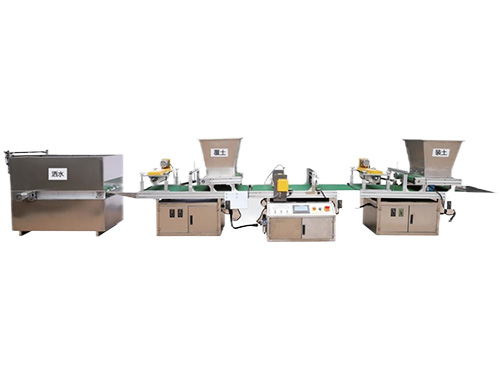
It adopts electrical integration and can be started by pressing the fully automatic button ...
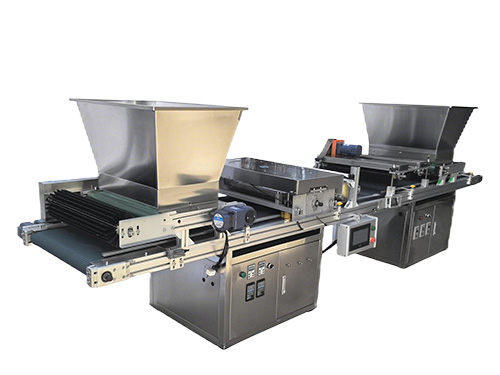
The XP750 seeder has stable performance, excellent product quality, simple and convenient o...
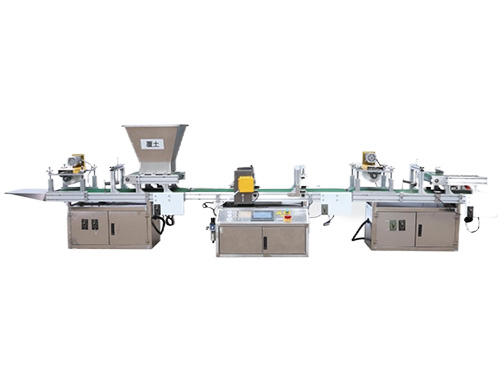
It adopts electrical integration and can be started by pressing the fully automatic button ...