





Tree Seedling Trays for Forestry and Reforestation: A Professional Guide
2026-11-03 17:42:04
In forestry and reforestation, seedling quality is measured years after the nursery finishes its work. A tree that survives its first dry season and establishes a functional root system is the product; everything in the nursery is preparation for that outcome. Tree seedling trays are a quiet but decisive part of that preparation.

The reason is root architecture. Seedlings raised in trays that produce deep, well-developed, air-pruned root systems suffer less transplant shock and establish faster, which directly raises field survival rates. Seedlings raised in shallow containers with circling roots look acceptable at dispatch and then fail quietly in the field — the most expensive kind of failure in a planting programme.
This guide covers deep-cell tray design, the role of air pruning in tree production, how to select cell volume by species, how to plan nursery scheduling at programme scale, and how to specify tree seedling trays factory-direct.
Why Deep Cells Matter for Tree Seedlings
Tree seedlings differ from vegetable plugs in two ways: they stay in the container longer, and their root systems are far more extensive relative to shoot size. Both point to the same requirement — depth. A shallow cell forces root binding before the seedling is field-ready, and a bound root system does not reliably leave the root plug after planting.
Deep cells give roots vertical room to develop, support air pruning at the base, and produce a plug that holds together during handling and planting while still allowing roots to emerge quickly into surrounding soil.
Vertical root room: prevents early binding during long nursery cycles.
Air pruning: produces fibrous root systems through wall and base openings.
Plug integrity: roots hold the medium together through transport and planting.
Fast emergence: fibrous roots leave the plug quickly after planting.
Drought resilience: better root-to-shoot balance improves first-season survival.
Air Pruning and Root Plug Quality
Air pruning stops a root tip at the container boundary and triggers branching behind it. Applied through wall openings and a raised base, it converts a few dominant circling roots into a dense fibrous mass distributed through the medium.
For tree seedlings this matters at planting. A fibrous plug roots into the surrounding soil across its whole surface; a circling root ball tends to keep circling, which is where girdling roots and long-term instability originate.
Selecting Cell Volume by Species
| Species group | Cell requirement | Reason |
|---|---|---|
| Fast-growing hardwoods (eucalyptus, poplar) | Large, deep cells | Extensive, fast-developing root systems |
| Oak, maple and other hardwoods | Large, deep cells | Long nursery cycle and substantial taproot development |
| Conifers | Medium to deep cells, high density | Smaller root volume, often produced at very high numbers |
| Shrubs and landscaping seedlings | Deep cells or root control containers | Transplant survival under low-maintenance conditions |
Nursery Scheduling at Programme Scale
Programme-scale forestry production is a scheduling problem as much as an agronomic one. Cell volume determines nursery cycle length, which determines how many production turns fit before the planting window, which determines how many trays the programme needs.
Under-specifying cell volume shortens the cycle but lowers survival; over-specifying raises tray cost and space requirements. The right answer is species-specific, which is why most programmes run two or three tray specifications rather than one.
Work backwards from the planting window to set sowing dates.
Match cell volume to species cycle length, not to a single standard tray.
Confirm tray availability and lead time before the sowing programme starts.
Plan container racking so base openings stay exposed for air pruning.
Build in a buffer for germination losses and culling.
Sourcing Tree Seedling Trays Factory-Direct
For large-scale programmes, factory-direct sourcing offers lower cost and greater control over cell depth, cell volume and material specification. Confirm dimensional tolerance, wall design, UV resistance for outdoor nursery use, and whether the manufacturer can supply matched root control containers for larger stock.
Request samples and run one full production cycle before committing programme volumes — the cost of a trial is small compared with the cost of a season lost to poor root systems.
Frequently Asked Questions
Conclusion
Tree seedling trays are a quiet but decisive factor in forestry and reforestation success. Deep cells, air pruning and consistent quality produce the root plugs that survive transplanting and establish into healthy trees — for large-scale programmes, investing in the right tray is investing in survival.
Explore deep-cell tree seedling trays and root control solutions at haodeseedtray.com to strengthen your planting programme.
References
GB/T 7714: Air Pruning Container Design and Root Architecture Development in Woody Seedlings. Journal of Forestry Research
MLA: Effects of Container Depth on Root Plug Quality and Outplanting Survival of Forest Seedlings. Horticultural Science & Technology
APA: Seedling Quality Standards and Field Performance in Reforestation Programmes. Journal of Environmental Horticulture

The CNC Seed Braiding Machine is a high-precision, fully automated agricultural equipment s...
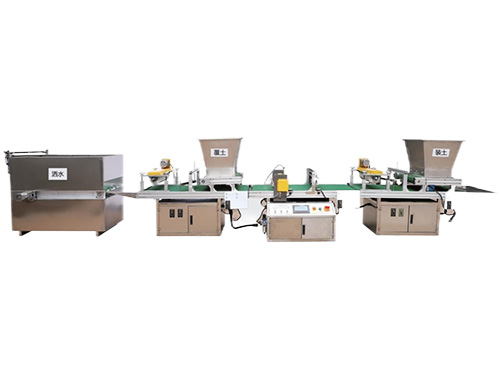
It adopts electrical integration and can be started by pressing the fully automatic button ...
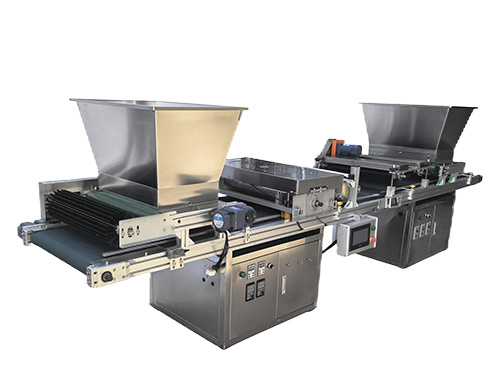
The XP750 seeder has stable performance, excellent product quality, simple and convenient o...
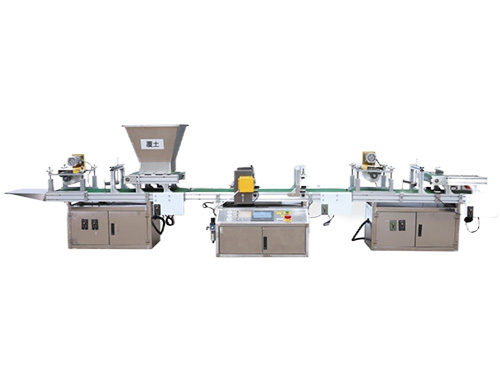
It adopts electrical integration and can be started by pressing the fully automatic button ...