





Bulk Seedling Trays at Factory Price: How to Source Wholesale Seedling Trays from a Chinese Manufacturer
2026-11-01 17:31:42
For commercial nurseries, seedling trays are a volume purchase where unit price looks like the decision but landed cost and consistency are what actually determine the outcome. Bulk seedling trays bought factory-direct remove distributor margin, and more importantly put specification control in the buyer's hands: material grade, wall thickness, cell geometry, drain-hole design and colour.

The risk in bulk sourcing is the opposite one. A low quote can reflect thinner walls, recycled content, or tooling that drifts across production runs — all invisible in a product photo and all expensive once trays reach a seeding line and start jamming or cracking. Qualifying the manufacturer matters more than negotiating the last few cents.
This guide sets out what drives seedling tray cost, how to write a specification that can actually be verified, which quality checks to run before accepting a bulk order, and how to plan MOQ, lead time and packing for a planting season.
What Actually Drives Seedling Tray Cost
Four variables dominate: raw material grade, material weight per tray, tooling quality, and order volume. Material weight per tray is the one most commonly reduced to hit a price point, and it is also the one that determines reuse life, stack strength and performance on automated seeding lines.
Volume affects unit price through tooling amortisation and production run efficiency, which is why minimum order quantity and repeat-order consistency both matter when negotiating.
| Cost driver | Effect on price | Effect on performance |
|---|---|---|
| Material grade (virgin PET vs blend) | Significant | Reuse life, clarity, food-grade compliance |
| Material weight per tray | Significant | Stack strength, warp resistance, seeder reliability |
| Tooling precision | Moderate | Cell pitch accuracy, de-stacking, seeding accuracy |
| Order volume | Moderate to significant | None directly, but affects lead-time planning |
| Custom colour or logo | Small to moderate | None, aids branding and inventory control |
Writing a Specification That Can Be Verified
A bulk order should be specified in measurable terms, not descriptive ones. "Heavy duty" cannot be checked at goods-in; wall thickness in millimetres and gram weight per tray can. The same applies to dimensions — overall footprint and cell pitch should carry tolerances.
Material grade, with food-grade documentation where required.
Gram weight per tray and wall thickness tolerance.
Overall tray dimensions and cell pitch, with tolerance.
Cell count, cell depth and drain-hole diameter.
Colour, UV resistance requirement, and custom logo if applicable.
Stacking strength requirement and packing specification.
Quality Checks Before Accepting a Bulk Order
Sample evaluation should mirror production conditions rather than a desk inspection. Run sample trays through seeding, irrigation and sanitizing before the bulk order is released, and check dimensional consistency across multiple trays from the same batch, not just one.
Dimensional check on multiple trays from the batch, including stack height.
De-stacking test on your seeding equipment.
Drainage timing test with your growing medium and irrigation method.
Hot-water and sanitizer exposure test for reusable programmes.
Carton and pallet condition on arrival — packing failures cause avoidable damage.
MOQ, Lead Time and Season Planning
Seedling demand is seasonal and unforgiving: a tray shortage during the planting window costs far more than carrying inventory. Plan MOQ and lead time backwards from the planting date, allowing time for sampling, production, shipping and customs clearance.
For repeat programmes, agree whether the factory can hold buffer stock for your specification. That arrangement converts a seasonal risk into a routine release schedule.
How to Qualify a Seedling Tray Manufacturer
Confirm the supplier is the manufacturer, not a trading intermediary.
Request material certification and, where relevant, food-grade documentation.
Ask for tooling and production capacity evidence for your volume.
Request samples from production tooling, and test them on your own line.
Check export experience, packing standards and container loading practice.
Verify repeat-order consistency — ask for references from repeat buyers.
Frequently Asked Questions
Conclusion
Bulk seedling tray sourcing rewards buyers who specify measurable properties and qualify the factory. Price matters, but specification control and repeat-order consistency determine what the trays actually cost per seedling across a season.
Ningjin County Haode New Material Co., Ltd. manufactures seedling trays, drainage mats, root control containers and seedling seeders in Hebei, China, and supplies nurseries and farms worldwide at factory-direct prices.
References
GB/T 7714: Comparative Analysis of Reusable vs Disposable Seedling Trays: Environmental Impact and Cost-Efficiency. Sustainability
MLA: Durability Evaluation of PET Reusable Seedling Trays for Year-Round Horticultural Use. Horticultural Science & Technology
APA: Biodegradable Seedling Trays: Material Properties, Degradation Mechanisms, and Plant Growth Impacts. Journal of Sustainable Agriculture

The CNC Seed Braiding Machine is a high-precision, fully automated agricultural equipment s...
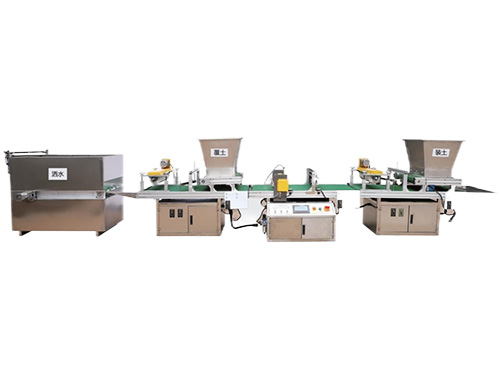
It adopts electrical integration and can be started by pressing the fully automatic button ...
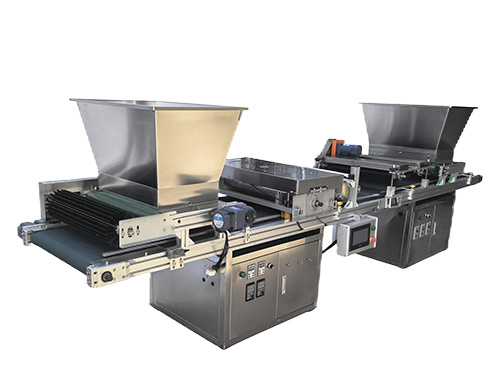
The XP750 seeder has stable performance, excellent product quality, simple and convenient o...
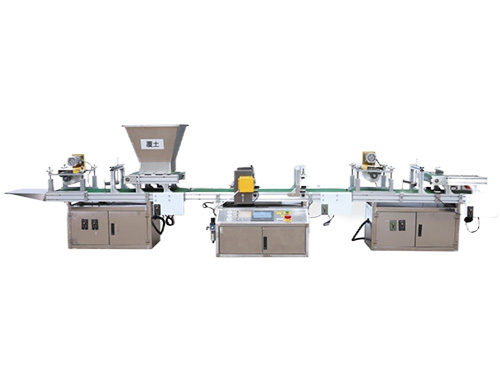
It adopts electrical integration and can be started by pressing the fully automatic button ...