





Seedling Tray Cell Count Selection Guide: 32, 50, 72, 100, 105, 128, 136 and 200 Cells Compared
2026-10-30 17:29:19
Cell count is the single specification that shapes everything downstream of the seeding line. It sets root volume per plant, which sets how long a plug can be held, which sets irrigation frequency, transplant timing and ultimately cost per transplant. Choosing it on habit rather than on crop cycle is one of the most expensive habits in propagation.

The trade-off is structural. More cells means more plants per tray, per bench and per pallet — but each plant gets less medium, dries faster and must be transplanted sooner. Fewer cells give stronger, longer-held plants at a higher cost per plant in space, freight and tray handling.
This guide compares the common formats from 32 to 200 cells, explains where shallow no-hole trays fit, and gives a practical decision sequence for specifying seedling trays for a production programme.
The Trade-Off: Root Volume vs Plant Density
Every cell count is a position on one curve. At the low end, large cells hold more medium, buffer moisture better and support long production cycles, but fewer plants fit on a bench. At the high end, density rises and handling cost per plant falls, but irrigation tolerance narrows and transplant timing becomes critical.
The practical rule: hold time is the deciding variable. If the crop leaves the tray within a few weeks, density wins. If it will sit in the tray for a month or more, root volume wins.
Root volume: determines drought buffering and how long a plug can be held.
Density: determines plants per bench, per tray and per freight pallet.
Irrigation tolerance: smaller cells need more frequent, more uniform watering.
Transplant timing: small cells impose tighter scheduling; large cells forgive delay.
Cell Count Comparison
| Cell count | Best for | Hold time | Irrigation demand |
|---|---|---|---|
| 32-cell / 24-cell | Melons, squash, large-rooted transplants | Long | Low frequency, high volume |
| 50-cell | Tomato, pepper, long-cycle vegetables | Medium to long | Moderate |
| 72-cell | Standard vegetable plugs, brassicas | Medium | Moderate |
| 100-cell | Vegetable plugs, rice seedlings | Short to medium | Moderate to high |
| 105-cell / 128-cell | Commercial plug programmes, mat irrigation | Short to medium | High, uniform |
| 136-cell | High-density vegetable and rice plugs | Short to medium | High, uniform |
| 200-cell | Very short-cycle plugs and seedlings | Short | Very high, precision required |
Crop-by-Crop Recommendations
Tomato and pepper: 50 to 72 cells, for enough root volume before field transplanting.
Brassicas and leafy vegetables: 100 to 136 cells, short cycles and high throughput.
Rice for mechanical transplanting: 100 to 136 cells, or floating trays for water beds.
Melons and squash: 32 to 50 cells, large seed and long roots.
Strawberry plugs: dedicated deep strawberry
seedling trays, not standard plug formats.
Tree and forestry seedlings: deep-cell tree
seedling traysor root control containers.
Microgreens and dense sowing: shallow trays without holes.
Where Shallow No-Hole Trays Fit
Shallow trays without drain holes serve a different production model. They suit microgreens, wheatgrass and dense surface sowing where plants are harvested above the medium rather than transplanted as plugs. Because there is no drain hole, water management is entirely surface-driven and overwatering is the main risk.
Made from PET, these trays offer good toughness and plasticity and can be recycled after service. They should not be confused with plug trays: using a no-hole tray for plug production leads directly to waterlogging and root loss.
A Practical Selection Sequence
Define the crop and how long plants will stay in the tray.
Set your transplant method — hand, mechanical, or plug extraction — and match tray rigidity to it.
Confirm irrigation capability; precise, uniform watering permits higher cell counts.
Check compatibility with existing seeding and handling equipment.
Validate with a sample tray run before committing to bulk volumes.
Frequently Asked Questions
Conclusion
Cell count is not a catalogue choice; it is a production decision linking crop cycle, irrigation capability and transplant method. Match those three and plug quality and cost per transplant both improve.
For help specifying the right format, Ningjin County Haode New Material Co., Ltd. supplies seedling trays from 21 to 200 cells with matched drainage mats and seeding equipment.
References
GB/T 7714: Effects of Cell Volume and Seedling Density on Plug Quality and Field Performance. Chinese Journal of Rice Science
MLA: Cell Configuration and Transplant Timing Interactions in Commercial Plug Production. Horticultural Science & Technology
APA: Irrigation Frequency Requirements Across Seedling Tray Cell Volume Classes. Journal of Horticultural Research

The CNC Seed Braiding Machine is a high-precision, fully automated agricultural equipment s...
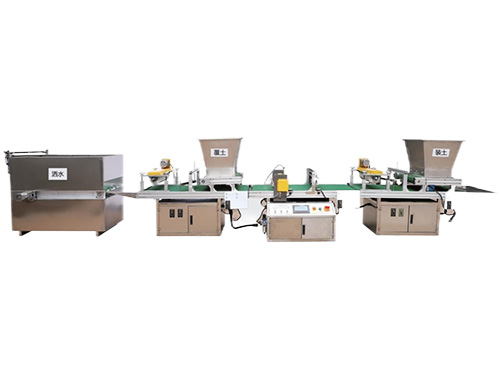
It adopts electrical integration and can be started by pressing the fully automatic button ...
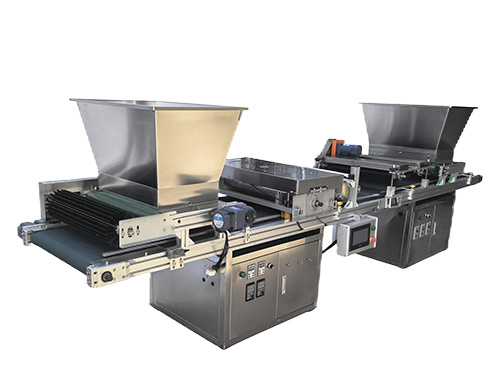
The XP750 seeder has stable performance, excellent product quality, simple and convenient o...
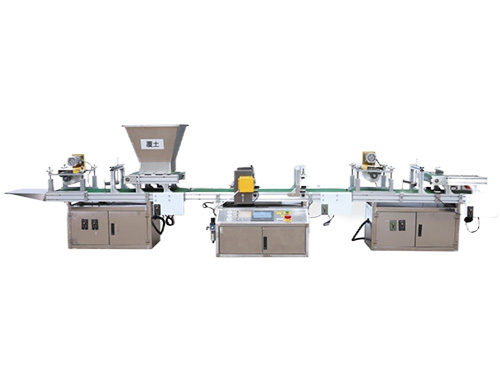
It adopts electrical integration and can be started by pressing the fully automatic button ...