





Automatic Seedling Seeders: Matching Seeding Equipment to Seedling Trays for Precision Propagation
2026-10-28 16:45:12
Seeding is the step where variability enters a propagation line. Hand seeding is flexible but slow and inconsistent; a mismatched automatic seedling seeder is fast and consistently wrong. Precision propagation depends on the seeding mechanism, the seed and the seedling tray being specified together, because each constrains the others.

The tray is the part most often treated as a commodity in that equation. In practice, an automatic seeder indexes on tray dimensions and cell pitch. If either varies beyond tolerance, the machine skips cells, double-drops seed, or seeds at inconsistent depth — all of which produce gaps that must be corrected by hand, which is exactly the labour the machine was bought to remove.
This guide explains how automatic seedling seeders work, which tray specifications they require, how cell count interacts with seed type and throughput, and how to evaluate seeding equipment and trays as a single system.
How an Automatic Seedling Seeder Works
Most nursery seeders use one of three mechanisms: a vacuum drum or plate that picks up individual seeds and releases them into cells, a mechanical plate with sized holes, or a pneumatic needle system. All three index the tray through a seeding station, then move it on to covering and watering.
The common requirement is repeatable positioning. Machines assume a fixed tray footprint and a fixed cell pitch; every deviation becomes a placement error. This is why tray dimensional stability is a seeding-line issue, not just a durability issue.
Vacuum drum or plate: high precision across a wide range of seed sizes.
Mechanical plate: simple and robust, best for uniform, larger seed.
Pneumatic needle: suited to small or irregular seed with careful calibration.
Integrated lines: combine medium filling, seeding, covering and watering in one pass.
Tray Requirements for Seeding Automation
A tray intended for automatic seeding must hold its geometry under stack load, de-stack cleanly, and keep cell pitch consistent from tray to tray and batch to batch. Thin-walled trays that flex are the leading cause of de-stacking failures, and warped trays cause seeding depth variation across the tray surface.
Material choice follows from that. PET trays with consistent wall thickness and accurate thermoformed cell geometry are the standard pairing for automated lines, precisely because they hold dimensions through handling, sanitizing and stacking.
Cell Count, Seed Size and Throughput
| Cell count | Seed handling | Throughput profile |
|---|---|---|
| 100-cell / 136-cell | Small to medium seed, high volume | Maximum plants per tray, lowest tray handling per plant |
| 72-cell / 105-cell | Medium seed, standard vegetable plugs | Balanced throughput and root volume |
| 50-cell | Larger seed, tomato and pepper | Lower density, longer hold in tray |
| 32-cell / 24-cell | Large seed, melons and squash | Lowest density, longest cycles |
| Shallow trays (no holes) | Microgreens and dense surface sowing | Specialised, not plug-based |
Where Automation Pays and Where It Does Not
Automation pays when seeding volume is high, seed is reasonably uniform, and the crop schedule is repetitive. It pays less when a nursery runs many small batches of different species with different seed sizes — changeover time then eats the throughput gain.
The realistic saving is not only labour. Consistent seeding depth and one seed per cell improves germination uniformity and reduces thinning, which lowers seed cost per usable plant.
Building a Matched Seeding System
Fix the crop list and cell count first; the tray and seeder follow from it.
Specify tray dimensional tolerance and de-stacking performance, not just cell count.
Confirm seeder compatibility with your seed size range and coating type.
Plan irrigation around the tray: drip, misting or capillary mat, each with drain-hole implications.
Trial one full cycle with production trays before committing to volume.
Frequently Asked Questions
Conclusion
Precision propagation is a specification exercise. Seed, seedling tray and seeding machine have to be chosen together; treating the tray as an afterthought is the most common reason automated lines underperform.
For nurseries planning a seeding-line upgrade, Ningjin County Haode New Material Co., Ltd. supplies seedling trays, drainage mats and automatic seedling seeders from one factory in Hebei, China, with matched specifications across trays and seeding equipment.
References
GB/T 7714: Precision Seeding Technology and Germination Uniformity in Plug Production. Transactions of the Chinese Society of Agricultural Engineering
MLA: Evaluation of Vacuum Seeder Performance Across Seedling Tray Cell Configurations. Horticultural Science & Technology
APA: Automation in Commercial Nursery Propagation: Throughput, Labour and Seedling Quality Outcomes. Journal of Horticultural Research

The CNC Seed Braiding Machine is a high-precision, fully automated agricultural equipment s...
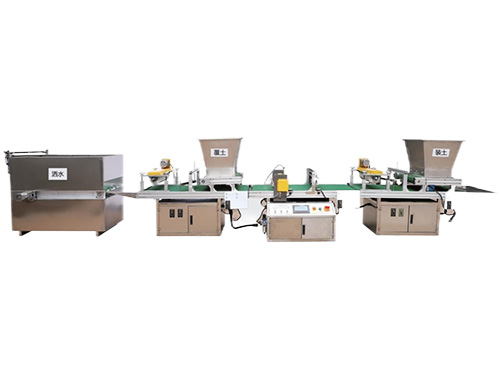
It adopts electrical integration and can be started by pressing the fully automatic button ...
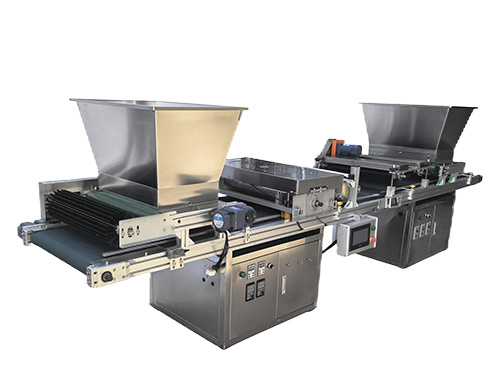
The XP750 seeder has stable performance, excellent product quality, simple and convenient o...
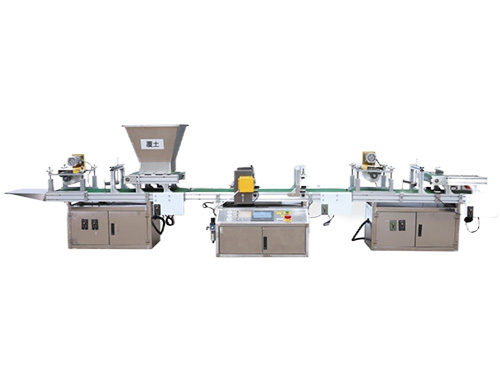
It adopts electrical integration and can be started by pressing the fully automatic button ...