





Root Control Containers and Air Pruning: A Professional Guide for Tree and Shrub Production
2026-10-26 16:36:52
A tree seedling fails in the field for one reason more often than any other: the root system it left the nursery with. Roots that circle inside a smooth-walled container keep circling after planting, girdling the trunk and slowly strangling a tree that looked healthy at dispatch. Root control containers exist to stop that outcome before it starts.

The mechanism is air pruning. When a root tip reaches a container wall that exposes it to air instead of deflecting it, the tip desiccates and stops elongating, and the plant responds by branching new roots further back. The result is a dense, fibrous root system distributed through the medium rather than a few circling roots packed against the wall.
This guide explains how root control containers and root control enclosures work, what they deliver in transplant survival and landscaping work, how they compare with conventional containers, and how to specify them for a production programme.
The Problem With Circling Roots
In a conventional smooth-walled container, a root grows until it meets the wall, then follows it. Over a production cycle that behaviour produces a root system shaped by the container rather than by the plant's needs. At planting, circling roots are slow to leave the root ball, and in woody plants they can become girdling roots that compromise structural stability years later.
The cost is not visible at dispatch. Both a well-rooted and a circling-rooted plant can look identical above ground, which is why root architecture is the variable most often ignored when container specifications are written.
How Air Pruning Works
Air pruning relies on a simple physiological response. Root tips require moisture to elongate. Expose a tip to air at the container wall and it stops growing; the plant compensates by initiating lateral roots behind the arrested tip. Repeated across the whole root system, this produces a dense, fibrous, evenly distributed root mass.
Two design features make it work: openings or ribs that hold the medium while exposing root tips at the boundary, and a base design that does the same at the bottom of the container. Containers that only treat the sidewall still allow roots to mat at the base.
Fibrous root mass: many short, branched roots instead of a few long circling ones.
No root circling: removes the main cause of girdling roots in planted trees.
Faster establishment: roots leave the root ball quickly after transplanting.
Better anchorage: distributed roots improve stability in wind and loose soils.
Reduced transplant shock: less root loss at planting means less canopy dieback.
Root Control Container vs Conventional Pot
| Criterion | Root control container | Conventional container |
|---|---|---|
| Root architecture | Fibrous, branched, evenly distributed | Circling, wall-hugging, matted at base |
| Girdling root risk | Very low | Significant in woody plants |
| Transplant survival | Higher under field stress | Lower, especially in dry conditions |
| Water and air exchange | Openings improve aeration | Limited to surface and drain holes |
| Best application | Trees, shrubs, landscaping seedlings | Short-cycle bedding and temporary holding |
Applications: Forestry, Landscaping and Orchard Production
The root control container is used wherever a woody plant will be transplanted into conditions it cannot be irrigated out of — reforestation sites, roadside and urban landscaping, and orchard establishment. In these settings, transplant survival is the metric that determines programme cost, and root architecture is the main lever on that metric.
A root control enclosure applies the same principle to larger-format production, where seedling cultivation methods prioritise root structure over container cost. For landscaping seedling programmes, the trade-off is straightforward: a higher container cost per plant against a materially higher establishment rate.
Specifying Root Control Containers for Production
Match container volume and depth to species root habit and planned production time.
Confirm the wall and base opening design exposes root tips in both locations.
Verify containers can be raised on racks or mesh so base openings stay in air.
Check stackability and handling strength for nursery logistics.
Ask the supplier for material UV resistance if containers stay outdoors for more than one season.
Request samples and run one full cycle before committing to programme-scale volumes.
Frequently Asked Questions
Conclusion
Root control containers shift nursery investment from what is visible above ground to what determines survival below it. Deep cells, air pruning and consistent container quality produce the root systems that survive transplanting and establish into healthy trees.
Explore root control containers, root control enclosures and deep-cell tree seedling trays at haodeseedtray.com, or request specifications, samples and factory-price quotes for programme-scale volumes.
References
GB/T 7714: Air Pruning Container Design and Root Architecture Development in Woody Seedlings. Journal of Forestry Research
MLA: Effects of Container Wall Design on Root Circling and Field Establishment of Landscape Trees. Horticultural Science & Technology
APA: Transplant Survival and Root System Morphology in Air-Pruned Tree Seedlings. Journal of Environmental Horticulture

The CNC Seed Braiding Machine is a high-precision, fully automated agricultural equipment s...
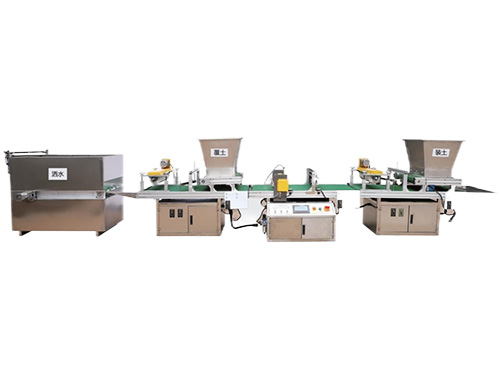
It adopts electrical integration and can be started by pressing the fully automatic button ...
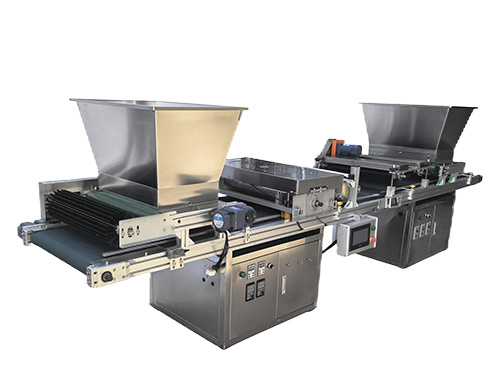
The XP750 seeder has stable performance, excellent product quality, simple and convenient o...
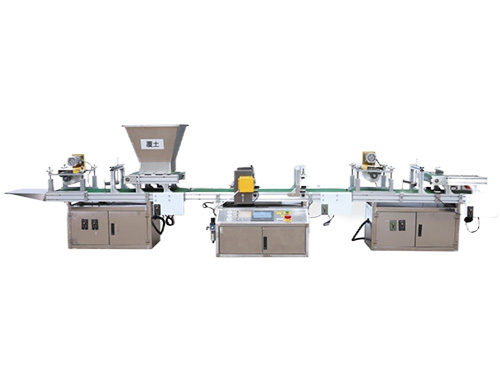
It adopts electrical integration and can be started by pressing the fully automatic button ...