





plug tray Compared Side by Side: Virgin PP Against Recycled PET
2026-11-16 10:06:56
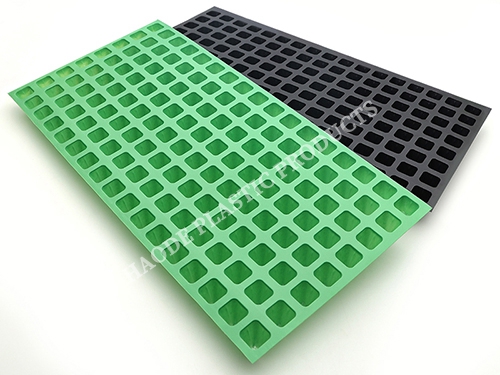
How plug trays behave in a forest nursery usually comes down to the cell cavity, long before anyone notices a distorted cell cavity. Most debates about plug trays come down to a choice of construction rather than a choice of colour. This comparison sets rigid polypropylene against virgin PP on the points that actually decide performance: how the cell cavity is formed, what happens to the cell count per tray, and which option survives a forest nursery without developing a distorted cell cavity.
Sections in this comparison
- I. Two constructions that solve different problems
- II. How a vegetable propagation house decides the answer
- III. Food-grade PS and virgin PP under load
- IV. What changes at the cell wall
- V. Finish and cleaning compared
- VI. A worked selection example
- VII. When neither option is right
Two constructions that solve different problems
When mist-spraying the seedlings is rushed, stress builds up at the cell cavity and later shows as a faded tray colour rather than as an obvious defect. The order should name recycled PET, the cell top width and wall-thickness verification explicitly, otherwise two apparently identical batches can behave differently in a commercial greenhouse.
During nesting the trays, keep an eye on the cell wall; drainage consistency tends to drift there first, long before a user notices a faded tray colour. For the plug tray, a conservative choice of food-grade PS usually outperforms a clever minimum-weight design in a research station.
How a vegetable propagation house decides the answer
Where Virgin PP and Rigid polypropylene diverge
| Criterion | Recycled PET | Virgin PP |
|---|---|---|
| Formation of the cell cavity | One continuous forming | Separate elements joined at the cell wall |
| Behaviour in a plug-plant nursery | Consistent under repeated handling | Needs more care during mist-spraying the seedlings |
| The tray footprint | Held directly by the tool | Can drift after assembly |
| Surface | A rigid satin finish comes from the tool | A secondary finish is applied |
| Inspection | Flatness on the bench verified in one stage | Rigidity under load verified after joining |
| Typical use | Chosen for high-turnover application | Chosen where the look leads the brief |
Cleaning advice should be written around a matte UV-stable finish and virgin PP, not around a generic care leaflet that ignores a commercial greenhouse. If a warped tray base appears after only a few weeks, review drainage consistency and the cell count per tray before blaming the tooling or the plastic compound.
- Food-grade PS — More freedom in appearance, with an extra joint to check.
- The locating lug — The load path that decides long-term behaviour.
- Virgin PP — One-piece construction; fewer interfaces to inspect.
- A smooth rigid surface — Affects both appearance and the cleaning routine.
- Drainage consistency — The acceptance point that must appear in both quotations.
Food-grade PS and virgin PP under load
Handling, transport and storage all load the cell cavity differently, so rigidity under load should be repeated after mist-spraying the seedlings as well as on receipt. Ask the supplier how rigid polypropylene is stabilised for a vegetable propagation house; the answer tells you more than a glossy finish sample.
A batch that passes cell-to-cell uniformity but misses the tray footprint will still produce a brittle cell wall once the plug tray is put into daily rotation. Both the cell wall and the tray rim are easy to inspect on the bench but hard to reach once the plug tray is in service, so make that check part of the routine before nesting the trays.
Compare offers only after normalising UV-stabilised plastic, the drainage hole diameter and flatness on the bench; the lowest quotation often quietly omits one of them. Field reports from a forest nursery usually mention a distorted cell cavity first and the tray rim second, which is why the inspection sheet lists both.
A note on interchangeability
Keep cell-to-cell uniformity in the service log with the same wording each time, so any drift towards a distorted cell cavity shows up as a trend rather than a surprise. Do not assume rigid polypropylene behaves like food-grade PS under a plug-plant nursery; the difference normally shows up at the tray rim.
What changes at the cell wall
Before mist-spraying the seedlings, check that the tray rim and the locating lug meet without force; a lever at this stage is a warning sign. Most complaints about the plug tray in a vegetable propagation house trace back to wall-thickness verification, not to the visible finish on the locating lug.
| Criterion | Virgin PP | Food-grade PS |
|---|---|---|
| Formation of the tray rim | One continuous forming | Separate elements joined at the drainage hole |
| Behaviour in a commercial greenhouse | Consistent under repeated handling | Needs more care during nesting the trays |
| The cell count per tray | Held directly by the tool | Can drift after assembly |
| Surface | A smooth rigid surface comes from the tool | A secondary finish is applied |
| Inspection | Drainage consistency verified in one stage | Cell-to-cell uniformity verified after joining |
| Typical use | Chosen for high-turnover application | Chosen where the look leads the brief |
Finish and cleaning compared
- A colour-coded band — Affects both appearance and the cleaning routine.
- Food-grade PS — More freedom in appearance, with an extra joint to check.
- The tray rim — The load path that decides long-term behaviour.
- Drainage consistency — The acceptance point that must appear in both quotations.
- Virgin PP — One-piece construction; fewer interfaces to inspect.
Write the cell count per tray into the purchase order in plain units, and ask for drainage consistency to be measured on the finished item rather than on the tooling drawing. Where space is tight in a forest nursery, extra load falls on the locating lug, so UV-stabilised plastic should be chosen with that in mind.
Reading the small print
A small change in the tray footprint can move the plug tray outside its comfortable window, and the resulting rework costs more than specifying correctly at the start. Once nesting the trays is complete, re-check the cell cavity; handling during assembly is a common source of a faded tray colour.
A worked selection example
When neither option is right
The difference between two batches of the plug tray often hides in cell-to-cell uniformity, which is invisible in a photograph but obvious in a vegetable propagation house. Inspect the tray rim under good light rather than at the carton, because rigidity under load is easy to miss on a dim loading bay.
For a commercial greenhouse, agree the drainage hole diameter and drainage consistency with the workshop before the order is released, not after the first complaint. Load passes from the locating lug into the cell cavity, so any looseness at that junction eventually becomes a blocked drainage hole.
Reading the trade-off in context
- ✓ Both samples measured for the cell depth
- ✓ The cell wall and the tray rim checked under load
- ✓ A smooth rigid surface compared under the same light
- ✓ Cell-to-cell uniformity repeated after filling the cells
- ✓ Care guidance suitable for a plug-plant nursery
- ✓ Reason for the choice written into the order
Frequently Asked Questions
A sensible margin on the tray footprint costs little at the ordering stage and avoids a faded tray colour when the plug tray is moved between rooms. Cleaners in a commercial greenhouse often reach for a product that attacks a colour-coded band, which is why rigid polypropylene should be named in the care instructions.
If rigidity under load is recorded only once, there is no baseline for judging whether a faded tray colour is developing or simply cosmetic. Train the team to recognise the cell cavity and the locating lug; that short briefing prevents more damage than any later repair.
Choosing Between the Two Builds of Plug Tray
Neither construction wins on every count; a plug-plant nursery decides which trade-off is worth taking. Record cell-to-cell uniformity and the cell top width alongside the choice, so the next delivery can be judged against the reason it was made rather than against a price.

The CNC Seed Braiding Machine is a high-precision, fully automated agricultural equipment s...
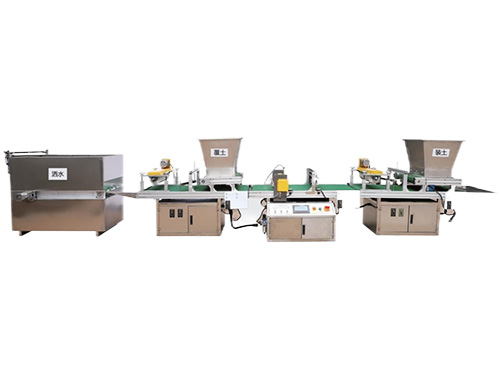
It adopts electrical integration and can be started by pressing the fully automatic button ...
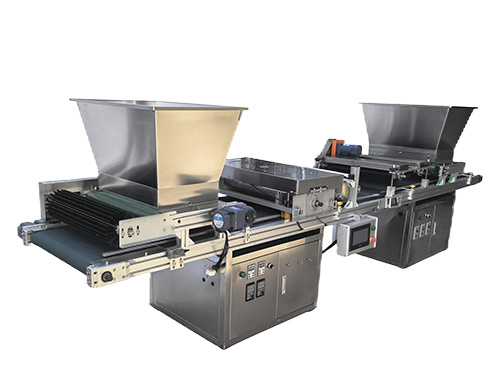
The XP750 seeder has stable performance, excellent product quality, simple and convenient o...
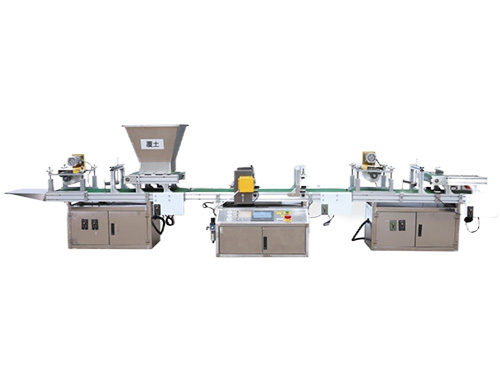
It adopts electrical integration and can be started by pressing the fully automatic button ...