





Plastic vs Biodegradable Seedling Trays: A Cost and Performance Comparison
2026-10-02 15:36:09
Every nursery faces the same material question when buying seedling trays: plastic or biodegradable? The answer shapes your costs, your environmental footprint, your workflow and even your crop quality. Yet the "obvious" answer is rarely the right one, because the two options optimize for very different things.
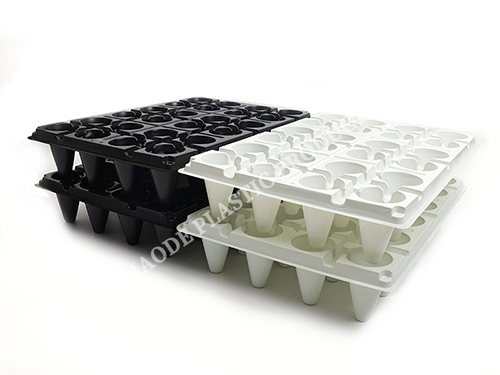
Plastic trays — particularly durable PET — optimize for reusability and long-term economics. Biodegradable trays optimize for waste elimination and direct-to-field planting. Understanding the real trade-offs, rather than marketing claims, is how you make a decision that serves both your budget and your production goals.
This guide compares the two materials across the dimensions that matter most: durability, cost, environmental impact and crop performance.
The Material Decision at the Heart of Seedling Production
The tray material is not a peripheral choice. It determines how you handle seedlings, whether you can mechanize, how many times you can reuse your investment, and what happens to the tray at the end of its life. For high-volume nurseries, getting this wrong is costly; for sustainability-focused operations, it is a reputational issue as well.
Durability and Reusability: The Cost Per Use Factor
Durable plastic trays — especially food-grade PET — can be cleaned, sanitized and reused for many seasons. This reusability is their defining economic advantage. While the upfront price is higher, the cost per use drops sharply with every cycle, making plastic trays the cheapest option over time for nurseries that reuse equipment.
Biodegradable trays, by contrast, are single-use by design. They begin degrading once wet and cannot be reliably reused. Their economics depend on eliminating tray removal and cleaning labor rather than on reusing the tray itself.
Environmental Impact: Recycling vs Composting
The environmental picture is more nuanced than "plastic is bad." Recyclable PET trays keep their material in circulation at end of life and eliminate the waste of repeated single-use purchases. Their footprint is spread across many uses. Biodegradable trays compost in the field and add organic matter, but their production still consumes resources, and not all "biodegradable" materials break down as cleanly as claimed.
The most sustainable choice depends on your waste infrastructure and whether trays are truly recycled or composted in practice — not just in theory.
Crop Performance and Root Development
Both materials can produce excellent seedlings, but they behave differently. Plastic trays maintain consistent cell geometry and drainage across many cycles, which supports predictable, uniform root development and compatibility with automated seeders. Biodegradable trays allow direct planting without root disturbance, which can reduce transplant shock for certain crops.
For operations relying on automation and repeatability, the dimensional stability of plastic is a significant performance advantage.
Total Cost of Ownership Over Time
| Cost Factor | Plastic (PET) | Biodegradable |
|---|---|---|
| Upfront cost | Higher | Lower per tray |
| Cost per use | Very low (reused) | High (single-use) |
| Cleaning labor | Required | None |
| Removal labor | Required | None (direct plant) |
| Waste disposal | Recycling | Composting |
| Long-term total cost | Lowest | Higher |
When Each Material Makes Sense
Plastic trays win for high-volume, repeated-cycle production where reusability, automation compatibility and consistent quality are priorities. They are the standard in commercial plug production. Biodegradable trays win where direct-to-field planting, waste elimination or specific sustainability certifications matter more than long-term tray economics.
A Hybrid Approach for Modern Nurseries
Many successful nurseries use both. They run reusable PET trays for their core, high-volume plug production, and offer biodegradable trays for specific product lines or eco-conscious customers who value direct planting. This hybrid approach captures the economics of reusability while meeting the sustainability demands of the market.
Haode New Material manufactures durable, food-grade PET and PS seedling trays, along with eco-friendly options, helping nurseries build a tray strategy balanced for both cost and sustainability.
Frequently Asked Questions
Are plastic or biodegradable trays cheaper in the long run?
Reusable plastic trays are cheapest over time because their cost is spread across many cycles, while biodegradable trays are single-use.
Can biodegradable trays be reused?
No. Biodegradable trays are designed for single use and begin to degrade once wet, so they cannot be reliably reused.
Are plastic seedling trays bad for the environment?
Not necessarily. Recyclable PET trays keep material in circulation and eliminate repeated single-use purchases, giving them a lower footprint per use than often assumed.
Do biodegradable trays reduce transplant shock?
Yes. Because they can be planted directly with the seedling, biodegradable trays avoid root disturbance during transplanting, reducing shock for some crops.
Which tray works best with automated seeders?
Plastic trays, thanks to their dimensional stability and consistent geometry, are the preferred choice for automated seeding and handling systems.
Can I use both materials in one nursery?
Yes. Many nurseries use reusable plastic trays for core production and biodegradable trays for specific lines or eco-conscious markets.
Conclusion
The choice between plastic and biodegradable seedling trays is a decision about economics, workflow and values — not a simple right-or-wrong. Reusable plastic trays deliver the lowest long-term cost and best automation compatibility, while biodegradable trays offer waste elimination and direct planting. A balanced strategy often uses both.
Explore durable, food-grade seedling trays and eco-friendly options at haodeseedtray.com to build the tray program that fits your operation.

The CNC Seed Braiding Machine is a high-precision, fully automated agricultural equipment s...
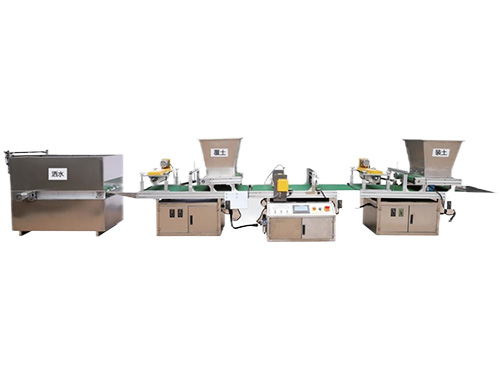
It adopts electrical integration and can be started by pressing the fully automatic button ...
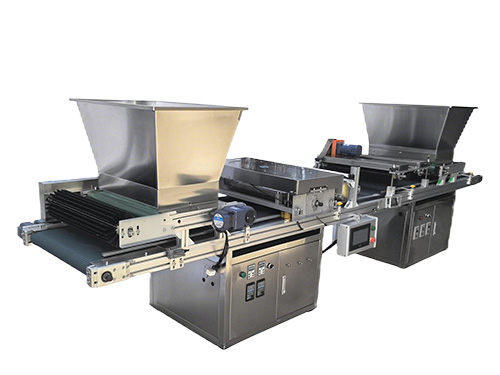
The XP750 seeder has stable performance, excellent product quality, simple and convenient o...
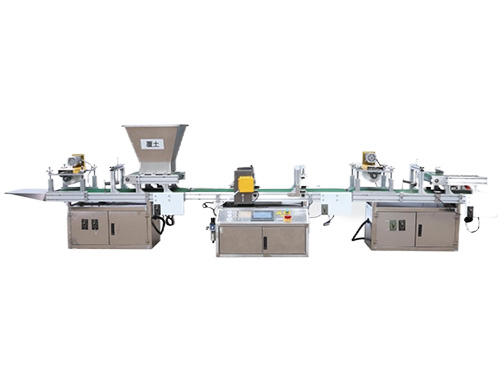
It adopts electrical integration and can be started by pressing the fully automatic button ...