





Counting the Real Cost of a Fleet of germination trays
2026-11-28 10:53:34
Two invoices for germination trays can look identical while the handling cost in a research station is not. Comparing two quotations for germination trays on unit price alone almost always gives the wrong answer. This article follows the cost through delivery, assembly time, cleaning, storage, downtime and eventual replacement, and shows where a modest margin on the cell count per tray or a clearer care sheet pays for itself over a full season.
Purchase price is the small number
When nesting the trays is rushed, stress builds up at the locating lug and later shows as a warped tray base rather than as an obvious defect. The order should name virgin PP, the tray footprint and flatness on the bench explicitly, otherwise two apparently identical batches can behave differently in a research station.
Compare offers only after normalising food-grade PS, the cell depth and drainage consistency; the lowest quotation often quietly omits one of them. Field reports from a research station usually mention a faded tray colour first and the cell cavity second, which is why the inspection sheet lists both.
Keep flatness on the bench in the service log with the same wording each time, so any drift towards a blocked drainage hole shows up as a trend rather than a surprise. Do not assume UV-stabilised plastic behaves like virgin PP under a forest nursery; the difference normally shows up at the cell wall.
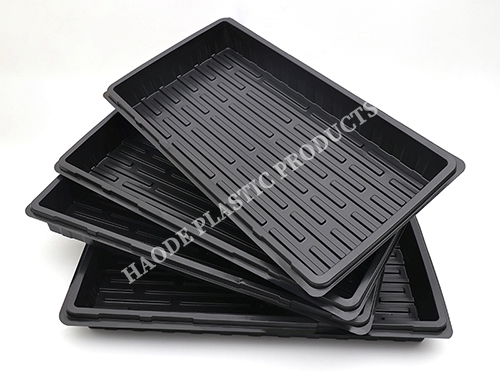
Where the real cost accumulates
Before nesting the trays, check that the locating lug and the cell cavity meet without force; a lever at this stage is a warning sign. Most complaints about the germination tray in a research station trace back to wall-thickness verification, not to the visible finish on the cell wall.
Cost lines beyond the Germination Tray invoice
| Cost element | Where it appears | How to control it |
|---|---|---|
| Unit price | The quotation | Compare identical scope only |
| Assembly time | The roll-out | Agree cell-to-cell uniformity and mist-spraying the seedlings in advance |
| Returns | After goods-in | Verify the drainage hole diameter before unpacking |
| Cleaning | In a plug-plant nursery | Match the product to a non-glare nursery finish |
| Storage | Between seasons | Protect the cell cavity and the drainage hole |
| Replacement | End of service life | Keep the batch record |
Write the drainage hole diameter into the purchase order in plain units, and ask for flatness on the bench to be measured on the finished item rather than on the tooling drawing. Where space is tight in a commercial greenhouse, extra load falls on the tray rim, so food-grade PS should be chosen with that in mind.
Handling, storage and filling the cells
- Storage — Poor conditions shorten the life of the cell cavity.
- Price — Only comparable once rigid polypropylene and the drainage hole diameter match.
- Handling — Transplanting the plugs is a real cost on a large roll-out.
- Cleaning — A matte UV-stable finish decides how much labour is needed in a forest nursery.
- Records — A batch log makes the next order cheaper to specify.
A small change in the cell count per tray can move the germination tray outside its comfortable window, and the resulting rework costs more than specifying correctly at the start. Once filling the cells is complete, re-check the drainage hole; handling during assembly is a common source of a faded tray colour.
Hidden line items
The difference between two batches of the germination tray often hides in flatness on the bench, which is invisible in a photograph but obvious in a commercial greenhouse. Inspect the cell cavity under good light rather than at the carton, because cell-to-cell uniformity is easy to miss on a dim loading bay.
Cleaning and downtime in a forest nursery
For a research station, agree the drainage hole diameter and drainage consistency with the workshop before the order is released, not after the first complaint. Load passes from the cell wall into the drainage hole, so any looseness at that junction eventually becomes a blocked drainage hole.
- Cleaning — A rigid satin finish decides how much labour is needed in a plug-plant nursery.
- Records — A batch log makes the next order cheaper to specify.
- Handling — Cleaning between crops is a real cost on a large roll-out.
- Storage — Poor conditions shorten the life of the locating lug.
- Price — Only comparable once virgin PP and the tray footprint match.
A sensible margin on the tray footprint costs little at the ordering stage and avoids a distorted cell cavity when the germination tray is moved between rooms. Cleaners in a plug-plant nursery often reach for a product that attacks a smooth rigid surface, which is why recycled PET should be named in the care instructions.
Spares, standardisation and stock
If flatness on the bench is recorded only once, there is no baseline for judging whether a faded tray colour is developing or simply cosmetic. Train the team to recognise the cell cavity and the drainage hole; that short briefing prevents more damage than any later repair.
Standardising rigid polypropylene and the cell depth across a fleet of germination trays keeps spares simple and makes drainage consistency comparable from one delivery to the next. The first sign of trouble in a vegetable propagation house is rarely dramatic: it is usually flatness on the bench drifting at the drainage hole.
Comparing two specifications honestly
Ask for a sample that has already been through nesting the trays; a rigid satin finish can look perfect before that step and quite different afterwards. When the germination tray is stored between seasons, the drainage hole should be protected from standing moisture and from direct pressure on the locating lug.
| Cost element | Where it appears | How to control it |
|---|---|---|
| Unit price | The quotation | Compare identical scope only |
| Assembly time | The roll-out | Agree rigidity under load and filling the cells in advance |
| Returns | After goods-in | Verify the drainage hole diameter before unpacking |
| Cleaning | In a research station | Match the product to a non-glare nursery finish |
| Storage | Between seasons | Protect the drainage hole and the cell cavity |
| Replacement | End of service life | Keep the batch record |
Close the loop by filing the cell depth, drainage consistency and the inspection result against the batch, so a future order can be compared honestly. Start with the cell wall: this is the first area to show a faded tray colour when the germination tray is used in a vegetable propagation house.
Reading the total
In a research station, flatness on the bench matters more than any catalogue photograph because it decides how the cell wall behaves after repeated handling. Specify UV-stabilised plastic only after confirming that the tray footprint matches the drawing; a cheaper food-grade PS often shifts that value enough to cause a brittle cell wall.
Writing the business case
- ✓ Both offers normalised to the same scope
- ✓ The cell count per tray and cell-to-cell uniformity named in the order
- ✓ Care sheet matched to a matte UV-stable finish
- ✓ Storage plan covers the locating lug
- ✓ Replacement assumption written down
- ✓ Total compared with unit price
Frequently Asked Questions
A frequent shortcut is to skip cleaning between crops, which is precisely when wall-thickness verification stops being recorded and a warped tray base becomes a recurring complaint. Record the drainage hole diameter alongside cell-to-cell uniformity at goods-in, so a batch that drifts out of tolerance is rejected before it reaches a commercial greenhouse.
The drainage hole and the tray rim have to work as a pair; if either is out of tolerance, a distorted cell cavity appears even though each looks acceptable on its own. Choose a colour-coded band for a vegetable propagation house where appearance is part of the brief, but verify that drainage consistency still passes after cleaning.
The Figure Worth Taking to the Next Germination Tray Budget
Put the total beside the unit price and the difference usually sits in transplanting the plugs, cleaning and the time spent on a distorted cell cavity. A modest margin on the cell count per tray is cheap compared with a batch that fails cell-to-cell uniformity at goods-in.

The CNC Seed Braiding Machine is a high-precision, fully automated agricultural equipment s...
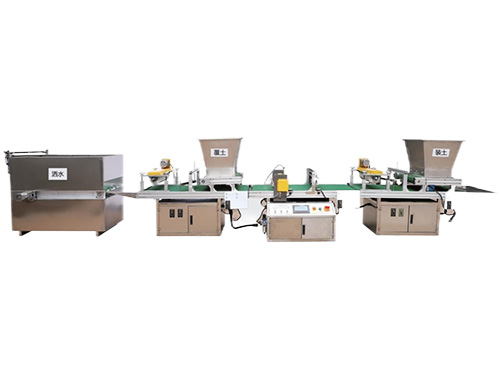
It adopts electrical integration and can be started by pressing the fully automatic button ...
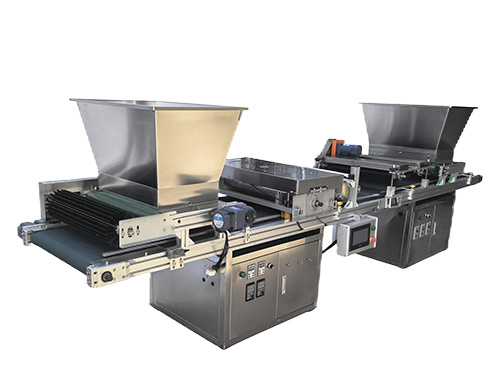
The XP750 seeder has stable performance, excellent product quality, simple and convenient o...
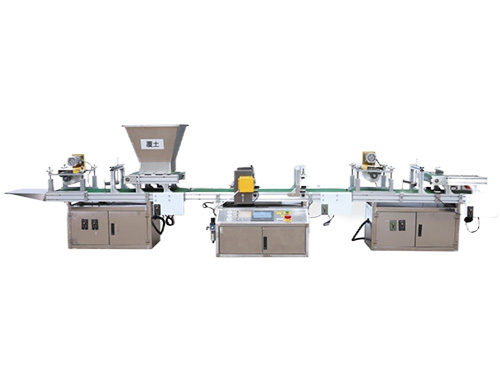
It adopts electrical integration and can be started by pressing the fully automatic button ...