





Nutrient Management for Seedlings in Plug Trays: A Complete Guide
2026-09-01 17:20:09
Proper nutrient management is the difference between seedlings that thrive and seedlings that struggle to survive. In plug tray production — where plants share confined cells with limited substrate volume — nutrition must be delivered with precision and timing. This guide covers everything you need to know about feeding seedlings from germination through transplant.
Why Nutrient Management Matters in Plug Trays
Plug trays constrain root zones to tiny volumes — typically 3–20 mL per cell depending on tray规格. With so little substrate to buffer against mistakes, nutrient imbalances develop quickly and can severely impact seedling quality. Over-fertilizing burns young roots; under-fertilizing causes stunted, chlorotic transplants that never reach their potential.
Effective nutrient management for seedlings in plug trays requires understanding three things: the right timing to start feeding, the correct fertilizer formulation, and how to monitor and adjust using Electrical Conductivity (EC) as your primary tool.
When to Start Fertilizing Seedlings
Seedlings do not need fertilizer until they have exhausted the energy reserves in the seed itself — typically the cotyledon (seed leaf) stage. Starting too early is wasteful and can cause salt damage to emerging roots.
The True Leaf Rule
The standard guideline is to begin fertilization when the first true leaf (not the cotyledon) is fully expanded, usually 7–14 days after germination depending on crop and temperature. Before this point, the seedling is living off seed reserves and supplemental feeding offers no benefit.
Quick reference: For most vegetables and ornamentals, start fertilizing at 50–75 ppm nitrogen (N) when the first true leaf appears. For slow-germinating crops like peppers, wait until the second true leaf stage.
Choosing the Right Fertilizer
NPK Ratio for Seedlings
Seedlings have different nutritional needs than mature plants. During early growth, nitrogen drives leaf and shoot development while phosphorus supports root establishment. A balanced or slightly nitrogen-high formula works best:
Vegetables (tomatoes, peppers, lettuce): 17-5-17, 20-10-20, or 15-5-15 (balanced NPK with adequate calcium and magnesium)
Leafy greens: 20-10-20 (higher nitrogen for rapid leaf growth)
Ornamentals / flowering transplants: 15-15-15 or 13-2-13 (equal NPK to balance shoot and root)
Complete Water-Soluble Fertilizers
For plug tray nutrition, use fully water-soluble fertilizers that dissolve completely — either granular formulations mixed into stock solutions or pre-dissolved liquid concentrates. These ensure even distribution through the irrigation system and consistent nutrient delivery to every cell in the tray.
Many growers use a two-part calcium-based fertilizer system to separately manage calcium (Ca) and sulfate (S) without precipitating problems — particularly important for crops sensitive to calcium deficiency like tomatoes and peppers.
Understanding and Managing EC for Seedlings
Electrical Conductivity (EC) measures the total concentration of dissolved salts — which directly correlates to nutrient availability — in your fertigation solution or substrate. It is your most reliable tool for managing EC for seedlings in plug trays.
Target EC Ranges
Pre-emergence / seed germination stage: EC 0.0–0.5 mS/cm (no fertilizer; plain water only)
Early seedling (1–2 true leaves): EC 0.5–1.0 mS/cm
Mid-stage (2–4 true leaves): EC 1.0–1.5 mS/cm
Pre-transplant (4+ true leaves): EC 1.5–2.0 mS/cm
These ranges are guidelines. Always calibrate your EC meter regularly and account for the baseline EC of your water source — some municipal or well water already contributes 0.2–0.5 mS/cm before any fertilizer is added.
EC Monitoring Best Practices
Measure EC of your incoming fertilizer solution daily before irrigation
Measure substrate EC by extracting a saturation paste or 1:2 dilution from the plug cell
Compare irrigation solution EC vs. substrate EC — a large gap signals nutrient leaching or accumulation issues
Flush trays with plain water if substrate EC exceeds 2.5 mS/cm to prevent salt stress
Macronutrient Deficiency Symptoms in Seedlings
Identifying deficiencies early in plug tray seedlings is critical because problems compound rapidly in small root volumes. Here is a practical reference for the three primary macronutrients:
| Nutrient | Key Symptom | Affected Plant Parts | Common Cause |
|---|---|---|---|
| Nitrogen (N) | Uniform yellowing from older to newer leaves; stunted, pale seedlings | Older (lower) leaves first, progresses upward | Insufficient N in fertilizer; root damage preventing uptake |
| Phosphorus (P) | Dark green or purple/red coloration; severely stunted growth | Entire seedling, most visible on leaf undersides and stems | Cold substrate temperatures limiting P availability; incorrect fertilizer P ratio |
| Potassium (K) | Leaf edge burn and chlorosis; weak, floppy stems | Older leaves first; margins and tips brown/crispy | Imbalanced N:K ratio; excessive calcium or ammonium competing for uptake |
Secondary macronutrients — calcium (Ca), magnesium (Mg), and sulfur (S) — also require attention. Calcium deficiency manifests as tip burn on the newest leaves and is especially common in tomato and pepper seedlings grown under high humidity. Magnesium deficiency produces interveinal chlorosis on older leaves and is easily corrected with Epsom salt (magnesium sulfate) at 1–2 g/L.
Micronutrient Deficiency Symptoms
Micronutrients (iron, manganese, zinc, copper, boron, molybdenum) are needed in minute quantities, but their absence causes serious problems in seedlings. Iron (Fe) and manganese (Mn) deficiencies are the most common in soilless plug substrates due to high pH lockout.
Iron deficiency: Severe interveinal chlorosis on the youngest, newest leaves — veins remain green while leaf tissue turns yellow. Often triggered by substrate pH above 6.5.
Manganese deficiency: Similar to iron — interveinal chlorosis in new growth — but symptoms appear at lower pH and often include small, speckled leaf patterns.
Boron deficiency: Thickened, brittle new leaves; growing point dies back; stubby, distorted roots. Boron deficiency progresses rapidly and can cause total seedling loss.
Prevention tip: Maintain substrate pH between 5.8 and 6.2 for optimal micronutrient availability. Use chelated forms of iron (Fe-DTPA or Fe-EDDHA) when deficiency symptoms appear rather than sulfate-based iron, which is quickly rendered unavailable at higher pH.
Feeding Schedules for Plug Tray Seedlings
A consistent seedling fertilizer schedule prevents feast-or-famine nutrition and builds uniform, vigorous transplants. Integrate fertilization with your irrigation routine.

The CNC Seed Braiding Machine is a high-precision, fully automated agricultural equipment s...
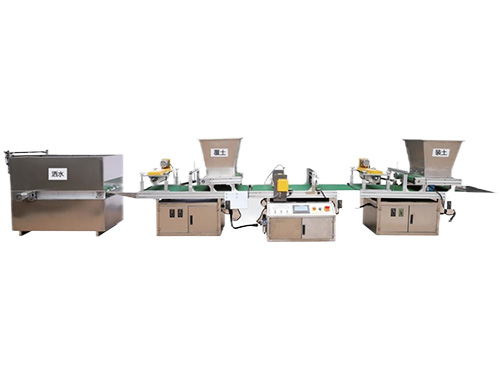
It adopts electrical integration and can be started by pressing the fully automatic button ...
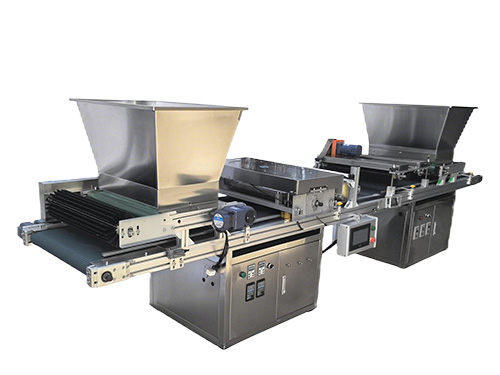
The XP750 seeder has stable performance, excellent product quality, simple and convenient o...
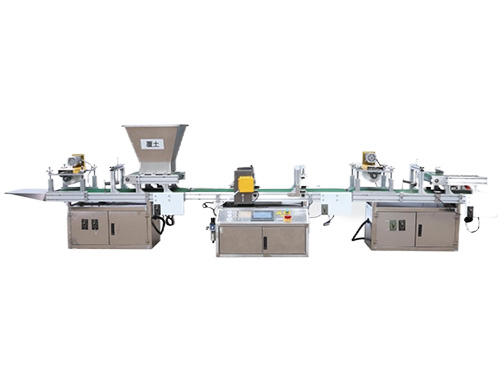
It adopts electrical integration and can be started by pressing the fully automatic button ...