





How to Choose the Right Seedling Seeder for Your Nursery or Farm
2026-08-15 19:00:14
Whether you're sowing 500 trays a year or 50,000, the right seeder can save hours of labor and improve germination uniformity. Here's how to match the machine to your operation.
Why a Seeder Matters
Hand-sowing plug trays is slow, inconsistent, and expensive at scale. A good seeder delivers:
One seed per cell (or controlled multi-seeding) — eliminating the need for thinning
Uniform seed depth — consistent germination across the tray
Speed — 5–10× faster than hand sowing
Reduced seed waste — precise placement means fewer seeds used
Reduced labor costs — one operator replaces three or four hand-seeders
The Four Types of Seeders: Which Is Right for You?
ManualHand Seeder / Dibble Board
A simple board with pegs that match the cell layout. Fill tray with medium, press board in, drop seeds by hand into the indentations. Very low cost (under $50). Speed: 1–2 trays/minute. Best for: hobbyists, very small operations, trial trays.
Semi-AutoVacuum Seeder
A flat plate with vacuum holes matching the cell layout. A vacuum pump draws seeds to the plate; when vacuum is released, seeds drop into cells. Speed: 3–10 trays/minute. Best for: medium-scale operations (5,000–30,000 trays/year). Requires compatible seed sizes — test before purchase.
Fully AutoAutomatic Plug Tray Seeder
Fully automated — trays are fed through a conveyor line where medium may be added, seeds dispensed, and trays covered in one continuous operation. Speed: 10–100+ trays/minute. Best for: large commercial operations (30,000+ trays/year). Higher capital cost, but massive labor savings.
SpecializedSeedling Pressure Hole Press
A specialized device for creating uniform seed holes in the growing medium of shallow trays. Often used in combination with manual or semi-auto seeders to improve depth consistency. Speed: N/A (adjunct tool). Best for: operations using raw growing medium that haven't invested in filled trays.
Choosing by Seed Type and Size
Different seeders handle different seed types with varying success. Here's the compatibility guide:
| Seed Type | Examples | Best Seeder | Notes |
|---|---|---|---|
| Large round seeds | Beans, peas, squash, cucumber | Needle seeder, drum seeder | Easiest to machine-seed accurately |
| Medium seeds | Tomato, pepper, cucumber, melon | Vacuum seeder, needle seeder | Test plate hole size; may need seed singulation |
| Small seeds | Lettuce, basil, celery, petunia | Vacuum seeder (fine plate), air seeder | Most challenging — test extensively before committing |
| Very small / dusty | Carrot, snapdragon, tobacco | Fluidized bed, precision vacuum seeder | Specialized equipment often required |
| Pelleted seeds | Any seed types in pelleted form | Most seeders work well | Pelleting standardizes size and shape |

The CNC Seed Braiding Machine is a high-precision, fully automated agricultural equipment s...
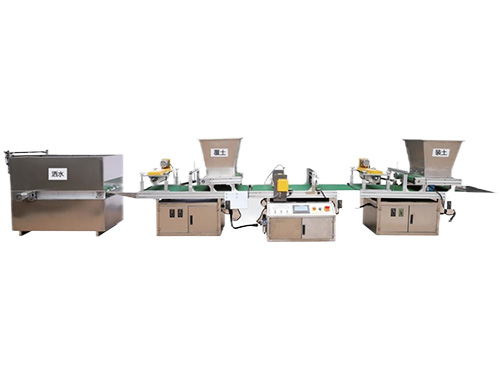
It adopts electrical integration and can be started by pressing the fully automatic button ...
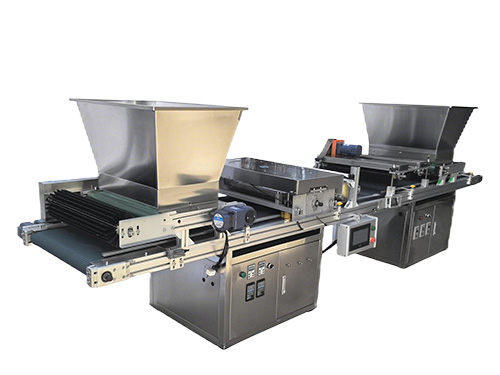
The XP750 seeder has stable performance, excellent product quality, simple and convenient o...
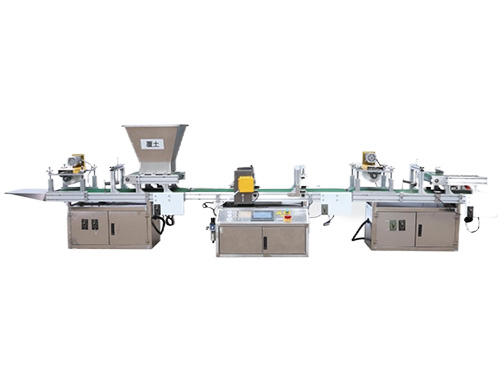
It adopts electrical integration and can be started by pressing the fully automatic button ...