





Strawberry Seedling Trays: A Complete Guide for Commercial Runner and Plug Production
2026-10-20 16:06:03
Strawberry propagation punishes compromise. The crop is highly sensitive to waterlogging, and crown rot spreads quickly through a tray block once drainage fails. Yet the same crop needs consistent moisture to root runners and build a plug dense enough to transplant cleanly. Dedicated strawberry seedling trays are designed around that contradiction: deep cells, generous drain holes, and enough spacing for airflow around the crown.

Most commercial operations now choose between two systems — rooting runner tips directly into trays, or producing plugs for transplanting into field or substrate. Both depend on tray design far more than growers expect. A shallow tray with slow drainage does not just reduce rooting percentage; it creates the humid crown environment where botrytis and Phytophthora establish.
This guide sets out how strawberry seedling trays should be specified, how drainage and aeration interact with crown health, what cell depth suits runner versus plug production, and how to build a sanitizing routine that prevents pathogen carry-over between cycles.
What Defines a Strawberry Seedling Tray
A strawberry tray typically consists of a tray body with a set of deep cells sized to hold a runner tip or a developing plug, matched with a drainage mat or base that manages free water. The two features that distinguish it from a general-purpose plug tray are cell depth and drainage capacity.
Cell depth matters because strawberry roots run deep relative to many vegetable plugs, and a shallow cell forces early transplanting or produces a root-bound plug. Drainage capacity matters because the crown — the plant's most disease-sensitive tissue — sits at the medium surface where water collects.
Deep cells: give runner tips room to root without premature binding.
Free-draining base: moves water away from the crown quickly after irrigation.
Airflow spacing: reduces humidity around crowns and lowers disease pressure.
Rigid walls: hold shape through repeated handling, stacking and sanitizing.
Matched drainage mat: creates an even moisture reservoir beneath the tray.
Why Drainage Is the Deciding Factor
Strawberries are among the least tolerant crops of saturated root zones. Free water around the crown invites rot, and once a single plant collapses in a tray block, the pathogen load in the shared irrigation water rises sharply.
The practical target is a cell that drains within a short, predictable window after each irrigation event and then holds capillary moisture. That is why drain-hole size and cell shape should be specified together rather than selected separately — a deep cell with an undersized hole behaves very differently from the same cell with a correctly sized one.
Runner Production vs Plug Production
| System | Tray requirement | Advantage | Constraint |
|---|---|---|---|
| Runner tipping into trays | Deep cells, wide spacing, free drainage | Direct rooting, simple workflow | Needs careful moisture control in week 1–2 |
| Plug production | Uniform cell volume, seeder-compatible pitch | Uniform plants, longer planting window | Higher cost per plant |
| Bare-root comparison | Not tray-based | Lowest unit cost | Narrow planting window, higher transplant shock |
Sanitizing Between Propagation Cycles
Pathogens persist in tray surfaces and drain holes. A tray that goes back into production without proper sanitizing carries inoculum straight into the next crop cycle — which is why reusable trays must be treated as production equipment, not storage.
A workable protocol is simple but must be complete: remove all medium, rinse, soak in a diluted sanitizing solution, scrub cell walls and drain holes, rinse again, and air-dry fully before stacking. Trays stored wet are the most common source of off-season mould and odour complaints.
Remove all growing medium before soaking — organic matter neutralises many sanitizers.
Scrub drain holes specifically; they harbour the highest pathogen load.
Air-dry completely before stacking to prevent mould in storage.
Inspect and discard cracked trays, which cannot be sanitized effectively.
Specifying Strawberry Trays From the Factory
When sourcing wholesale seedling trays for strawberry production, specify cell depth, cell count, drain-hole diameter, material grade and whether trays will be machine-handled. Samples should be trialled with your actual runner-rooting or seeding workflow before a bulk order is placed.
A seedling tray manufacturer that also produces drainage mats and seedling seeders can specify the whole propagation set coherently — an advantage when drain geometry, mat capacity and seeder pitch all have to line up.
Frequently Asked Questions
Conclusion
Dedicated strawberry seedling trays are a foundational investment in plug quality and yield. With the right cell depth, drainage and a disciplined sanitizing protocol, growers produce uniform plugs that establish quickly and fruit reliably.
Explore strawberry seedling trays and matched drainage systems at haodeseedtray.com to strengthen your propagation programme.
References
GB/T 7714: Effects of Tray Cell Depth and Drainage on Strawberry Plug Quality and Field Establishment. Journal of Horticultural Research
MLA: Sanitation Protocols for Reusable Propagation Trays in Berry Crop Production. Horticultural Science & Technology
APA: Water Management and Crown Rot Incidence in Strawberry Plug Production Systems. Journal of Plant Protection

The CNC Seed Braiding Machine is a high-precision, fully automated agricultural equipment s...
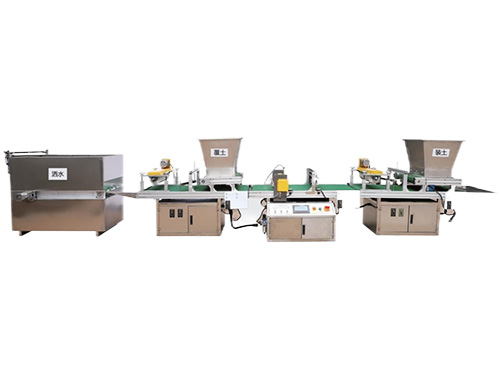
It adopts electrical integration and can be started by pressing the fully automatic button ...
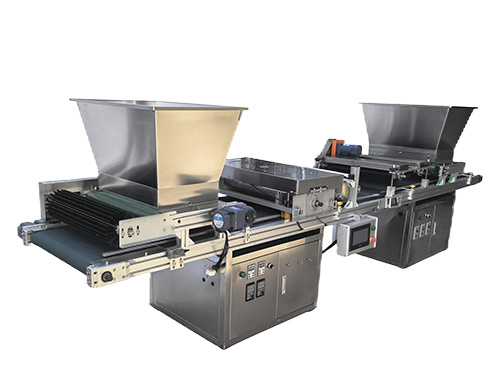
The XP750 seeder has stable performance, excellent product quality, simple and convenient o...
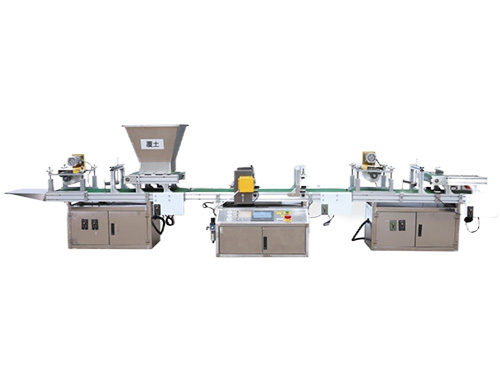
It adopts electrical integration and can be started by pressing the fully automatic button ...